
Pliers Set for Jewelry: 4 Kits Compared by Tool Mix

For most jewelry makers, vouiu 10-Piece Jewelry Pliers Set is the most versatile choice because its 10-piece mix includes specialty pliers for varied beading and fine hobby work. Choose URSKYTOUS 4-Piece Jewelry Pliers Set instead if you want four core tools, or WORKPRO 3-Pack Jewelry Pliers Set if a compact three-tool kit with spring handles fits your needs better.
We earn a commission if you buy through links on this page. As an Amazon Associate I earn from qualifying purchases. Products are compared on manufacturer specifications, not hands-on testing.
- Best overall: vouiu 10-Piece Jewelry Pliers Set – Ten tool types cover a wider range of fine hobby and beading tasks.
- Best for four core tools: URSKYTOUS 4-Piece Jewelry Pliers Set – Combines needle, round, bent-nose pliers and a wire cutter.
- Best for spring-assisted handling: WORKPRO 3-Pack Jewelry Pliers Set – Includes a double-leaf spring and three mini pliers for jewelry work.
| Product | Best for | Tool count | Distinctive tools | Length | Shop |
|---|---|---|---|---|---|
| vouiu 10-Piece Jewelry Pliers Set | Varied fine work | 10 | Step bail, nylon jaw, split ring, crimping | 11.61 in | Check Price on Amazon |
| URSKYTOUS 4-Piece Jewelry Pliers Set | Core wire work | 4 | Needle, round, bent nose, cutter | 4.9 in | Check Price on Amazon |
| WORKPRO 3-Pack Jewelry Pliers Set | Spring-assisted grip | 3 | Needle/chain, round, cutter | 5 in | Check Price on Amazon |
| Shynek 3-Piece Jewelry Plier Set | Basic repair kit | 3 | Needle/chain, round, cutter | — | Check Price on Amazon |
Pliers Sets for Jewelry Making
Compare each kit’s tool mix and features to match it to the jewelry work you do most.
vouiu 10-Piece Jewelry Pliers Set

The 10-piece assortment stands apart with specialty tools beyond the basic wire-shaping trio. Its included tools are step bail making, nylon jaw, round nose, bent nose, flat nose, side cutter, chain nose, crimping, split ring and end nippers. High-carbon steel and anti-slip grip handles suit makers who work across different beading and fine hobby tasks and want more jaw styles in one kit. The tradeoff is a larger assortment to sort and store; for a small project that only needs core pliers and a cutter, a three- or four-piece kit may be simpler.
Bottom line: Choose it for a broad selection of plier types for varied fine hobby work.
URSKYTOUS 4-Piece Jewelry Pliers Set

Four core tools make this kit a straightforward pick for wire wrapping and small jewelry repairs: needle-nose, round-nose, bent-nose pliers and a jewelry wire cutter. The steel tools are suited to gripping, shaping and cutting wire, while the different nose shapes help reach and form small loops and findings. This set fits a maker who wants more than the basic three-tool combination without a large specialty assortment. The specifications give no handle or jaw-length measurements, so buyers who need a particular grip style or precise reach should verify those before choosing.
Bottom line: Pick this set for a four-tool mix centered on wire shaping and cutting.
WORKPRO 3-Pack Jewelry Pliers Set

A double-leaf spring distinguishes this three-piece kit, returning the handles apart to reduce repeated manual opening during small tasks. The set pairs mini needle/chain-nose pliers with round-nose pliers and a wire cutter; the 5-inch tools also have non-slip ergonomic handles. Drop-forged carbon steel with nickel-plated coating and a polished surface are intended for jewelry work, including shaping wire and handling jump rings. This is a focused core kit rather than an expanded selection: it does not include bent-nose or specialty tools such as crimping or split-ring pliers.
Bottom line: Choose it when spring-assisted handles and three core tools are the priority.
Shynek 3-Piece Jewelry Plier Set
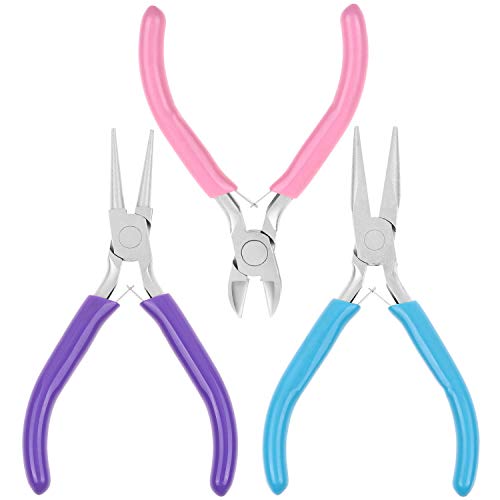
This three-piece set pairs needle/chain-nose pliers and round-nose pliers with wire cutters for basic jewelry making, repairs and wire wrapping. Its compact tool mix suits someone who needs the core shapes for holding, bending and cutting rather than specialty pliers. The maker coats the tools with oil to help prevent rust, so wipe the heads clean before use and apply oil before storage. Unlike the spring-handled alternative, no spring feature is identified here; makers who prefer assisted opening should choose a kit that explicitly includes one.
Bottom line: Pick this set for basic jewelry tasks and when routine oiling is acceptable.
How to choose jewelry pliers
Start with the tasks you do most: round-nose jaws form loops, chain- or needle-nose jaws grip and maneuver findings, and cutters trim wire. A three-tool kit covers those basics; add bent-nose pliers when angled access helps, or specialty tools when you regularly crimp or open split rings. Match the kit to your work instead of treating a higher tool count as automatically useful.
For delicate findings, smooth, well-aligned jaws help avoid marring metal, while nylon jaws can hold wire with less risk of scratching it. Use a dedicated cutter for wire rather than cutting hard steel with general-purpose pliers. If you work with several types of findings, a larger assortment can reduce tool changes; for occasional repairs, a compact trio is often enough.
Which plier jaws suit common jewelry tasks
Round jaws shape wire into curves and loops, while flat or chain-nose jaws hold small parts and close jump rings. Jaw shape matters more than tool count when a task requires a particular grip or bend.
The table maps common work to a jaw style; use the tool names in each kit to see which tasks it supports.
| Task | Useful tool | Why it helps |
|---|---|---|
| Forming loops | Round-nose pliers | Tapered round jaws shape wire curves |
| Holding small findings | Chain- or needle-nose pliers | Narrow tips reach small spaces |
| Working at an angle | Bent-nose pliers | Angled tips improve access |
| Trimming wire | Wire cutter | Dedicated cutting edges trim wire |
How to avoid damaging wire and findings
Use only enough jaw pressure to hold a finding securely; excessive force can flatten soft wire or leave marks. Nylon-jaw pliers are useful when gripping finished wire where surface scratches matter, while smooth metal jaws suit many routine shaping jobs. For a jump ring, grip each side and twist the ends sideways apart rather than pulling them outward, then twist them back together to close the gap.
Keep cutting edges reserved for wire within the tool’s intended use, and keep fingers clear of the cutting path. Wipe oil from plier heads before working, especially on tools shipped with a protective coating, and store metal tools dry to limit corrosion.
Care and storage for jewelry pliers
Clean plier jaws after use and remove residue before it transfers to wire or findings. A light protective oil film can help steel tools resist rust during storage; wipe away excess before the next project. Store cutters with their edges protected, and keep different jaw types together in a case or organizer so fine tips do not bend against heavier tools.
Check the jaws periodically for misalignment, rough edges or loose handles, since poor alignment can make small findings harder to grip. Avoid using jewelry pliers as general-purpose tools on hard materials: cutting or gripping work outside their intended task can damage fine jaws and cutting edges.
Frequently Asked Questions
How do you open a jump ring with pliers?
Grip one side of the ring with chain-nose pliers and the other side with a second pair, then twist the ends sideways apart. Avoid pulling the ends straight outward, which can distort the ring’s round shape.
What size pliers work best for jewelry making?
Mini pliers around 5 inches are a practical size for many small jewelry tasks because their tips can reach small findings. Choose a larger tool only when the work needs a broader grip or more leverage.
Can jewelry pliers cut every type of wire?
No; use a wire cutter only for wire within the cutter’s intended capacity. Hard wire or steel can damage cutting edges, so check the tool’s allowable wire material and diameter before cutting.
How should jewelry pliers be stored?
Wipe tools clean and dry before storage, then apply a light oil film to steel surfaces if needed for rust protection. Keep cutting edges covered and fine jaws separated from heavier tools to reduce damage.
Why use nylon jaw pliers for jewelry wire?
Nylon jaws grip and shape wire while reducing the chance of scratching its surface. They are useful on finished or delicate wire, but metal-jaw pliers are more suitable for many ordinary gripping and cutting tasks.