
Audien Atom Pro 2: Compare 5 Hearing Aid Models

Audien Atom Pro 2 is the closest match for someone seeking Audien Atom Pro 2: it has four listening modes and a charging case with a 5-minute UV-C cycle. Choose another model if you want touchscreen controls, analog dials, a 24-hour battery life, or app control.
OTC hearing aids are intended for adults with perceived mild to moderate hearing loss; consult a hearing professional if you have sudden hearing loss, ear pain, or drainage.
We earn a commission if you buy through links on this page. As an Amazon Associate I earn from qualifying purchases. Products are compared on manufacturer specifications, not hands-on testing.
- Best overall: Audien Atom Pro 2 – Four modes and a charging case with a 5-minute UV-C cycle.
- Best for touchscreen controls: Audien Atom X – CaseControl touchscreen adjusts volume and mode without an app.
- Best for stated battery life: Audien Atom Air – Its product name specifies a 24-hour battery life.
| Product | Best for | Controls | Listening modes | Case or battery feature | Shop |
|---|---|---|---|---|---|
| Audien Atom Pro 2 | automatic case cleaning | — | 4 | 5-minute UV-C cycle; 3 extra charges | Check Price on Amazon |
| Audien Atom X | touchscreen adjustments | Touchscreen case | 4 | 16-hour battery | Check Price on Amazon |
| Audien Atom One | analog dial controls | Two analog dials | — | Rechargeable | Check Price on Amazon |
| Audien Atom Air | longer stated battery | — | — | 24-hour battery | Check Price on Amazon |
| Audien Ion Pro 2 | phone app control | Phone app; 2 buttons | 3 modes; 6 profiles | UV sanitizing | Check Price on Amazon |
Audien Atom Pro 2 and related OTC hearing aids
Compare the controls, listening options, and charging features that distinguish these Audien models.
Audien Atom Pro 2

The Atom Pro 2 is the exact model named in this search, distinguished by automatic UV-C case care. The maker says docking starts a 5-minute UV-C cycle, and the portable case holds three additional full charges. Four modes cover conversation, restaurant, TV, and outdoor settings. Those features suit buyers who want several presets and a cleaning cycle built into charging. The tradeoff is that the specifications do not identify its control method, so confirm that controls match your preferences before ordering.
Bottom line: Choose this if automatic case cleaning and four presets are your priorities.
Audien Atom X

The Atom X stands apart with a touchscreen on its charging case rather than a phone app or tiny buttons. Its four presets include conversation, crowd, and TV modes; the maker also specifies a 16-hour battery. This suits someone who wants to change volume or listening mode by tapping the case.
Bottom line: Pick this if touchscreen case controls matter more than UV-C sanitizing.
Audien Atom One

The Atom One replaces the Atom Pro 2’s preset-focused pitch with two physical analog dials, one for volume and one for frequency. The maker says it is intended for adults with mild to moderate hearing loss and does not require a prescription. Its dial-based setup may appeal to people who prefer direct manual adjustment over a touchscreen or app.
Bottom line: Choose this if separate volume and frequency dials suit you.
Audien Atom Air
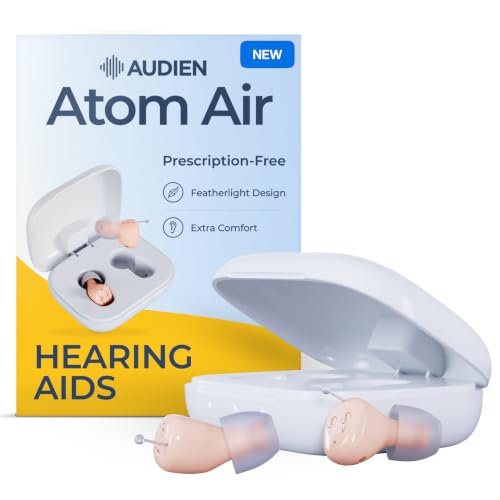
The Atom Air is the alternative with a 24-hour battery life and separate left- and right-ear shapes. The maker says its Sound Chip A1 is designed for everyday sound, and the product name describes it as rechargeable and app-free. Side-specific fit may matter to buyers who find one-shape designs uncomfortable.
Bottom line: Pick this if side-specific shape and a 24-hour battery lead your priorities.
Audien Ion Pro 2

The Ion Pro 2 is the only alternative here that specifies phone app control, alongside two buttons, three modes, and six custom hearing profiles. The maker says it also has UV sanitizing and enhanced streaming for calls, music, or TV. Its app-based adjustments make it a better fit for someone seeking profiles and streaming functions than the Atom Pro 2’s four-mode approach.
Bottom line: Choose this if app-based profiles and streaming are more useful than four presets.
How to choose an OTC hearing aid
Choose by control style, fit, and the situations where you most need help hearing; more modes alone do not guarantee a better match. OTC hearing aids in the United States are intended for adults with perceived mild to moderate hearing loss, not children or people with severe or profound loss. A one-on-one conversation, a restaurant, and television can have very different sound environments, so preset modes may be useful when they target those settings. With under 30 minutes to adjust settings comfortably, favor simple physical controls or an accessible case interface over an app-dependent setup. Anyone with sudden hearing loss, ear pain, ear drainage, or one-sided worsening should seek medical evaluation rather than self-fitting an OTC device.
Fit and comfort for in-ear hearing aids
Comfort depends on the ear tip seal and shell shape, not just whether a device is called discreet. A loose seal can reduce amplification and let the aid shift; an overly tight tip can cause soreness or block the canal. Insert and remove the device gently, and stop wearing it if pain develops. Side-specific shells can help distinguish left from right and may suit ears that do not tolerate identical shapes. Give new fittings short adjustment periods rather than wearing an uncomfortable device all day; persistent discomfort or feedback warrants a fit check with a hearing professional. Keep the device dry and avoid inserting cotton swabs into the ear canal, which can push wax deeper.
Listening modes and control styles
Preset modes change how an aid handles sound, while controls determine how quickly you can select them. A restaurant preset may emphasize speech differently from a television setting, but background noise remains difficult for many hearing aids. For a buyer who avoids smartphone setup, choose a model with direct case or dial controls; choose app controls only if profile adjustments and phone access are useful. This guide separates the options by function:
| Need | Feature to prioritize |
|---|---|
| Adjust without a phone | Case touchscreen or analog dials |
| Clean during charging | UV-C case cycle |
| Personalized sound profiles | App control and custom profiles |
| Different ear shapes | Side-specific fit |
Before buying, confirm the control method and fit approach you can use consistently.
Cleaning and safe daily use
Earwax and moisture can block sound ports or interfere with charging, so clean hearing aids regularly with a dry, soft cloth and a small brush if one is supplied. A UV-C charging cycle is a device feature, not a substitute for removing visible wax or following safe care practices. Keep electronics away from water, and do not wear in-ear devices while bathing or swimming unless the manufacturer explicitly says they are water resistant. Replace or clean ear tips when they collect wax, and keep charging contacts dry. If sound suddenly weakens in one aid, inspect the tip and sound opening before increasing volume; a blockage may be the cause.
Frequently Asked Questions
Who can use over-the-counter hearing aids?
OTC hearing aids in the United States are intended for adults 18 and older with perceived mild to moderate hearing loss. Sudden loss, ear pain, drainage, or a major difference between ears calls for medical evaluation first.
How long do hearing aid batteries usually last?
Rechargeable in-ear models commonly need charging daily, while disposable zinc-air batteries can last roughly 3 to 10 days depending on size and use. Follow the device’s charging guidance, and do not assume a case’s extra charges equal continuous wear time.
Can hearing aids make restaurant speech clear?
A restaurant mode can emphasize speech, but it cannot remove all competing voices and room noise. Sitting with your back to a wall and facing the speaker often helps reduce distracting sound.
How should I clean an in-ear hearing aid?
Wipe the device with a dry, soft cloth and clear wax from the sound opening using an appropriate small brush. Keep the aid and charging contacts dry; never rinse an electronic device unless its maker explicitly permits it.
When should I see a doctor about hearing loss?
Seek prompt medical care for sudden hearing loss, ear pain, drainage, or hearing that worsens in one ear. Gradual difficulty hearing conversations is also worth discussing with a hearing professional, especially before choosing amplification.