
Best Small 1-Seater Car: 3 Kids’ Ride-Ons Compared

24V One-Seat Ride-On is the best small 1-seater car for most families because its 33.86-inch length and 22.64-inch width give it the smallest footprint here. Choose Best Choice Products 12V Ride-On if you prefer a one-seat ride-on with a 12V motor and a 2.8 mph maximum speed.
24V 4WD Ride-On Truck is a related 4WD ride-on with a wide seat, but its seating count is unclear, so confirm it before choosing if you need exactly one-seat.
We earn a commission if you buy through links on this page. As an Amazon Associate I earn from qualifying purchases. Products are compared on manufacturer specifications, not hands-on testing.
- Best overall: 24V One-Seat Ride-On – Its 33.86-by-22.64-inch dimensions make it the smallest of the compared options.
- Best for a slower ride: Best Choice Products 12V Ride-On – Its maximum speed is 2.8 mph, and it has child and parent-control modes.
- Best for 4WD: 24V 4WD Ride-On Truck – Its four-wheel drive and three speed settings suit buyers prioritizing traction.
| Product | Best for | Dimensions | Maximum speed | Drive | Shop |
|---|---|---|---|---|---|
| 24V One-Seat Ride-On | Smallest footprint | 33.86 × 22.64 × 21.46 in | 1.86–3.11 mph | Dual 80W motors | Check Price on Amazon |
| Best Choice Products 12V Ride-On | Slower speed | 39.25 × 26 × 26 in | 2.8 mph | 12V motor | Check Price on Amazon |
| 24V 4WD Ride-On Truck | Four-wheel drive | 38.2 × 24.2 × 22.9 in | Up to 4.9 mph | 4WD | Check Price on Amazon |
Small 1-Seater Ride-On Cars
Compare the size, speed, and drive setup to match a ride-on to your child and available space.
24V One-Seat Ride-On
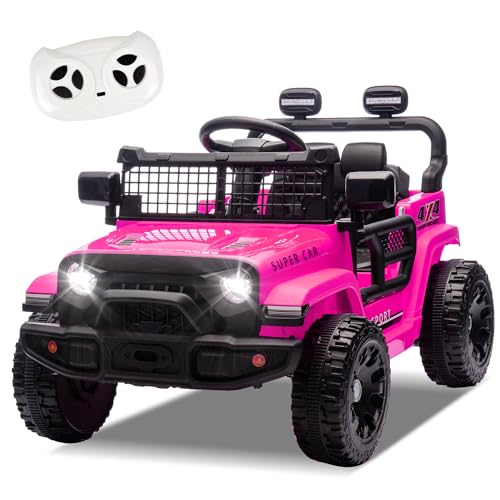
24V One-Seat Ride-On has the smallest footprint among these options, measuring 33.86 inches long and 22.64 inches wide. The one-seat design pairs two 80W motors with a 24V system, parent remote control, and a maximum load of 66.14 pounds. The maker says the vehicle meets ASTM, CPSIA, and FCC standards. Its speed range is gentler than the faster 4WD alternative, which may suit younger drivers and tighter outdoor areas. The limitation is its 66.14-pound load rating, so check the child’s weight against that limit before choosing.
Bottom line: Choose this for the smallest footprint and a one-seat layout.
Best Choice Products 12V Ride-On
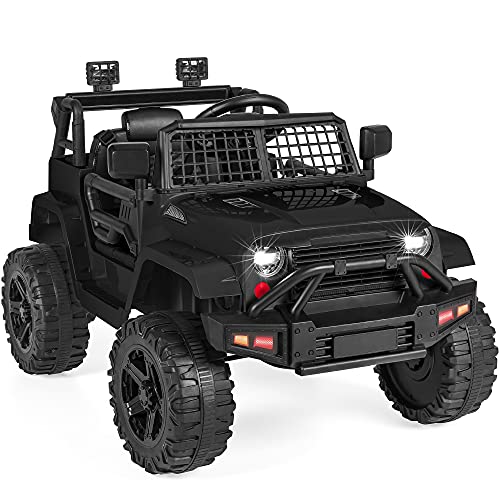
Best Choice Products 12V Ride-On stands out for its 2.8 mph maximum speed and a clear 12V, one-seat configuration. The ride-on includes manual driving and parent remote control, plus a seat belt, locking doors, spring suspension, and traction tires. A built-in AUX connection supports music playback. At 39.25 inches long and 26 inches wide, it needs more floor space than 24V One-Seat Ride-On, so measure the storage route as well as the parking spot. Its 12V setup and 2.8 mph top speed may matter to buyers seeking a slower option rather than 4WD power.
Bottom line: Pick this for a one-seat ride-on with a 2.8 mph stated top speed.
24V 4WD Ride-On Truck

24V 4WD Ride-On Truck is the traction-focused option: its 24V battery powers four-wheel drive, and three speed settings reach a maximum of 4.9 mph. It measures 38.2 inches long and 24.2 inches wide, between the two exact one-seat choices in footprint. Parent controls include steering, speed selection, and an emergency brake; the feature set also includes a seat belt, anti-roll design, and spring shock absorption. The wide-seat description does not establish that it is a one-seater, so confirm the seat count before choosing if that requirement is firm.
Bottom line: Choose this only if 4WD matters more than confirmed one-seat fit.
How to choose a small 1-seater car
Start with the ride-on’s full dimensions and the space the child will use, not just the word “small.” Compare both length and width, then leave several inches of maneuvering clearance on each side and at the front; a 26-inch-wide vehicle needs more than a 26-inch opening. Check the maximum load against the child’s weight, and compare the maximum speed with the child’s ability to steer and stop. Parent remote control can add adult oversight, but it does not replace direct supervision. If the car will be stored indoors, measure doorways, turns, and the parking area before deciding.
One-seat ride-on size and fit
Measure the narrowest doorway and turning point on the route to the riding area, then compare those measurements with the car’s width and length. Allow extra room for steering rather than relying on a snug fit. For example, a 22.64-inch-wide car needs more than 22.64 inches of usable clearance to pass without scraping or getting stuck. A compact footprint can simplify storage, but the child still needs room to enter, sit securely, and operate the controls. Check the dimensions in inches and account for protruding parts such as mirrors or bumpers if the product’s measurements do not include them.
Speed, motors, and drive types
Ride-on cars differ in both maximum speed and how power reaches the wheels. A 12V motor setup and a 24V system are not interchangeable descriptions of speed: compare the miles per hour, drive layout, and control features instead. Two-wheel drive generally powers two wheels, while four-wheel drive sends power to all four and is commonly intended to help with traction; surface and slope still affect movement. Use a clear decision rule: favor the lower stated top speed for a young or inexperienced driver, and reserve faster models for a supervised area with ample room. A remote control is an added control method, not permission for unattended riding.
Safe riding and battery care
Use a ride-on on a flat, dry, private surface away from streets, pools, steps, and vehicle traffic. Rechargeable ride-on batteries need the charger intended for that model; mismatched chargers can create overheating or battery damage risks. Let the battery and charger cool if they become hot, and keep charging away from combustible clutter. Before each ride, check that tires, steering, and restraints are secure and that the battery compartment is closed. Store the vehicle dry and follow its battery-care directions.
Frequently Asked Questions
How much room does a small ride-on car need?
Measure the car’s width and length, then allow several extra inches for turning and clearance. A 22.64-inch-wide vehicle needs an opening wider than 22.64 inches to pass comfortably.
What surface is safest for a kids ride-on car?
A flat, dry, private surface away from traffic, steps, and water is a safer choice. Wet ground and steep slopes can reduce traction and make steering or stopping harder.
Should a child use a ride-on car without an adult?
No; keep an adult supervising and within reach during every ride. A parent remote can help guide the car, but it does not replace supervision.
How do I compare ride-on car speed ratings?
Compare the maximum speed in miles per hour rather than assuming voltage alone determines speed. For a young or inexperienced driver, favor the lower top-speed option and use a roomy, controlled riding area.
Can I use another charger for a ride-on battery?
Use the charger intended for that ride-on model. An incompatible charger can damage the battery or create an overheating hazard.