
Best Golf Hole Cutter: 5 Tools Compared by Design

Lichtund 2-in-1 Golf Hole Cutter suits most backyard golfers because its detachable pole works as a compact or full-length tool, with depth scales for 4- and 6-inch cuts. Choose CDZHLTG Lever-Action Hole Cutter instead if you prefer lever action, or Portable Stainless Steel Cutter, 4- and 6-Inch Heads if you need two cutter-head sizes.
A golf hole cutter removes a plug of turf and soil to create a cup opening; confirm the cutter diameter matches your intended cup before ordering.
We earn a commission if you buy through links on this page. As an Amazon Associate I earn from qualifying purchases. Products are compared on manufacturer specifications, not hands-on testing.
- Best overall: Lichtund 2-in-1 Golf Hole Cutter – Detachable pole offers compact or standing use, with marked 4- and 6-inch depths.
- Best for lever action: CDZHLTG Lever-Action Hole Cutter – Manual lever-action design uses a wooden handle and steel frame.
- Best for two head sizes: Portable Stainless Steel Cutter, 4- and 6-Inch Heads – Includes 4-inch and 6-inch cutter heads and a soil-pushing rod.
| Product | Best for | Blade or frame material | Depth or head sizes | Soil removal | Shop |
|---|---|---|---|---|---|
| Lichtund 2-in-1 Golf Hole Cutter | Standing use | Stainless steel | 4- and 6-inch depth marks | — | Check Price on Amazon |
| KINGTOP Golf Hole Cutter | Compact storage | Carbon steel blade | 4- and 6-inch cutting depths | 10-inch soil chamber | Check Price on Amazon |
| CDZHLTG Lever-Action Hole Cutter | Lever operation | Alloy steel frame | — | — | Check Price on Amazon |
| Portable Stainless Steel Cutter, 4- and 6-Inch Heads | Two cutter heads | Stainless steel | 4- and 6-inch heads | Soil-pushing rod | Check Price on Amazon |
| AugFir Carbon Steel Golf Hole Cutter | Marked soil ejection | Carbon steel | 4- and 6-inch cups | Integrated soil ejector | Check Price on Amazon |
Golf Hole Cutters for Backyard Greens
Compare the cutting style, material, and soil-handling features before choosing a tool for your green.
Lichtund 2-in-1 Golf Hole Cutter
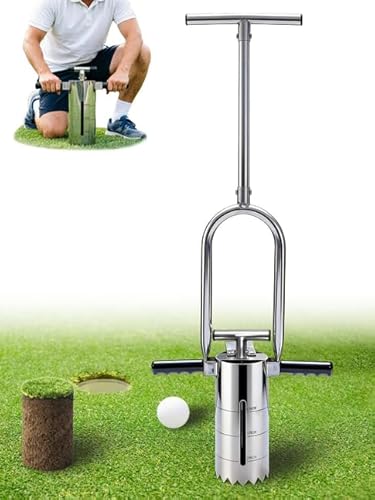
Lichtund 2-in-1 Golf Hole Cutter is the only tool here with a detachable pole that can be used compactly or extended to 40 inches for standing work. The stainless-steel construction and visible depth scales for 4- and 6-inch cuts suit golfers who want to avoid kneeling while making repeat cuts. Its dimensions do not establish the cutter’s opening diameter, so verify compatibility with the cup you plan to install. This tool is a better fit for a home green than for someone seeking the lever mechanism of CDZHLTG Lever-Action Hole Cutter.
Bottom line: Choose it if you want a detachable tool with standing-length use and marked cutting depths.
KINGTOP Golf Hole Cutter

KINGTOP Golf Hole Cutter pairs a carbon-steel blade with a 10-inch soil chamber, distinguishing it from the ejector-rod and lever-action designs. Its detachable handle makes it suited to golfers who need to transport or store the cutter between backyard sessions, while the maker describes it as designed for 4- and 6-inch cutting depths. The handle configuration and steel blade are the key tradeoffs: this is not the standing 40-inch setup described for Lichtund 2-in-1 Golf Hole Cutter, and it does not provide the two distinct head sizes of Portable Stainless Steel Cutter, 4- and 6-Inch Heads.
Bottom line: Pick it for a detachable-handle design with a dedicated soil chamber.
CDZHLTG Lever-Action Hole Cutter

CDZHLTG Lever-Action Hole Cutter is the lever-action option, using a wooden handle and steel frame rather than a detachable digging pole. The manual punch style suits a golfer who wants a lever mechanism to press into turf and then remove the plug for cup installation. Its feature set emphasizes construction and operation, not marked cutting depth or multiple head sizes, so it is less suited to buyers who need those specific controls. Keep the cutting frame aligned as you operate it, since a tilted cut can leave an uneven opening.
Bottom line: Choose it if a manual lever-action punch is your preferred cutting style.
Portable Stainless Steel Cutter, 4- and 6-Inch Heads
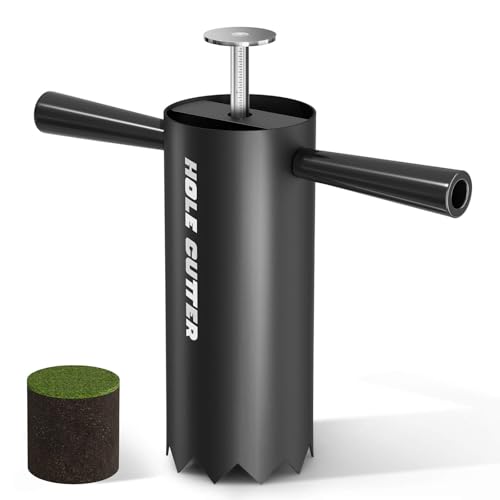
Portable Stainless Steel Cutter, 4- and 6-Inch Heads stands out with separate 4-inch and 6-inch cutter heads plus an integrated soil-pushing rod, rather than relying on a single cutting configuration. The rod has a depth scale and pushes soil out as part of the tool’s operation, a useful combination for golfers who want to manage cutting and plug removal together. Confirm that either head matches the opening and cup dimensions you intend to use.
Bottom line: Pick it if you want two head sizes and an integrated soil-pushing rod.
AugFir Carbon Steel Golf Hole Cutter

AugFir Carbon Steel Golf Hole Cutter combines a carbon-steel build with an integrated soil ejector and depth markings, differentiating it from KINGTOP Golf Hole Cutter’s specified 10-inch soil chamber. It is aimed at buyers making 4- or 6-inch cup openings and wanting to remove the soil without a separate ejector step. The maker claims the tool is intended for USGA-standard cups, but a 4-inch size does not match the regulation hole diameter of 4.25 inches. Verify the intended measurement before using it for a regulation cup.
Bottom line: Choose it for an integrated ejector and marked depth control, after confirming cup fit.
How to Choose a Golf Hole Cutter
Start with the cup opening you need, then choose a mechanism that suits the green and how often you will cut. A regulation golf hole is 4.25 inches in diameter, and the Rules of Golf require a depth of at least 4 inches. Tool measurements can refer to head diameter, cup size, or cutting depth, so do not treat those terms as interchangeable. For frequent cuts, a soil chamber or ejector can simplify plug removal; a detachable handle can make storage easier, while a lever-action frame favors a pressing motion. Keep the cutter vertical as it enters turf: a slanted cut can leave a poorly fitting cup or liner.
Hole Diameter and Depth for Golf Cups
A regulation golf hole is 4.25 inches wide and at least 4 inches deep. A cutter labeled for 4-inch holes may refer to its depth setting rather than the diameter, so check what the measurement describes before matching it to a cup. Six-inch depth marks can provide a deeper cut, but depth alone does not establish a regulation opening. Use this quick guide to separate the two measurements:
| Measurement | Regulation reference | What to match |
|---|---|---|
| Opening diameter | 4.25 inches | Cutter head and cup diameter |
| Hole depth | At least 4 inches | Cut depth and cup or liner depth |
Do not assume a 4-inch diameter tool makes a regulation-size opening. Confirm the cup system’s fit and the cutter’s measurement meaning first.
Lever, Detachable, and Soil-Ejecting Designs
Lever-action cutters press into turf with a frame and handle, while detachable designs break down for transport and storage. Soil chambers hold the plug; pushing rods or ejectors help clear it from the cutter. Those mechanisms affect workflow rather than the required hole dimensions, so select the style only after confirming diameter and depth. If you expect to make repeated cuts, consider how the plug exits between cuts: a chamber can collect soil, while an ejector can push it out. Use a steady vertical motion and keep hands clear of cutting edges, which can be sharp enough to injure.
Using and Caring for a Golf Hole Cutter
Cutting into moist, workable turf generally takes less force than cutting soil that is very dry or waterlogged. Press the cutter straight down, then remove the plug cleanly; a tilted tool can tear the turf edge and create an uneven opening. Clear packed soil from the blade and any ejector after use, then dry metal surfaces before storage to limit corrosion. Carbon steel may need more attention to moisture than stainless steel, but both types benefit from cleaning after contact with damp soil. Wear sturdy footwear and keep fingers away from the blade while clearing a plug.
Frequently Asked Questions
What diameter is a regulation golf hole?
A regulation golf hole is 4.25 inches in diameter. Match the cutter opening to the cup system rather than assuming a 4-inch tool measurement means diameter.
How deep does a golf hole need to be?
A regulation hole must be at least 4 inches deep. A 6-inch cutting-depth option can make a deeper hole, but the cup or liner still needs to fit the opening.
Can a golf hole cutter make holes in dry turf?
A cutter can enter dry turf, but hard, dry soil usually takes more force and can make a clean plug harder to remove. Waterlogged ground can also deform the turf edge, so aim for moist, workable soil.
How do you keep a golf hole cutter from rusting?
Remove soil after each use and dry the metal before storage. Carbon steel is more sensitive to moisture than stainless steel, so take extra care to dry a carbon-steel blade.
Should a golf hole cutter be pushed straight down?
Yes, keep the cutter vertical while pressing it into the turf. A tilted cut can leave an uneven opening that does not fit the cup cleanly.