
Best Double Door Entry Mat: 4 Sizes and Styles Compared

The 60 x 24-inch coir mat is the best double door entry mat for most people because its width suits a broad doorway while its rectangular shape fits a typical porch. Choose a different option if you need a wider 72-inch mat, a half-round outline, or a polypropylene surface for trapping moisture.
Measure the available porch depth and door swing before choosing; a mat that projects into the door path can catch the bottom edge.
We earn a commission if you buy through links on this page. As an Amazon Associate I earn from qualifying purchases. Products are compared on manufacturer specifications, not hands-on testing.
- Best overall: Evergreen Monogram Coir Mat, 60 x 24 – Its 60 x 24-inch rectangle is sized as a standalone double-door mat and has a rubber backing.
- Best for broad coverage: DEXI Polypropylene Mat, 72 x 48 – The 48 x 72-inch polypropylene mat offers the widest rectangular footprint here.
- Best for a curved threshold: Evergreen Coastal Coir Mat, 60 x 24 – Its 72 x 36-inch half-round shape follows a curved entry and has dense coir fibers.
| Product | Best for | Size | Shape | Surface | Shop |
|---|---|---|---|---|---|
| Evergreen Monogram Coir Mat, 60 x 24 | Personalized entry | 60 x 24 in | Rectangle | Natural coir | Check Price on Amazon |
| DEXI Polypropylene Mat, 72 x 48 | Dirt and moisture | 72 x 48 in | Rectangle | Polypropylene | Check Price on Amazon |
| Evergreen Coastal Coir Mat, 60 x 24 | Coastal decor | 60 x 24 in | Rectangle | Natural coir | Check Price on Amazon |
| Kempf Sunburst Half-Round Coir Mat, 72 x 36 | Curved doorway | 72 x 36 in | Half-round | Natural coir | Check Price on Amazon |
Double Door Entry Mats
Compare each mat’s footprint, shape and surface against your doorway and porch before deciding.
Evergreen Monogram Coir Mat, 60 x 24
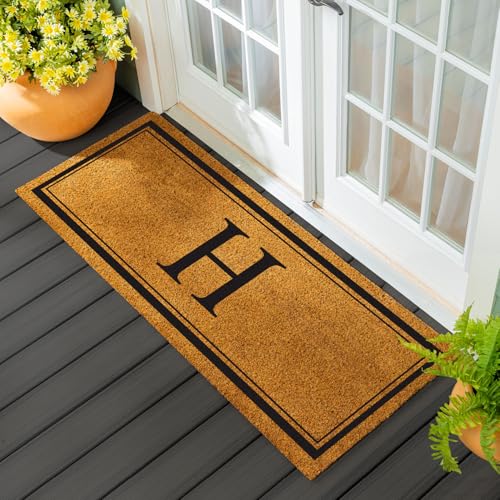
The monogrammed 60 x 24-inch rectangle gives double doors a coordinated entrance without extending as far into the porch as the 72-inch-wide choices. Its natural coir surface has a printed letter H, and the rubber backing is designed to resist slipping. The maker says the surface resists weather, fading and stains, and can be shaken, swept or hosed clean. This suits a buyer who wants a decorative coir scraper for a covered or open porch. Its 24-inch depth may feel narrow if you want a larger landing zone for several people stepping out together.
Bottom line: Choose this if a 60-inch width and monogrammed coir surface suit your threshold.
DEXI Polypropylene Mat, 72 x 48
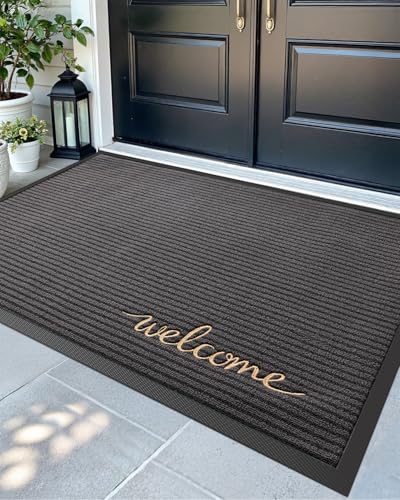
The 72 x 48-inch footprint is the largest rectangular option here, making this the choice for shoppers who want broad coverage across a double-door entry. Its polypropylene surface has a scraping texture intended to catch dirt and moisture, with rubber backing and a low-profile design. The maker says the surface resists rain and snow and is easy to clean. This mat suits a busy threshold where shoes bring in dust or wet debris. Its generous 48-inch depth needs more porch space than the 24-inch options, so measure the door swing and landing area before choosing it.
Bottom line: Choose this if you have room for a deeper mat and prioritize dirt and moisture capture.
Evergreen Coastal Coir Mat, 60 x 24

The coastal print distinguishes this 60 x 24-inch coir rectangle from the monogrammed alternative, while keeping the same compact double-door footprint. Its natural coconut-husk surface has nautical artwork, and the rubber backing is anti-skid. The maker says the coir is weather-, fade- and stain-resistant for indoor or outdoor use. This is a fitting decorative choice for a beach or lake house entry where a themed print matters more than a personalized initial. The 24-inch depth provides less step-off room than the wider DEXI mat, so it may not suit an entry that needs a broad landing surface.
Bottom line: Choose this for a coastal motif and a 60-inch-wide coir rectangle.
Kempf Sunburst Half-Round Coir Mat, 72 x 36

The half-round outline sets this 72 x 36-inch coir mat apart from the rectangular choices, creating a curved front edge while reaching across a wide double-door threshold. Its dense coco coir fibers scrape debris from shoes, and its heavy-duty rubber backing is designed to anchor it. The sunburst pattern offers a more architectural look than a plain rectangle. This suits an entry where the curved silhouette complements the porch. The semicircular shape does not provide the same rectangular coverage at the front corners, so choose a rectangle if those areas need a full mat surface.
Bottom line: Choose this if a curved silhouette and 72-inch span match your entry.
How to choose a double door entry mat
Start with the doorway width, then check porch depth and door clearance. A mat should cover the paired doors without crowding the threshold; measure the usable floor area, including the path of any outward-swinging door. For a simple sizing rule, allow at least 2 inches of space between the mat edge and a door that swings over it. Coir has coarse fibers suited to scraping dry soil, while polypropylene fibers can capture dust and moisture. Backing matters too: rubber helps limit movement, but a mat still needs a flat, clean surface to grip.
Choose shape based on the footprint you need. Rectangles give more consistent coverage across the front edge; a half-round can suit a curved porch but leaves less coverage near its front corners. A mat that is too small may leave a traffic lane uncovered, while one that is too deep can interfere with the door.
Entry mat sizes and doorway fit
Measure the clear width of both doors together and the depth from the threshold to the first obstruction. A 60-inch width covers many paired-door entrances, while 72-inch options provide more span; compare those measurements with the actual porch, not the door slab alone. Door sweep clearance is the key fit check: thick mats can catch a door even when their width is right.
Use this fit guide to narrow the shape and coverage before selecting a surface.
| Entry need | Practical choice | Fit check |
|---|---|---|
| Compact double-door area | 60 x 24 in rectangle | Confirm enough depth for a step |
| Broad landing area | 72-inch-wide rectangle | Measure porch depth and door path |
| Curved porch edge | Half-round mat | Check corner coverage |
Doorway trim, a raised threshold or an uneven porch can change the usable footprint. Leave the door able to open freely rather than forcing a larger mat into a tight space.
Coir and polypropylene surfaces compared
Coir is made from coconut husk and has coarse, stiff fibers that scrape dry dirt from footwear. It is commonly used on outdoor entrance mats, but heavy saturation can make natural fibers take longer to dry; place the mat where it can dry between wet spells. Polypropylene is a synthetic fiber often chosen for dirt and moisture capture and typically dries more readily than dense natural coir.
Backing affects stability and care. Rubber-backed mats are intended to grip, yet dust or water underneath can reduce traction, so lift and clean below the mat regularly. Shake or sweep loose debris from coir; use a hose only when the product supports it, then let it dry fully before placing it back. For any mat, avoid positioning it where a door cannot clear its thickness.
Keeping an entry mat useful and safe
Shake or sweep an entrance mat weekly in a busy entry, and clean it more often when grit builds up; trapped sand wears fibers and can scratch adjacent flooring. Lift the mat periodically to remove debris underneath and let both the floor and backing dry. A wet mat on a smooth surface can slide, so reset it only after the floor is dry and the mat lies flat.
Replace or reposition a mat when edges curl, backing separates, or the mat shifts underfoot. Keep the mat away from stairs and narrow walkways where a raised edge could become a trip hazard. For doors with a tight sweep, test clearance after placing the mat; a snug threshold fit is not worth a door that binds or lifts the mat with each opening.
Frequently Asked Questions
How wide should a double door entry mat be?
A 60- to 72-inch width can span many paired-door entrances, but measure the combined doorway and usable porch width first. Leave room around the mat so doors and nearby walls do not catch its edges.
Can an entry mat go under an outward-swinging door?
Only if the door clears the mat without dragging or pushing it. Check the bottom sweep against the mat’s height and keep enough clearance for free movement.
Which entry mat surface is better for wet shoes?
Polypropylene is a practical choice when moisture capture is a priority, while coir’s coarse fibers are suited to scraping dirt. Whichever surface you choose, let the mat dry fully if it becomes saturated.
How often should I clean a front door mat?
Shake or sweep a busy entrance mat about once a week, or sooner when visible grit accumulates. Lift it during cleaning so debris and moisture do not stay trapped underneath.
Does a rubber-backed doormat need a dry floor?
Yes, a clean, dry floor helps the backing grip as intended. Water or dust beneath a rubber-backed mat can reduce traction, so lift and reset it after the floor is dry.