
Best Aussie Dog Nail Clippers: 4 Tools Compared

Millers Forge Orange-Handle Large Clipper is the best fit for most owners seeking Aussie dog nail clippers because its large-dog design pairs stainless steel blades with a spring-loaded action.
Dog nail clippers shear the nail with a blade, while grinders abrade it gradually; neither safety guard nor light replaces careful, small cuts because the quick contains sensitive tissue.
We earn a commission if you buy through links on this page. As an Amazon Associate I earn from qualifying purchases. Products are compared on manufacturer specifications, not hands-on testing.
- Best overall: Millers Forge Orange-Handle Large Clipper – Large-dog sizing, stainless steel blades, and spring-loaded action.
- Best for light nails: iToleeve LED Large Clipper – The LED illuminates light-colored nails to help locate the quick.
| Product | Best for | Size fit | Safety features | Shop |
|---|---|---|---|---|
| Millers Forge Orange-Handle Large Clipper | Large dog cuts | Large dogs | Lock | Check Price on Amazon |
| gonicc Guarded Medium/Large Clipper | Guarded trimming | Medium and large dogs | Safety guard, file | Check Price on Amazon |
| iToleeve LED Large Clipper | Light nail visibility | Large | LED, guard, lock, file | Check Price on Amazon |
| Tpotato Large/Medium Clipper | Thick nail cuts | Medium and large pets | Quick sensor, guard, file | Check Price on Amazon |
Aussie Dog Nail Clippers Compared
Compare cutting tools with a grinder alternative, and choose by your dog’s nail size and tolerance for clipping or grinding.
Millers Forge Orange-Handle Large Clipper

Millers Forge Orange-Handle Large Clipper is a straightforward large-dog clipper with spring-loaded action and stainless steel blades. Its non-slip handles are intended to help maintain control, and a lock keeps the blades closed for storage. The 4-inch dimensions are given for height, length, and width, so check that this handle shape suits your grip before choosing it.
This option suits owners who want a conventional blade cut without extra illumination or an included file. Take off small amounts at a time; a safety lock prevents opening during storage, but it does not limit how much nail the blade removes.
Bottom line: Choose it for large nails and a simple, spring-loaded cutting tool.
gonicc Guarded Medium/Large Clipper
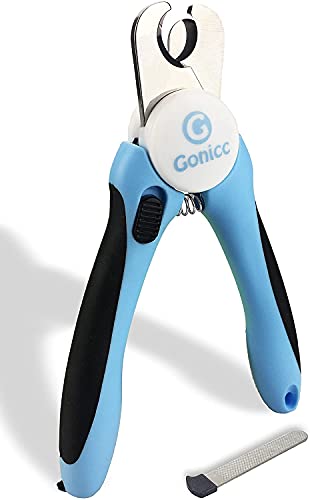
gonicc Guarded Medium/Large Clipper combines a built-in safety stop with a mini nail file integrated into the handle, making it distinct from the simpler large-dog clipper choices. Its 3.5 mm stainless steel blades are intended for medium and large dogs. The guard is an aid to limiting nail insertion, not a substitute for judging where the quick lies.
Choose this design if you want a guard and a file close at hand. Owners working on dark nails should still trim cautiously: the quick can be harder to see, and the guard cannot identify its location.
Bottom line: Pick it when a built-in stop and handle-mounted file matter.
iToleeve LED Large Clipper

iToleeve LED Large Clipper adds an LED light to a large clipper, which can help illuminate the quick on light-colored nails. It also has a safety guard, a blade lock, and an integrated nail file. Unlike a grinder, this tool still cuts the nail with a blade, so the light is an aid rather than a guarantee against cutting too far.
The maker cautions that the LED may not work well on dark nails. This is a useful choice for owners who want extra visual help on pale claws, but it is less helpful when nail pigment obscures the quick.
Bottom line: Choose it when your dog has light-colored nails and you want an LED aid.
Tpotato Large/Medium Clipper
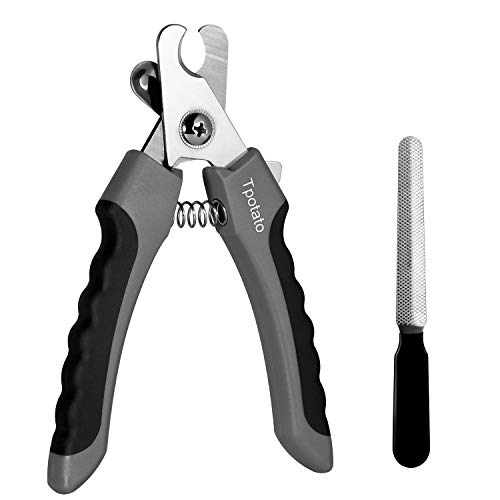
Tpotato Large/Medium Clipper is a medium-to-large clipper with medical stainless steel blades described as up to 3.5 mm thick, plus a quick sensor, safety guard, and nail file. The sensor and guard distinguish it from simpler blade models, but they cannot replace a careful view of the nail before each cut. The maker also describes a noise-reduction feature.
This option suits owners who want several aids in a clipping tool. It is still a blade clipper, not a grinder, and the specifications do not clarify how the sensor functions; confirm how to interpret it before relying on it.
Bottom line: Choose it for a medium or large pet if you want a quick sensor and guard.
How to choose Aussie dog nail clippers
Choose by nail thickness, dog size, and whether you prefer a blade cut or gradual abrasion. Clippers cut through nail in one squeeze; grinders remove material by rotating abrasive bits and can smooth sharp edges as they work. For thick nails, favor a tool explicitly sized for medium or large dogs, and avoid forcing a blade that does not cut cleanly.
Safety aids have limits: a guard controls how far a nail enters, while an LED may help with light nails, but neither reliably reveals the quick on dark claws. Trim a little at a time and stop if you see a dark center, a pink area, or your dog reacts. With dark nails, favor very small cuts rather than relying on illumination.
Clipper guards, LEDs, and grinders compared
Clippers make a direct cut, while a grinder abrades nail gradually; the right style depends on your handling preference and your dog’s tolerance. An LED and guard are separate aids: the light improves visibility only when nail pigment allows it, and the guard limits insertion rather than identifying the quick.
The table separates tool function from the feature that may affect your choice.
| Tool approach | How it removes nail | Useful for |
|---|---|---|
| Blade clipper | Shears in a squeeze | Direct trimming |
| Guarded clipper | Shears; limits nail insertion | Owners wanting an added depth stop |
| LED clipper | Shears; lights the nail | Light-colored nails where the quick is visible |
| Grinder | Abrasive rotating bit | Gradual shaping and smoothing |
How to trim dog nails safely
Make several small cuts instead of trying to remove a large section at once. The quick contains blood vessels and nerves, and cutting it can cause pain and bleeding; on pale nails it often appears as a pink area, while dark nails can conceal it. Keep the blade pointed across the nail tip, not toward the paw, and pause if the dog pulls away.
For grinders, use short contacts and lift the bit between passes because friction generates heat. Introduce the motor sound before touching a nail, and stop if the dog becomes distressed. Keep a firm hold on the paw without twisting toes, and ask a veterinary professional for guidance if you cannot identify a safe cutting point.
When to trim dog nails and what to watch
Many dogs need nail trimming about every 3 to 4 weeks, but wear on pavement, activity, and nail growth change the interval.
Check all paws during each session, including dewclaws, and use a calm, well-lit setting. A nail that is split, painful, or bleeding needs more than routine trimming. Stop rather than cutting into a dark nail when the safe endpoint is unclear, and seek professional help if handling the paw is difficult.
Frequently Asked Questions
How often should I trim my dog’s nails?
Many dogs need a trim about every 3 to 4 weeks, though pavement walking can wear nails down and reduce how often trimming is needed.
Can an LED show the quick on black nails?
An LED may help illuminate light-colored nails, but dark pigment can keep the quick difficult to see. For dark claws, remove only tiny amounts at a time and stop when the center changes or you are unsure.
Are grinders safer than dog nail clippers?
Neither tool is automatically safer: clippers can cut too far in one squeeze, while grinders can heat a nail through prolonged contact. Use short grinding passes or small clipping cuts, and stop if your dog pulls away.
Why do dewclaws need separate trimming?
Dewclaws sit higher on the leg and usually do not touch the ground during walking, so they may not wear down naturally like other nails. Check them at every nail session, especially if they begin to curl.
What should I do if I cut the quick?
Stop trimming and apply steady pressure with clean gauze until bleeding slows; a styptic powder made for pets can help control minor nail bleeding. Contact a veterinarian if bleeding does not stop or the nail is badly damaged.