
Sopami Quick Effect Coating Agent: 4 Options Compared

Sopami Quick Effect Coating Spray is the closest fit for a quick-effect coating spray, with a spray-and-wipe approach and a towel included. Choose SOPAMI Ceramic Paint Sealant, 500 ml if you prefer a rinse-and-dry process; Sopami Nano Ceramic Paint Sealant and Sopami Multi-Purpose Quick Coating Spray suit different vehicle or surface needs.
Spray coatings are wipe-on products that leave a thin finish on vehicle surfaces; they are not a substitute for paint repair or a professionally installed coating.
We earn a commission if you buy through links on this page. As an Amazon Associate I earn from qualifying purchases. Products are compared on manufacturer specifications, not hands-on testing.
- Best overall: Sopami Quick Effect Coating Spray – Its spray-and-wipe format and included towel align with a quick coating routine.
- Best for rinse application: SOPAMI Ceramic Paint Sealant, 500 ml – Its instructions describe applying with a sponge, then rinsing and drying.
- Best for multiple vehicles: Sopami Nano Ceramic Paint Sealant – Its vehicle range includes cars, RVs, motorcycles, boats and ATVs.
| Product | Best for | Application | Surface range | Package size | Shop |
|---|---|---|---|---|---|
| Sopami Quick Effect Coating Spray | Quick wipe-downs | Spray and wipe | Car; glass mentioned | — | Check Price on Amazon |
| SOPAMI Ceramic Paint Sealant, 500 ml | Rinse-and-dry use | Sponge, rinse, dry | Car body; glass | 16.91 fl oz (2-pack) | Check Price on Amazon |
| Sopami Nano Ceramic Paint Sealant | Multiple vehicles | Spray coating | Cars, RVs, motorcycles, boats, ATVs | 17.5 fl oz (2-pack) | Check Price on Amazon |
| Sopami Multi-Purpose Quick Coating Spray | Interior and wheels | Spray and wipe | Body, wheels, interior | — | Check Price on Amazon |
Sopami quick effect coating agent options
Compare each spray by its application method and the surfaces or vehicles it is intended to cover.
Sopami Quick Effect Coating Spray

Sopami Quick Effect Coating Spray is the closest match for a quick-effect coating spray, and its name also describes a waterless wash and glass-cleaning use. The towel supports a spray-and-wipe routine, while the maker claims a mirror-like finish and protection lasting six months or more. The product is aimed at car owners who want one spray for paint and glass rather than a multi-step rinse process. The package size is unclear across the fields, so confirm the amount before buying if capacity matters.
Bottom line: Pick this for a quick spray-and-wipe routine on a car.
SOPAMI Ceramic Paint Sealant, 500 ml
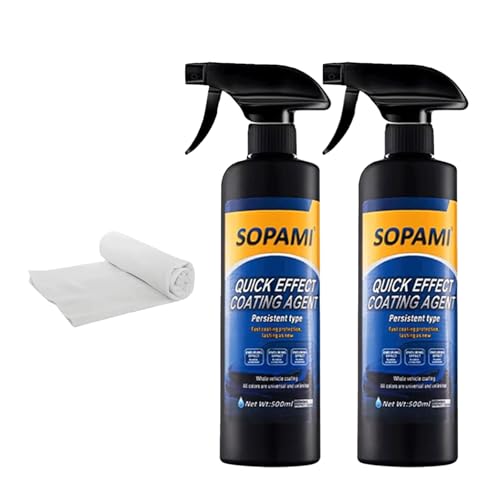
SOPAMI Ceramic Paint Sealant, 500 ml stands apart for its explicit rinse-off method: apply the cleaner to a sponge, wipe the glass or body evenly, rinse with water, and dry with a clean towel. The package is identified as two 500 ml units, and its use centers on a car and glass. That routine may suit someone who prefers rinsing away residue instead of leaving a spray wiped dry. It takes more steps than a simple spray-and-wipe approach, and the maker’s odor-free and non-toxic claims do not replace ordinary care around cleaning products.
Bottom line: Choose this if you want an application that ends with a rinse.
Sopami Nano Ceramic Paint Sealant
Sopami Nano Ceramic Paint Sealant broadens the fit beyond cars: its vehicle range includes RVs, motorcycles, boats, and ATVs. The maker emphasizes hydrophobic behavior, gloss, and protection it says lasts more than six months. That makes it the more relevant alternative when one coating spray is intended for several kinds of vehicle. Its fields do not give an application sequence, so confirm the correct surface preparation and use directions for the vehicle before applying it. The broader vehicle range is its distinguishing point, not a rinse-off method.
Bottom line: Choose this for a coating spray intended across several vehicle types.
Sopami Multi-Purpose Quick Coating Spray

Sopami Multi-Purpose Quick Coating Spray is the surface-focused alternative, with the maker describing use on bodywork, wheels, and interior surfaces. The maker also claims a glossy finish, water repellency, and improvement in the appearance of light marks; these claims do not mean the spray repairs scratched paint. It may suit someone seeking a multi-area quick coating product rather than a spray described chiefly for paint and glass. The routine begins with cleaning and drying, then spraying and wiping. Check surface compatibility before using a paint product on interior trim, since materials can vary.
Bottom line: Pick this when wheel and interior-surface use matters.
How to choose a quick coating spray
Choose by application method and compatible surface first, then weigh gloss or water-repelling claims. Spray coatings usually leave a thin surface layer; they do not fill deep scratches or replace a paint correction step. For a simple wipe-down, select a product whose directions explicitly say spray and wipe; for a rinse routine, select one that directs a water rinse and drying. Work on a cool surface in shade, because direct sun and hot panels can make product dry too quickly and leave streaks. Wash off grit before applying any coating spray: dragging dirt across paint can cause fine scratches. When surface compatibility is unclear, test a small inconspicuous area before treating a full panel.
Preparing paint before applying a coating spray
Clean, dry paint gives a spray coating a better chance of spreading evenly; applying over dust or road film can trap contamination under the finish. Begin with a thorough wash and rinse, then dry with a clean microfiber towel, especially around trim and panel edges. If the paint feels rough after washing, an automotive clay bar can remove bonded surface contaminants, but clay may leave marring that needs polishing. Use a separate, clean towel for buffing rather than the towel used to remove dirt. Avoid applying several products at once: layering wax, sealant, and spray coating can make streaking harder to diagnose and may prevent the newest layer from bonding as intended.
Quick coating spray application mistakes
Use small sections instead of coating an entire vehicle at once; working one panel or half-panel at a time makes it easier to spread and buff before the product dries. Apply only enough spray to cover the section, since excess product commonly causes smears rather than added protection. Keep separate towels for spreading and final buffing, and turn to a clean towel face as residue builds up. Avoid applying in wind, direct sun, or on hot paint, where uneven drying is more likely. A spray coating’s water behavior and durability depend on the formula, preparation, and wash conditions, so do not treat a hydrophobic effect as proof that paint is fully protected from scratches or chemical damage.
Using coating sprays safely on different surfaces
Use a product only on surfaces it is intended for; paint, glass, rubber, plastic trim, and interior finishes can respond differently to the same formula. Glass products can leave haze if residue is not removed evenly, while a slick coating on a steering wheel, pedals, or other control surface can create a safety hazard. Keep spray away from those controls and from brake components, tires, and seat contact areas. Work with ventilation and avoid breathing mist, even when a maker describes its formula as odor-free. Wear gloves if your skin is sensitive, and keep the container away from children. If the product’s surface directions do not cover a material, test an inconspicuous spot first.
Frequently Asked Questions
How often should a car coating spray be reapplied?
Reapplication depends on the product formula, surface preparation, weather, and wash routine. A maker’s durability is a claim for that product, not a universal interval; watch for the finish’s water behavior to change and follow its directions.
Can I apply a coating spray in direct sunlight?
Shade and cool paint are safer choices because heat and sun can make a spray dry unevenly before it is buffed. Work one panel at a time and avoid applying to hot bodywork.
Should I wash a car before using a coating spray?
Yes, remove loose grit and road film before coating; wiping dirty paint can cause fine scratches. Dry the surface before using a product whose method calls for a dry finish.
Can coating spray remove scratches from car paint?
A spray coating cannot repair deep scratches or replace polishing and paint repair. A gloss layer may make very light marks less noticeable, but assess the paint first and do not expect a coating to remove damage.
Can the same spray be used on glass and paint?
Only use a spray on both materials when its directions identify both; formulas and residue behavior differ by surface. Buff glass evenly to avoid haze, and keep coatings off tires, pedals, and other control surfaces.