
Best Bore Light for Firearms: 5 Models Compared

The Birchwood Casey Flexible Bore Light suits most firearm owners because its flexible body helps direct LED light along the bore. Choose a fiber-optic attachment or a light with a locking switch instead if you prefer those specific inspection features.
We earn a commission if you buy through links on this page. As an Amazon Associate I earn from qualifying purchases. Products are compared on manufacturer specifications, not hands-on testing.
- Best overall: Birchwood Casey Flexible Bore Light – A flexible LED design helps position illumination along the bore.
- Best for tight spaces: SE Compact Fiber-Optic Bore Light – A slide-on fiber-optic acrylic attachment is designed to illuminate barrel interiors.
- Best for longer inspections: Hoppe’s Bore Light – A locking feature can keep the light on during extended checks.
| Product | Best for | Power | Reach or attachment | Special feature | Shop |
|---|---|---|---|---|---|
| Birchwood Casey Flexible Bore Light | Flexible positioning | LED | Flexible body | Universal caliber compatibility | Check Price on Amazon |
| SE Compact Fiber-Optic Bore Light | Fiber-optic viewing | 1 AAA battery | Slide-on acrylic attachment | Standalone flashlight | Check Price on Amazon |
| Hoppe’s Bore Light | Extended inspection | 2 AAA batteries | — | Locking on feature | Check Price on Amazon |
| Remington Extended Flex Bore Light | Extended reach | LED; batteries not included | Flexible neck | 10 in. × 3 in. × 0.75 in. | Check Price on Amazon |
| Real Avid Magnetic Bore Light | Hands-free placement | LED | 5 in. flexible neck | Magnetic; hands-free operation | Check Price on Amazon |
Bore Lights for Firearms
Choose by how the light reaches inside the bore and the inspection feature that matters to you.
Birchwood Casey Flexible Bore Light

The Birchwood Casey light stands out for its flexible body, which can be maneuvered to direct illumination along a bore. Its LED is intended to help reveal fouling, obstructions, and cleaning results, and the maker says it works with rifles, shotguns, and handguns across calibers. The compact form suits routine firearm inspection and cleaning kits. The tradeoff is that the specifications give no battery type or neck length, so choose another option if you need those specifications confirmed before deciding.
Bottom line: Choose this if directing a flexible LED into different firearm bores is your priority.
SE Compact Fiber-Optic Bore Light

The SE pairs a compact flashlight with a slide-on fiber-optic acrylic piece, unlike flexible-neck models that aim the light itself. It runs on one AAA battery, which is not included, and the pocket clip supports carrying it between inspection tasks. The maker says the focused beam can help illuminate barrel interiors and tight spaces; the body can also serve as a standalone flashlight. This design suits buyers who want a removable light guide, but the single-cell power requirement means keeping a compatible AAA battery available.
Bottom line: Pick this for a removable fiber-optic attachment and one-AAA operation.
Hoppe’s Bore Light

The Hoppe’s model is distinguished by a locking feature that can keep the light on during longer inspections. It runs on two AAA batteries, not included, and the maker says its illumination can expose nicks, scratches, pits, and fouling inside a bore. That focus may appeal when checking a used firearm or inspecting a bore before and after cleaning. The specifications do not give a flexible neck or attachment, so buyers who need to steer light around a bend should favor a flexible design instead.
Bottom line: Choose this for a light that can stay on during a longer bore check.
Remington Extended Flex Bore Light

The Remington model combines an extended flexible neck with an LED, making its form factor distinct from compact lights and removable fiber-optic attachments. The product name gives dimensions of 10 by 3 by 0.75 inches, and batteries are not included. The maker says the light is intended for inspecting used firearms, cleaning, and checking for bore obstructions. Its dimensions may matter for storage or access in a compact kit; confirm the battery format before ordering if power compatibility is important.
Bottom line: Pick this if an extended flexible neck is the deciding feature.
Real Avid Magnetic Bore Light
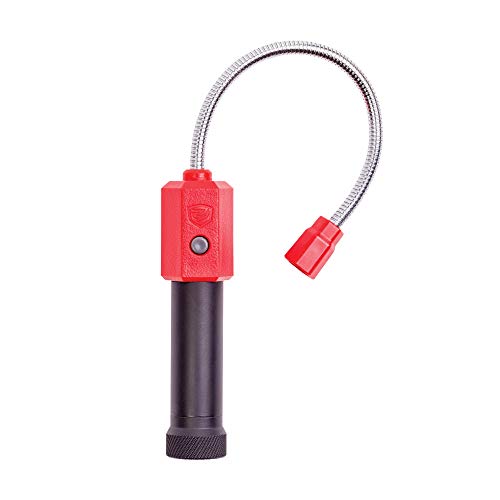
The Real Avid model adds magnetic placement to a 5-inch flexible neck, setting it apart for hands-free positioning near work areas. Its high-intensity white LED is described by the maker as suitable for illuminating bores, chambers, and other hard-to-see spaces. The magnetic base may suit a gunsmithing bench where a nearby metal surface can hold the light while both hands remain available.
Bottom line: Choose this for magnetic placement and a five-inch flexible neck.
How to choose a bore light for firearms
Choose a light by its route into the bore: flexible necks can be aimed, while a fiber-optic guide channels illumination through a narrow attachment. A compact flashlight with a pocket clip is easier to carry, while a magnetic base can free both hands when a suitable metal surface is nearby. Battery count also changes the routine: the SE uses one AAA cell and Hoppe’s uses two, with batteries not included for either. For an inspection where you need the light to stay on, a locking switch is a distinct convenience; for awkward positioning, prioritize a flexible neck instead. Never treat illumination as proof that a firearm is unloaded.
Safe bore inspection and cleaning
Before inspecting a firearm, point it in a safe direction, remove the magazine if present, open the action, and verify the chamber is empty; keep ammunition separate from the work area. A bore light helps reveal visible obstruction or fouling, but a narrow beam cannot replace physically checking that the chamber and action are clear. For cleaning, use a properly sized rod and bore brush for the firearm’s caliber or gauge; forcing an oversized tool can damage the bore or crown. If an obstruction cannot be removed without force, stop and consult a qualified gunsmith rather than firing the firearm.
Flexible neck, fiber optic, and magnetic designs
Flexible lights, fiber-optic attachments, and magnetic lights solve different positioning problems. A flexible neck directs the light source toward a bore or tight space; a fiber-optic piece transfers light into a narrow opening; a magnetic base holds a light near a work area when the surface is compatible. Use this comparison to match the mechanism to the task.
| Design | Useful when | Tradeoff |
|---|---|---|
| Flexible neck | Directing light into angled or hard-to-reach areas | Reach depends on neck length |
| Fiber-optic attachment | Sending light into a narrow barrel opening | Requires the attachment and compatible light |
| Magnetic placement | Keeping a light near a bench task hands-free | Needs a suitable metal surface |
Battery and fit checks before inspection
Check battery type, included status, and the light’s physical reach before relying on it in a cleaning kit. AAA-powered models differ even within this group: one uses a single cell and another uses two, and both state that batteries are not included. A 5-inch flexible neck gives a concrete reach measurement, while an extended-flex model gives overall dimensions rather than a neck length. Compact dimensions can help with storage but do not establish how far a light reaches into a specific firearm. Confirm the battery format and clearance for the firearm you intend to inspect before ordering.
Frequently Asked Questions
How do you safely inspect a firearm bore?
Unload the firearm, remove the magazine if present, open the action, and check the chamber visually and physically before inspection. Keep the muzzle pointed in a safe direction and ammunition outside the work area.
Can a bore light show a barrel obstruction?
A bore light can illuminate visible debris or an obstruction, but it does not establish that the firearm is safe to fire. Stop if an obstruction remains and do not force a cleaning rod through it.
What batteries do bore lights use?
Battery needs differ by model: the SE uses one AAA battery, while Hoppe’s uses two AAA batteries. Both specify that batteries are not included.
Is a flexible bore light better than fiber optic?
A flexible neck aims the light source, while a fiber-optic attachment carries light into a narrow opening. Choose flexible reach for repositioning and fiber optics when a separate light guide fits your inspection task.
How long should a flexible bore light be?
A five-inch neck is one defined option in this group, while an extended-flex model gives overall dimensions rather than a neck measurement. Compare the reach you need with the firearm’s access path before choosing.