
Best Aloe Vera Shampoo: 3 Formulas Compared for Hair

Mill Creek Aloe Vera Shampoo, 14 oz is the best aloe vera shampoo for most people seeking a mild everyday formula, with organic ingredients and no parabens or SLS/SLES. Choose Aloderma Aloe Nourishing Shampoo, 16.2 oz instead if you want a shampoo marketed for dry, damaged hair and a formula with crambe seed oil; choose Grisi Aloe Vera Shampoo, 2 x 13.5 oz for a two-bottle pack with avocado and olive.
We earn a commission if you buy through links on this page. As an Amazon Associate I earn from qualifying purchases. Products are compared on manufacturer specifications, not hands-on testing.
- Best overall: Mill Creek Aloe Vera Shampoo, 14 oz – Its mild everyday formula includes organic ingredients and is free of parabens and SLS/SLES.
- Best for dry, damaged hair: Aloderma Aloe Nourishing Shampoo, 16.2 oz – The formula pairs organic aloe vera with crambe seed oil and is marketed for dry, brittle hair.
- Best for a two-bottle routine: Grisi Aloe Vera Shampoo, 2 x 13.5 oz – The pack contains two 13.5-ounce bottles and includes avocado and olive.
| Product | Best for | Size | Notable ingredients | Formula claims | Shop |
|---|---|---|---|---|---|
| Mill Creek Aloe Vera Shampoo, 14 oz | Everyday cleansing | 14 fl oz | Organic ingredients | Paraben- and SLS/SLES-free | Check Price on Amazon |
| Aloderma Aloe Nourishing Shampoo, 16.2 oz | Dry, brittle hair | 16.2 fl oz | Organic aloe, crambe seed oil | Alcohol- and paraben-free | Check Price on Amazon |
| Grisi Aloe Vera Shampoo, 2 x 13.5 oz | Two-bottle routine | 27 fl oz total | Aloe, avocado, olive | Paraben-free | Check Price on Amazon |
Aloe Vera Shampoo Compared
Compare the formulas, pack sizes and intended uses to find the right fit for your hair routine.
Mill Creek Aloe Vera Shampoo, 14 oz

Mill Creek Aloe Vera Shampoo, 14 oz stands out for its mild everyday formulation and shorter list of excluded ingredients. The 14-ounce shampoo contains organic ingredients and is free of parabens, SLS/SLES, artificial colors, gluten and propylene glycol. The maker says the formula moisturizes and softens hair and is intended to soothe a dry scalp. That makes it a reasonable fit for someone who wants an everyday shampoo without those ingredients. The main limitation is that the maker does not identify a specific hair type or describe a targeted formula for damaged hair, so shoppers looking for that focus may prefer Aloderma Aloe Nourishing Shampoo, 16.2 oz.
Bottom line: Pick this if you want a mild everyday shampoo without parabens or SLS/SLES.
Aloderma Aloe Nourishing Shampoo, 16.2 oz

Aloderma Aloe Nourishing Shampoo, 16.2 oz is the option specifically marketed for dry, damaged, brittle hair, rather than as a general everyday formula. It combines organic aloe vera with crambe seed oil, and the maker says it moisturizes and nourishes hair for a soft, manageable feel. The shampoo is alcohol- and paraben-free and comes in a 16.2-ounce bottle. Its focused positioning may suit someone whose main concern is dry or brittle hair.
Bottom line: Choose this if your priority is a nourishing shampoo for dry or brittle hair.
Grisi Aloe Vera Shampoo, 2 x 13.5 oz
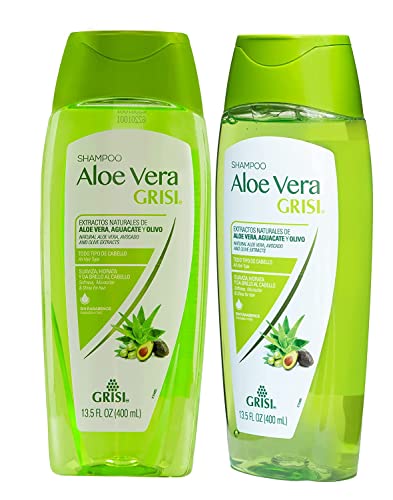
Grisi Aloe Vera Shampoo, 2 x 13.5 oz differs from the other single-bottle options by combining two 13.5-ounce bottles into a 27-ounce pack. Its formula includes aloe vera extract, avocado and olive, and is paraben-free. The maker says it is formulated for all hair types and hair colors, with an aloe vera scent; the suggested routine is to apply it to wet hair, lather and rinse thoroughly. This is a practical fit for someone who wants a multi-bottle supply and an all-hair-types claim.
Bottom line: Pick this if you want two bottles and a formula marketed for all hair types.
How to Choose Aloe Vera Shampoo
Choose by your hair’s needs and the full formula, not the aloe label alone. Shampoo cleans by using surfactants to lift oil, sweat and residue so they can rinse away; formulas differ in cleansing strength and added conditioning ingredients. If your hair feels dry after washing, look for a formula marketed for moisture, while oily roots may call for more frequent cleansing rather than a richer formula. Ingredient exclusions matter only when you are avoiding a particular ingredient: for example, Mill Creek Aloe Vera Shampoo, 14 oz is free of SLS/SLES, while Aloderma Aloe Nourishing Shampoo, 16.2 oz is alcohol- and paraben-free. Aloe vera on a label does not by itself tell you how much aloe is present or how the shampoo will feel on your hair.
How Often to Wash With Aloe Shampoo
Wash when your scalp and hair need cleansing; there is no single schedule that suits every hair type. Oily scalps and frequent exercise often call for more frequent washing, while dry, curly or textured hair may need less frequent shampooing to avoid removing too much surface oil. Start with your current routine and adjust gradually if your scalp feels oily between washes or your hair feels dry after cleansing. Apply shampoo mainly to the scalp, where oil and residue collect, and let the rinse carry suds through the lengths. A second lather is not automatically necessary; use one when the first wash leaves noticeable buildup or styling residue.
How to Compare Shampoo Sizes and Packs
Compare total volume when choosing between a single bottle and a multipack. A two-bottle pack is useful only if you will finish it before the product’s period-after-opening guidance; check the container for its storage and use symbol. Bottle count is not the same as formula variety: Grisi Aloe Vera Shampoo, 2 x 13.5 oz is two bottles of the same shampoo, while a shampoo-and-conditioner bundle is a different kind of purchase. Shampoo and conditioner have different roles: shampoo cleans the scalp, while conditioner is generally applied to the lengths to add slip and manageability. Choose a shampoo-only format if you already have a conditioner that suits you.
| Need | What to compare | Choice cue |
|---|---|---|
| Everyday formula | Ingredient exclusions | Match the exclusions to ingredients you avoid |
| Dry or brittle hair | Moisturizing focus | Look for a formula marketed for that concern |
| Multi-bottle supply | Total ounces and bottle count | Check that both fit your routine |
How to Use Shampoo Without Overwashing
Concentrate shampoo on the scalp and rinse thoroughly to remove loosened oil and residue. Use lukewarm rather than very hot water, which can make hair feel drier, and avoid scratching the scalp with fingernails. If you have a sensitive scalp, patch-test a new formula on a small area and stop using it if irritation occurs; aloe does not guarantee that every ingredient will suit every person. Keep shampoo out of your eyes, and rinse with clean water if contact occurs. A noticeable change in scalp symptoms is a reason to seek professional guidance rather than relying on a cosmetic shampoo.
Frequently Asked Questions
Does aloe vera shampoo work for every hair type?
Aloe vera shampoo is not automatically suited to every hair type; formulas differ in cleansing and added ingredients. For example, Grisi Aloe Vera Shampoo, 2 x 13.5 oz is marketed for all hair types, while Aloderma Aloe Nourishing Shampoo, 16.2 oz is aimed at dry, brittle hair.
Can I use aloe vera shampoo every day?
Daily shampooing can suit some oily scalps, but dry, curly or textured hair may do better with less frequent washing. Adjust based on whether your scalp feels oily and whether your hair feels dry after cleansing.
Should shampoo go on the scalp or hair ends?
Apply shampoo mainly to the scalp, where oil and residue collect, then rinse it through the lengths. Conditioner is generally applied to the lengths rather than the scalp.
What should I do if shampoo irritates my scalp?
Stop using the shampoo if irritation develops and rinse the scalp with clean water. Aloe does not guarantee that a formula will suit sensitive skin, and persistent symptoms warrant professional guidance.