
Best Netting for Blueberry Bushes: 4 Covers Compared

OZMI 6 x 6 Ft Netting suits most blueberry growers because each 6-by-6-foot cover gives a larger bush more room than the compact bags. Choose a smaller bag for a compact plant, and measure the canopy first because a cover that cannot reach the ground will leave an opening.
Blueberry netting is a mesh cover that helps keep birds from reaching fruit; mesh size and secure placement matter as much as the cover dimensions.
We earn a commission if you buy through links on this page. As an Amazon Associate I earn from qualifying purchases. Products are compared on manufacturer specifications, not hands-on testing.
- Best overall: OZMI 6 x 6 Ft Netting – Each of the two covers measures 6 by 6 feet and has zipper access.
- Best for fine mesh: Evoio 2.3 x 3.5 Ft Netting – Four 2.3-by-3.5-foot covers use 60-mesh fabric.
- Best for compact bushes: 2.7 x 3.3 Ft Zipper Netting – Four covers measure 2.7 by 3.3 feet and include a zipper and drawstring.
| Product | Best for | Cover dimensions | Pack count | Access / mesh | Shop |
|---|---|---|---|---|---|
| OZMI 6 x 6 Ft Netting | Larger bushes | 6 x 6 ft | 2 | Zipper; drawstring | Check Price on Amazon |
| Evoio 2.3 x 3.5 Ft Netting | Fine mesh | 2.3 x 3.5 ft | 4 | Drawstring; 60 mesh | Check Price on Amazon |
| 2.7 x 3.3 Ft Zipper Netting | Compact bushes | 2.7 x 3.3 ft | 4 | Zipper; drawstring | Check Price on Amazon |
| LCHUANG 3.3 x 2.7 Ft Netting | Drawstring bags | 3.3 x 2.7 ft | 4 | Drawstring | Check Price on Amazon |
Netting for Blueberry Bushes
Compare the cover dimensions and access features against your bush canopy before choosing.
OZMI 6 x 6 Ft Netting

OZMI 6 x 6 Ft Netting has the largest cover dimensions among these options: each of its two reusable covers measures 6 by 6 feet. That gives it a better chance of covering a broad shrub in one piece than the smaller bags, and the zipper provides access for harvesting without removing the cover. A bottom drawstring helps close the opening. Measure the canopy before choosing; a 6-foot cover still may not fit a taller or wider plant.
Bottom line: Choose this pair when your bush needs a broader cover and harvest access matters.
Evoio 2.3 x 3.5 Ft Netting
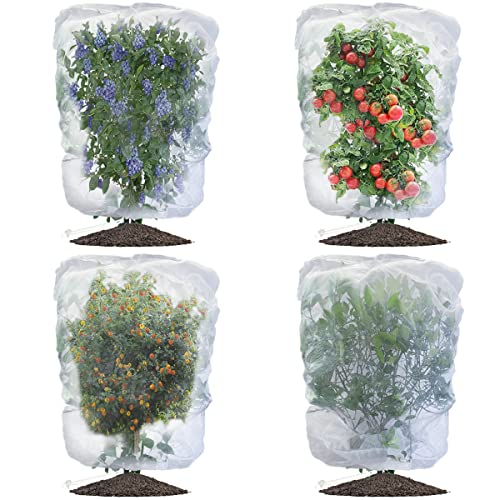
Evoio 2.3 x 3.5 Ft Netting stands out for its 60-mesh fabric, while its four bags are smaller than the 6-by-6-foot covers. The maker says the mesh lets water, air, and sunlight through, and the drawstring helps secure each bag around a plant. The compact dimensions suit individual small shrubs or berry plants rather than a large, spreading bush. Mesh count alone does not establish the opening size or guarantee exclusion of a particular insect, so buyers focused on insect control should confirm the mesh aperture. Check that each bag can cover the canopy and reach below fruiting branches.
Bottom line: Pick this set for smaller plants when fine mesh is a priority.
2.7 x 3.3 Ft Zipper Netting
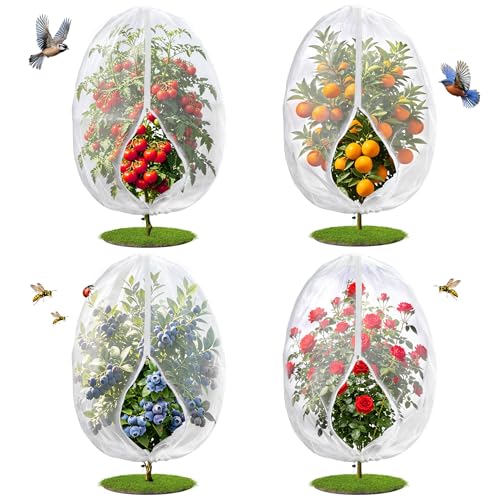
2.7 x 3.3 Ft Zipper Netting offers four covers with zipper and drawstring access, a useful combination for small bushes that need occasional harvesting without pulling off the whole cover. Each measures 2.7 by 3.3 feet, placing it among the smaller options here. The maker describes polyethylene fabric with an anti-UV coating and says the bags are intended for blueberry bushes and other fruit plants. Measure both the bush height and width; a narrow fit can press against branches or leave fruit exposed.
Bottom line: Choose these if four compact covers and zipper access match your bushes.
LCHUANG 3.3 x 2.7 Ft Netting

LCHUANG 3.3 x 2.7 Ft Netting is a four-pack of lightweight polyethylene netting bags with drawstrings, sized 3.3 by 2.7 feet. The maker says the cover is intended to protect blueberries and other garden plants from birds and insects. Because no mesh count appears in the fields, it is not possible to compare its openings with fine-mesh alternatives. Check that the opening closes securely around the plant and that the bag clears the fruiting canopy.
Bottom line: Pick this set for compact plants when drawstring closure is sufficient.
How to choose blueberry netting by size
Measure the bush across its widest point and from the ground to its tallest branch before selecting a cover. Choose a net that can extend beyond the canopy and close below the lowest fruit; a bag that only fits over the top leaves birds a route underneath. For example, a bush wider than 6 feet exceeds the flat width of the largest covers here, while compact bags measuring about 3 feet across are for smaller plants. Leave space around branches rather than stretching mesh tight across berries, which can press fruit against the fabric. If one bag cannot cover the plant with slack, choose a larger cover or use a supported frame.
Mesh size and bird protection
Mesh opening size determines what can pass through, while mesh count by itself is not enough to compare openings unless the measurement convention is known. The 60-mesh bags here are the only products with a mesh count; the others do not provide one in their fields. For bird exclusion, select netting with openings small enough to stop the local birds and secure every edge, rather than relying on fabric name or color. Fine mesh can also reduce airflow compared with wider openings, so avoid wrapping foliage tightly. Before buying for insects as well as birds, confirm the actual aperture in inches or millimeters and whether the cover is intended for that pest.
Covering and harvesting berry bushes
Support netting above the branches with a simple frame or hoops when a loose bag would sit directly on fruit. A raised cover reduces snagging and leaves room to reach ripe berries; zipper access helps when harvesting through a cover, while a drawstring closes its base. Water-permeable fabric can remain in place during watering, but check after rain that water has not pooled on a sagging cover. Install the barrier before berries begin to color, since birds can find ripening fruit quickly. Secure the bottom without trapping wildlife, and inspect the mesh regularly for tears or animals caught in it.
Common blueberry netting fit mistakes
The most common mistake is choosing by pack count instead of canopy dimensions: four small bags do not equal one large cover if the bush is broad. Another is leaving a gap at ground level or around a support, which defeats the barrier. Measure the widest canopy point and height, then allow extra room for branches and closure. Keep netting taut enough not to sag into fruit, but not so tight that it crushes stems. Inspect the cover daily during harvest for tears, loose ties, or trapped birds; remove it when protection is no longer needed.
Frequently Asked Questions
When should I put netting over blueberry bushes?
Install netting before berries start to ripen and attract birds. Put it over a supported frame when possible so the mesh does not rest on fruit.
Can blueberry netting keep insects off the fruit?
Fine mesh can serve as an insect barrier only when its openings are smaller than the target pest.
Should blueberry netting touch the berries?
No; keep the mesh from resting on fruit where possible, because birds may peck through it and the fabric can snag branches. A frame or hoops create clearance above the canopy.
How do I stop birds getting under blueberry netting?
Close the netting below the lowest fruit and secure its perimeter without leaving gaps. Check the base and seams regularly, especially after wind or harvesting.
Can I leave blueberry netting on after harvest?
Remove or secure unused netting after harvest so wildlife cannot become entangled. Inspect covers for tears before storing them dry and out of direct sunlight.