
Best Bike Stem Extender: 5 Options Compared by Fit

The BUCKLOS adjustable stem suits most riders seeking a bike stem extender because it offers several lengths and a -60° to +60° angle range for fine-tuning reach and position. Riders who need to raise a handlebar on a 28.6mm threadless steerer without replacing the stem should choose a spacer-style riser instead.
Stem extenders and adjustable stems are different parts: a steerer riser stacks above the fork steerer, while an adjustable replacement stem changes handlebar reach and angle. Match the steerer and handlebar diameters before choosing either style.
We earn a commission if you buy through links on this page. As an Amazon Associate I earn from qualifying purchases. Products are compared on manufacturer specifications, not hands-on testing.
- Best overall: BUCKLOS Adjustable Stem, 31.8mm – Multiple available lengths and an adjustable angle range from -60° to +60° offer the broadest position tuning.
- Best for adjustable rise: TRIWONDER Steerer Riser, 73mm – Four spacers allow a maximum rise of 73mm on a 28.6mm steerer.
- Best for taller rise: LERWAY Steerer Riser, 85mm – The spacer-style extender offers up to 85mm of height increase.
| Product | Best for | Handlebar clamp | Adjustment | Shop |
|---|---|---|---|---|
| BUCKLOS Adjustable Stem, 31.8mm | Broad angle tuning | 31.8mm | 100–140mm; −60° to +60° | Check Price on Amazon |
| Adjustable Stem Riser, 110mm | Simple angle setting | 31.8mm | 110mm; 0° to +60° | Check Price on Amazon |
| TRIWONDER Steerer Riser, 73mm | Spacer-adjusted rise | — | Up to 73mm | Check Price on Amazon |
| LERWAY Steerer Riser, 85mm | Maximum listed rise | — | Up to 85mm | Check Price on Amazon |
| CXWXC Adjustable Stem, 145mm | Longer fixed reach | 31.8mm | 145mm; 70° | Check Price on Amazon |
Bike Stem Extenders Compared
Match the extender style to the adjustment you need, then confirm both diameters against your current bike parts.
BUCKLOS Adjustable Stem, 31.8mm
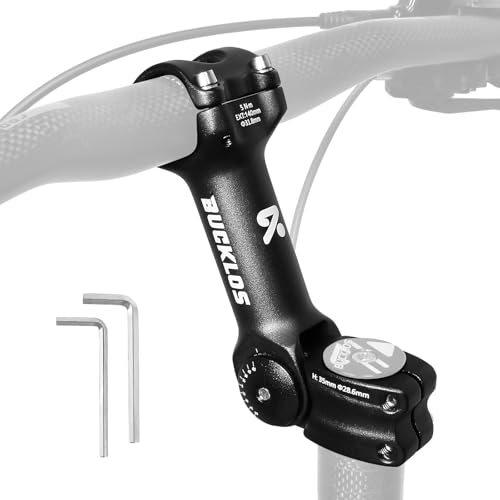
Five listed lengths and the widest angle range in this group make this adjustable replacement stem suited to riders changing both reach and handlebar angle. The CNC-machined aluminum construction is paired with 31.8mm handlebar and 28.6mm steerer compatibility, and two hex wrenches are included. The maker says the design combines low weight with rigidity. Choose a length based on the reach you need rather than treating the stem as a vertical riser; the available 100–140mm lengths can extend the cockpit as well as reposition the bar. It does not provide the spacer-stack style rise of products built for that purpose.
Bottom line: Pick this if you want wide angle adjustment and several reach lengths.
Adjustable Stem Riser, 110mm

This 110mm adjustable replacement stem uses a 0° to +60° angle range, making it a narrower choice than options that tilt in both directions. It fits 31.8mm handlebars and 28.6mm steerers, with a four-bolt handlebar clamp and an angle indicator for setting the position. The maker says it can be adjusted without removing the stem and includes installation tools. Riders who want an upward angle without selecting among multiple stem lengths may find the fixed 110mm reach a straightforward fit. The limitation is reach choice: the size is 110mm, so riders needing a shorter or longer reach should compare another option.
Bottom line: Choose this for a 110mm stem with upward angle adjustment.
TRIWONDER Steerer Riser, 73mm

Unlike replacement stems, this spacer-style riser raises the handlebar assembly by stacking above a 28.6mm steerer; four included spacers (three 10mm and one 5mm) provide height increments up to 73mm. The 6061 aluminum alloy construction weighs 180g, and two stainless-steel hex bolts clamp around the steerer. This is a fit for riders who want to tune bar height without choosing a new stem reach or handlebar clamp diameter. It does not offer an integrated handlebar clamp, so the existing stem still determines handlebar compatibility and reach. Verify the available steerer length and your bike’s safe assembly limits before installation.
Bottom line: Pick this for incremental rise while retaining your current stem.
LERWAY Steerer Riser, 85mm
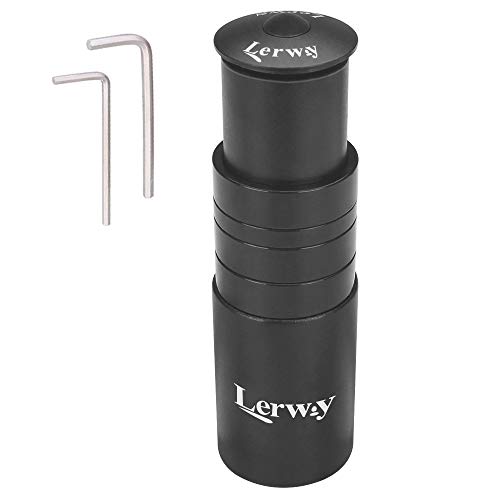
This spacer-style extender provides the highest rise here, up to 85mm, with three 10mm spacers and one 5mm spacer for height changes. It fits a 1-1/8-inch (28.6mm) threadless steerer and is made of aluminum; a hex key is included. Unlike adjustable replacement stems, it raises the stem and handlebar together rather than changing reach or bar angle. That makes it a candidate when added height is the priority and the current handlebar clamp already fits.
Bottom line: Choose this when a spacer-style riser with up to 85mm rise fits your setup.
CXWXC Adjustable Stem, 145mm

This adjustable MTB stem is the longest reach option in this set at 145mm, with a 70-degree angle and 3D-forged alloy construction. It fits a 31.8mm handlebar and 28.6mm fork steerer, positioning it as a replacement stem rather than a spacer extender. The maker says an adjustable stem can help tune handlebar height and reach, especially for long hours in the saddle. It may suit a rider who specifically needs a long cockpit reach and a fixed angle. The limitation is fewer angle and length choices in the selected size than the BUCKLOS option; check the correct total stem length before purchase.
Bottom line: Pick this if you need a 145mm reach with a 70-degree angle.
How to Choose a Bike Stem Extender
Choose between a spacer-style steerer riser and an adjustable replacement stem first; they change different dimensions. A spacer riser adds height while preserving the existing stem’s reach, while a replacement stem changes the distance from steerer to handlebar and may change angle. Most threadless steerers use a 1-1/8-inch (28.6mm) clamp diameter, but handlebars commonly use either 31.8mm or 25.4mm clamps, so check both interfaces. If your goal is a bar-height increase without changing reach, choose a spacer riser; if you need to move the bar forward or adjust its angle, choose a replacement stem. A longer stem can alter steering feel, so avoid choosing on rise alone.
Steerer and Handlebar Fit
Match the extender’s steerer diameter to the fork and its handlebar clamp to the bar; a mismatch at either joint prevents a correct fit. The adjustable models here fit 28.6mm steerers and 31.8mm handlebars, while the spacer risers fit 28.6mm steerers and retain the existing stem’s handlebar clamp. Measure the handlebar at the clamping area rather than the grip section. For threadless systems, the stem or riser clamps around the steerer and the top cap preloads the headset; the top cap is not a substitute for secure clamp bolts. Never stack a riser beyond the steerer or assembly limits specified for your fork and stem, and consult a qualified mechanic if the required steerer engagement is unclear.
Rise, Reach, and Angle Compared
Pick a spacer riser for a measured height change, and pick an adjustable stem when reach or angle is also part of the fit. Spacer increments matter because a small 5mm change can be tried before adding several 10mm spacers; larger rises can also affect cable slack and riding position. Adjustable stem angle figures are not directly comparable to spacer rise: angle moves the handlebar in an arc and changes both height and reach. Use this guide to identify the type of adjustment before comparing a measurement.
| Adjustment need | Choose | Key check |
|---|---|---|
| Raise bars and keep current reach | Spacer-style riser | Available steerer length and safe stack limit |
| Change reach and bar angle | Adjustable replacement stem | Steerer and handlebar clamp diameters |
| Fine-tune rise in steps | Riser with multiple spacers | Spacer thickness and cable slack |
Installation and Safety Checks
Correct clamping and adequate steerer engagement are essential because the handlebar assembly carries steering loads. A threadless headset uses a top cap to set bearing preload, then stem clamp bolts secure the stem; tightening the top cap excessively does not make a loose stem safe. Follow the component maker’s torque values with a torque wrench, since aluminum bolts and clamps can be damaged by overtightening. After changing height, turn the handlebar fully left and right and check that brake and shift cables do not pull tight or snag. Recheck for movement before riding and after the first short ride. If the steerer is carbon, use parts and assembly limits approved for that fork.
Frequently Asked Questions
How much can a bike stem extender raise handlebars?
Spacer-style extenders commonly provide roughly 20–80mm of rise, depending on the model and steerer length. The risers compared here list maximum rises of 73mm and 85mm; do not exceed the fork or riser maker’s permitted stack.
How do I measure my handlebar clamp diameter?
Measure the straight section where the stem clamps the bar, using calipers for accuracy. Common road and mountain-bike clamp diameters include 31.8mm and 25.4mm, and the grip diameter is not the clamp measurement.
Can I use a stem extender on a carbon steerer?
Only use an extender explicitly approved for your fork’s steerer material and assembly limits. Carbon steerers can be damaged by excess clamp force or an unsupported extension, so use the fork maker’s torque and stack limits.
Do stem extenders change bike handling?
Yes, changing handlebar height and stem reach changes rider position and can alter steering feel. Make small adjustments, then check cable slack and steering clearance through a full left-to-right turn before riding.
What is the difference between a stem riser and a stem extender?
A spacer-style steerer riser raises the existing stem, while an adjustable replacement stem changes reach and angle. Choose a riser when you want height without a new reach measurement; choose a replacement stem when the bar also needs to move forward or angle upward.