
Scratch Repair Kit for Glasses: 3 Options Compared

For glasses, Eyeglass Scratch Remover Spray, 2-Pack is the closest fit because it is specifically intended for eyeglass and sunglass lenses and uses a spray-and-wipe application. Choose Glass Scratch Repair Paste, 100g if you also want paste for household glass; abrasive glass polishing kits may be unsuitable for coated or prescription lenses.
Most lens scratches cannot be safely polished away at home: abrasion can damage coatings or alter the lens surface. Check lens compatibility before applying any repair product.
We earn a commission if you buy through links on this page. As an Amazon Associate I earn from qualifying purchases. Products are compared on manufacturer specifications, not hands-on testing.
- Best overall: Eyeglass Scratch Remover Spray, 2-Pack – Its use is eyeglass and sunglass lenses, with a spray-and-wipe application.
- Best for household glass: Glass Scratch Repair Paste, 100g – It includes 100g of paste and a sponge for glass surfaces including glasses.
- Best for powered polishing: GLASS POLISH DIY Kit, 3-inch – It is a 3-inch kit designed to work with a drill or polisher on glass.
| Product | Best for | Application | Included amount | Intended surface | Shop |
|---|---|---|---|---|---|
| Eyeglass Scratch Remover Spray, 2-Pack | Eyewear cleaning | Spray and wipe | 2 pieces | Eyeglasses and sunglasses | Check Price on Amazon |
| Glass Scratch Repair Paste, 100g | Home glass care | Paste with sponge | 100 g | Household glass and glasses | Check Price on Amazon |
| GLASS POLISH DIY Kit, 3-inch | Powered glass polishing | Multi-stage abrasives | 3-inch pads | General glass surfaces | Check Price on Amazon |
Scratch Repair Kits for Glasses
Compare the application and intended surfaces before using a repair product on optical lenses.
Eyeglass Scratch Remover Spray, 2-Pack
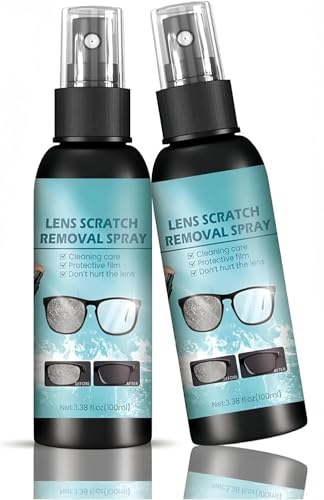
Unlike the glass polishing kits, Eyeglass Scratch Remover Spray, 2-Pack is intended for eyeglasses and sunglasses and uses a spray-and-wipe method. The package contains two pieces, and the maker says the formula also cleans fingerprints and dust from lenses and screens. It suits someone seeking an eyewear-focused cleaner for routine surface care, rather than a powered polishing setup. The scratch-removal claim should be treated cautiously: polishing or chemical treatment may harm lens coatings, and the specifications do not identify lens materials or coating compatibility. Confirm compatibility before applying it to prescription or coated lenses.
Bottom line: Choose this for eyewear-focused spray cleaning, after confirming it is compatible with your lens coating.
Glass Scratch Repair Paste, 100g

Glass Scratch Repair Paste, 100g is the only option here that pairs a specified paste quantity with a matching sponge, and its uses span household glass and glasses. The 100g tub suits buyers who want one application format for windows, mirrors, tabletops, and minor marks on glasses. The maker describes it for light marks and surface wear, not deep lens damage. Its abrasive strength and compatibility with prescription coatings are not established here, so it may be a poor fit for coated lenses; confirm compatibility before using it on eyewear.
Bottom line: Pick this for light surface care across household glass, not as a sure fix for coated lenses.
GLASS POLISH DIY Kit, 3-inch

GLASS POLISH DIY Kit, 3-inch differs from the eyewear-directed options because it uses a 3-inch multi-stage abrasive and cerium oxide process, with a drill or polisher. The maker says it is intended for deep scratches and surface damage on glass; it is not presented specifically as a prescription-lens repair method. Its powered approach may suit someone restoring larger glass surfaces, but it can be unsuitable for optical lenses, where abrasion can damage coatings or affect the surface. Keep this choice to glass surfaces whose material and use are compatible with the process.
Bottom line: Choose this for compatible larger glass surfaces, not routine prescription-lens care.
How to choose a scratch repair kit for glasses
Choose by lens compatibility before choosing by application method. Prescription lenses may have anti-reflective, scratch-resistant, or other coatings, and abrasive polishing can remove or damage those layers; a lens that looks clearer in one spot can still be optically distorted. A spray-and-wipe cleaner is a different kind of treatment from a multi-stage abrasive polishing kit, so do not assume both can safely correct a scratch. For a visible scratch on a prescription lens, the safer decision rule is to avoid abrasive repair unless the lens maker or an optician confirms the method is compatible. If the lens is only dirty, use a cleaner approved for eyewear and a clean microfiber cloth rather than rubbing grit across the surface.
When glass polish is a poor fit for eyeglasses
Powered glass polish is generally meant for larger glass surfaces, not small prescription lenses. A 3-inch polishing pad can cover an area far larger than a lens, making controlled work difficult, and abrasive resurfacing may alter optical curvature or coatings. Do not use a drill-powered kit on lenses unless the lens maker explicitly approves that process. For a small scratch, first distinguish surface dirt from actual damage: rinse off loose grit before wiping, because dry particles can add fine scratches. Deep, spreading, or vision-obstructing lens damage is a reason to seek an optician’s assessment rather than attempting to grind the lens surface.
How to clean lenses without adding scratches
Rinse eyewear with lukewarm water before wiping so dust and grit do not drag across the lens. Use a clean microfiber cloth and a cleaner labeled safe for eyeglasses; paper towels, tissues, and clothing can contain fibers or particles that mar lens surfaces. Avoid hot water and household solvents such as acetone, which can harm some lens materials or coatings. Store glasses in a protective case when not worn, and keep the cloth clean rather than reusing one that has collected grit. These habits help prevent new surface marks, though they do not reverse existing lens damage.
What kind of damage can a glasses repair product address
Cleaning products can remove fingerprints, dust, and smudges, while abrasives physically remove surface material; those are not interchangeable tasks. A mark that disappears after rinsing was likely residue, whereas a scratch that catches light or remains after cleaning is damage to the lens surface or coating. Polishing an optical lens risks changing how it bends light, especially when concentrated on one small area. Never treat a coating flaw or a deep scratch as a stain. If the lens is under warranty or the scratch impairs vision, ask an optician about replacement or repair before trying a paste or powered polisher.
Frequently Asked Questions
Can scratches be removed from prescription glasses at home?
Usually, a home abrasive repair is not a safe choice for prescription lenses because it can damage coatings or affect optical performance. If a scratch remains after gentle cleaning, ask an optician whether the lens can be replaced.
Does toothpaste fix scratches on eyeglasses?
Toothpaste is abrasive and can harm lens coatings, so it is not a reliable glasses repair method. Use a lens-safe cleaner for residue, and seek professional advice for a persistent scratch.
How can I tell a scratch from dirt on glasses?
Rinse the lens with lukewarm water and use a clean microfiber cloth; a mark that remains is more likely surface damage than loose dirt. Avoid rubbing dry grit, which can create additional fine marks.
Can a drill-powered glass polisher be used on eyeglasses?
A drill-powered polisher is not a good default for eyeglasses because its abrasive pad can damage coatings or alter the optical surface. Use one on a prescription lens only if the lens maker or an optician confirms compatibility.
What cloth should I use to clean eyeglass lenses?
Use a clean microfiber cloth after rinsing away grit with lukewarm water. Paper products and clothing can drag particles over the lens and cause additional fine scratches.