
Asbestos Sealer and Primer: Types and Uses Compared

For a flooring surface that needs both encapsulation and a primer for a new finish, Perfect Primer Encapsulant, 1 Gallon is the closest match because it is designed to prime over mastics and bond with several flooring materials.
We earn a commission if you buy through links on this page. As an Amazon Associate I earn from qualifying purchases. Products are compared on manufacturer specifications, not hands-on testing.
- Best overall: Perfect Primer Encapsulant, 1 Gallon – Combines asbestos encapsulation with floor priming for subsequent coatings.
- Best for versatile abatement: Fiberlock ABC Binding Compound, 5 Gallons – Can be diluted with water for penetrating, bridging or lockdown applications.
- Best for post-removal lockdown: Sentinel 812LS Lockdown Sealant, 5 Gallons – Designed to seal asbestos and lead dust after removal.
| Product | Best for | Package size | Color | Application focus | Shop |
|---|---|---|---|---|---|
| Perfect Primer Encapsulant, 1 Gallon | Flooring preparation | 1 gallon | Medium gray | Encapsulation and floor priming | Check Price on Amazon |
| Fiberlock ABC Binding Compound, 5 Gallons | Flexible abatement use | 5 gallons | Off white | Penetrating, bridging, lockdown | Check Price on Amazon |
| Sentinel 812LS Lockdown Sealant, 5 Gallons | Post-removal dust control | 5 gallons | White | Post-removal dust lockdown | Check Price on Amazon |
| Perfect Primer and PaintPlus Floor System | Primed floor finish | — | Gray | Encapsulation and floor topcoat | Check Price on Amazon |
Asbestos Sealer and Primer Options
Match the product to whether you are priming flooring, encapsulating material or locking down dust after removal.
Perfect Primer Encapsulant, 1 Gallon

Perfect Primer Encapsulant, 1 Gallon is the flooring-focused choice in this group: its combined encapsulant-and-primer role is intended to prepare existing mastic for a range of new floor coatings. The product is specified for use over surfaces or mastic, including legacy flooring adhesives, and is described as compatible with epoxy, tile, self-leveling cement, latex paint, glue-down wood and sheet vinyl. Its 1-gallon package suits a smaller scope than the 5-gallon compounds. The limitation is that it is not framed as a post-removal dust-lockdown product; choose a lockdown sealant when removal has already occurred.
Bottom line: Choose this when the project is priming over legacy flooring mastic.
Fiberlock ABC Binding Compound, 5 Gallons

Fiberlock ABC Binding Compound, 5 Gallons stands out for application flexibility: its high-solids, non-flammable compound can be diluted with water for lockdown/removal, penetrating encapsulation or bridging encapsulation. The 5-gallon package is aimed at a larger abatement scope than a 1-gallon flooring primer. The maker says the compound meets EPA requirements for encapsulation and removal of asbestos-containing material, and it can also help control fiber exposure hazards in soil. This is an abatement compound rather than a floor-bonding primer, so it is not the direct choice when the main goal is preparing mastic to receive a new floor finish.
Bottom line: Choose this for varied encapsulation or lockdown applications.
Sentinel 812LS Lockdown Sealant, 5 Gallons
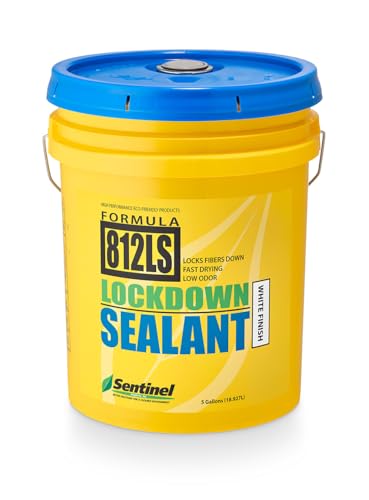
Sentinel 812LS Lockdown Sealant, 5 Gallons is specifically positioned for sealing and locking down asbestos and lead dust after removal, unlike the products intended to prepare an existing floor coating surface. Its water-based, low-odor formula is described for occupied buildings, and application may be by brush, roller or spray equipment. The adhesion surfaces include concrete, wood and metal. The 5-gallon pail is suited to larger jobs. Its key limitation is purpose: it is a post-removal sealant, not a primer system for bonding new tile, paint or flooring over mastic.
Bottom line: Choose this when the task is post-removal dust lockdown.
Perfect Primer and PaintPlus Floor System

Perfect Primer and PaintPlus Floor System combines an encapsulating primer with a PaintPlus gray floor topcoat, so it differs from Perfect Primer Encapsulant, 1 Gallon by including a finish coat in the system. The primer is intended for problem flooring surfaces such as cutback glue and legacy adhesives, while PaintPlus is described as water-based and epoxy-grade in durability. This pairing suits a project where a gray painted floor is the intended outcome rather than an unspecified new finish.
Bottom line: Choose this when a gray floor topcoat is part of the plan.
Choosing an asbestos sealer by job
Choose by whether the asbestos-containing material is staying in place, being encapsulated, or has already been removed. Encapsulation coatings are generally grouped as penetrating, bridging, or lockdown products: penetrating coatings enter porous material, bridging coatings form a surface layer, and lockdown coatings bind residual fibers after disturbance or removal. A flooring primer has a separate role: it prepares the substrate for a new flooring adhesive or coating. For new flooring over mastic, choose a product whose use includes that next finish; for post-removal residue, choose a purpose-built lockdown product. Do not treat a general stain-blocking primer as an asbestos encapsulant.
Asbestos encapsulant types compared
Penetrating, bridging, and lockdown encapsulants address different surface conditions, so the label and project condition should drive the choice. A porous substrate may accept a penetrating coating, while a coating that bridges a surface forms a continuous layer; lockdown products are used to secure residual dust. The table separates these roles from flooring primers, which are intended to support an additional finish.
| Product role | Typical purpose | Choose when |
|---|---|---|
| Penetrating encapsulant | Enters porous material | Substrate can absorb the coating |
| Bridging encapsulant | Forms a surface layer | A continuous coating is appropriate |
| Lockdown sealant | Binds residual dust or fibers | Post-removal cleanup is the task |
| Floor primer | Prepares for a new finish | New flooring or coating will follow |
Preparing flooring before encapsulation
Flooring preparation begins with a stable surface, not aggressive scraping or sanding that can release fibers from suspect material. Older resilient flooring and black cutback adhesive can contain asbestos; visual inspection cannot confirm whether a material contains asbestos. Avoid dry sanding, grinding, drilling, or sweeping debris until the material has been assessed. If a coating system is meant to go over mastic, confirm that the planned finish is among its compatible coating types, and verify the area and required film build from the product label before application. For a surface that is damaged, crumbling, or shedding, get qualified asbestos guidance rather than treating primer as a substitute for abatement.
Asbestos sealer safety and project limits
Asbestos fibers are most hazardous when airborne, so keep suspect material undisturbed and avoid methods that generate dust. In the United States, EPA rules govern asbestos work in schools and certain public and commercial buildings, while state and local requirements may also apply to residential work; requirements depend on the building and project. A coating does not make damaged material safe to disturb, and encapsulation is not the same as removal. Use a qualified asbestos professional when material is friable, deteriorating, or likely to be disturbed, and verify that the chosen coating is intended for the material and condition at hand.
Frequently Asked Questions
How can I tell if old floor adhesive contains asbestos?
Appearance alone cannot confirm asbestos in old adhesive; black cutback mastic is one material that may contain it. Have suspect material assessed before scraping, sanding, or drilling.
Can asbestos primer go under new flooring?
Some encapsulant primers are made to prepare mastic for a new finish, but compatibility depends on the intended flooring system. Confirm that the primer’s use includes the planned material, such as tile adhesive or sheet vinyl.
What is the difference between encapsulation and lockdown?
Encapsulation coats or penetrates asbestos-containing material that remains in place, while lockdown is used to bind residual fibers or dust, commonly after removal. The surface condition and project stage decide which role is appropriate.
Should I sand asbestos mastic before applying sealer?
No; dry sanding can put asbestos fibers into the air. Avoid scraping or sanding suspect flooring and adhesive until their contents and a safe work method have been established.
When should damaged asbestos material be handled professionally?
Use a qualified asbestos professional when material is friable, crumbling, or likely to be disturbed during renovation. A sealer is not a substitute for assessing damage or selecting an appropriate abatement method.