
Refrigerator Coil Cleaner Brush: 5 Options Compared

For most refrigerator coil cleaning, choose 29.5-Inch Fridge Coil Brush, 2-Pack: its 29.5-inch total length is the clearest advantage for reaching deep gaps without bending. Choose XANGNIER 5-Piece Coil Cleaning Kit if you want several tool shapes, or Multi-Size Dryer Vent and Coil Brush Kit if you also need brushes for dryer vents and drains.
A refrigerator coil brush is a narrow cleaning tool for removing dust and lint from hard-to-reach condenser areas. Coil access and location differ by refrigerator, so check the appliance manual before moving panels or cleaning near electrical components.
We earn a commission if you buy through links on this page. As an Amazon Associate I earn from qualifying purchases. Products are compared on manufacturer specifications, not hands-on testing.
- Best overall: 29.5-Inch Fridge Coil Brush, 2-Pack – Its 29.5-inch total length and flexible wire target deep, narrow gaps.
- Best for tool variety: XANGNIER 5-Piece Coil Cleaning Kit – The five-piece set includes a flexible coil brush, small brooms, a crevice brush and a wire rake.
- Best for multi-appliance cleaning: Multi-Size Dryer Vent and Coil Brush Kit – The kit is marketed for refrigerator coils, dryer vents, lint traps and drains.
| Product | Best for | Reach or size | Included tools | Shop |
|---|---|---|---|---|
| 29.5-Inch Fridge Coil Brush, 2-Pack | Deep narrow gaps | 29.5 in total | 2 brushes | Check Price on Amazon |
| XANGNIER 5-Piece Coil Cleaning Kit | Multiple tool shapes | — | 5 pieces | Check Price on Amazon |
| Multi-Size Dryer Vent and Coil Brush Kit | Appliance cleaning | 9, 14, 15, 30 in | Brush kit | Check Price on Amazon |
| Flexible Drain and Coil Brush | Drain and coil use | — | 1 brush | Check Price on Amazon |
| Drain and Dryer Vent Cleaning Brush Set | Dryer and drain tasks | — | Several brush types | Check Price on Amazon |
Refrigerator Coil Cleaner Brushes Compared
Compare the available reach and tool variety, then match the brush to your refrigerator’s access points.
29.5-Inch Fridge Coil Brush, 2-Pack
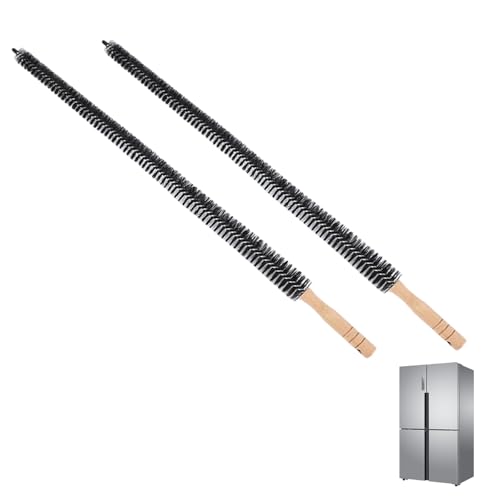
With a 29.5-inch total length, this dedicated coil brush offers the longest reach among these options. Its 25.6-inch stainless steel wire bends to reach gaps and corners, while the small PP-bristle head is designed to remove lint and debris. The set contains two brushes and has a rounded head intended to reduce scratching.
The maker says the brush is suitable for deep cleaning without bending. Its narrow brush head suits tight spaces, but it is not a broad surface duster; choose a multi-tool set if you need different brush shapes for several areas.
Bottom line: Pick this if reach into a narrow coil gap matters most.
XANGNIER 5-Piece Coil Cleaning Kit

This kit stands out for its five different tools: a flexible coil brush, two small brooms, a crevice brush and a metal wire rake. That variety can help when coil access includes both a narrow gap and a wider dusty area. The maker says the set is intended for refrigerator coils as well as drains, sinks, dryer vents, pipes and showers.
The specifications do not give a brush reach or material, so buyers who need a specific length or bristle type should verify those before ordering. Its broad assortment suits households that want several tool shapes, but it may be more than needed for a single accessible coil area.
Bottom line: Choose this when a mix of brush shapes is more useful than a specified long reach.
Multi-Size Dryer Vent and Coil Brush Kit
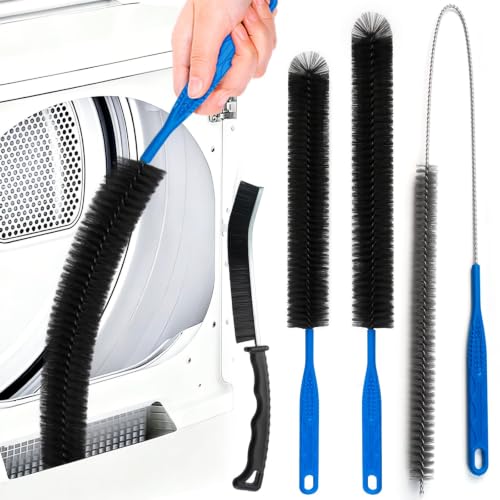
It is marketed for refrigerator coils, dryer vents, dryer filters, lint traps and drains, making it a fit for buyers assembling a general appliance-cleaning kit.
The maker says its bendable brushes can reach narrow gaps and hidden areas. Choose a dedicated coil brush instead if refrigerator access is your only concern.
Bottom line: Pick this if you also want brushes for dryer vents, lint traps and drains.
Flexible Drain and Coil Brush

This flexible brush combines drain cleaning with refrigerator-coil use, unlike the more coil-focused long brush. Its maker says the brush head bends into hard-to-reach corners and can remove dust and lint from condenser coils, as well as debris from sink and shower drains.
The product dimensions are given, but they do not establish the brush’s working reach. That makes it harder to match the tool to a deep refrigerator gap; check the brush length if your coils sit far behind an access panel. It suits someone seeking one narrow brush for both appliance and drain tasks, rather than a dedicated long-reach coil tool.
Bottom line: Choose this if you want one flexible brush for both drains and refrigerator coils.
Drain and Dryer Vent Cleaning Brush Set

This set emphasizes dryer vents, dryer lint and drain cleaning, with refrigerator coils included among its intended uses. Its components include a dryer vent brush, dryer lint brush, drain cleaning brush and appliance brush set, making it a broader household cleaning choice than a dedicated coil brush.
The maker says the flexible vent brush bends to reach deep into vents. The set is a better fit when dryer and drain cleaning are also priorities.
Bottom line: Pick this if dryer lint and drain cleaning are as important as coil dust.
How to choose a refrigerator coil cleaner brush
Choose a brush by the route to the coils, not by overall length alone. Measure the gap from the access opening to the dusty area, then allow extra reach for the handle and room to guide the brush; a 29.5-inch total tool length does not mean the whole length is bristles. Refrigerator condenser coils may sit behind a lower front grille, at the rear, or beneath the cabinet, so the right shape depends on the model.
Use a narrow, flexible brush for a confined opening and a set of different shapes when the cleaning area varies. A coil brush removes loose dust and lint; it is not a tool for prying panels or scraping tubing. Disconnect power as the appliance manual directs, and use light strokes to avoid bending delicate fins.
| Cleaning need | Prioritize |
|---|---|
| Deep, narrow route | Long flexible reach |
| Different access shapes | Several brush types |
| Open, reachable coil area | Narrow simple brush |
Where refrigerator coils sit and how to reach them
Coil access varies by refrigerator design: coils can be behind the lower front grille, across the back, or underneath the cabinet. Check the manual for the access point before pulling the appliance away from the wall; a rear coil may require clearance, while a front grille can provide access without moving the refrigerator.
Use a brush only through the intended opening, and do not force a long handle around a tight bend. If the brush catches, withdraw it and change the angle rather than pushing against tubing or wiring. A brush’s overall length and its flexible wire length can differ, so compare the usable reach with the measured path. Keep the work area dry and avoid touching electrical connections.
How often to clean refrigerator condenser coils
A practical interval for many households is every 6 to 12 months; dust, pets, and heavy cooking can make the shorter end more appropriate. Check the manual because some refrigerator designs specify different maintenance steps or access procedures.
Coils collect airborne dust and lint over time, especially near the floor where household debris gathers. Before cleaning, disconnect power when the manual calls for it or when the access area exposes electrical parts. Brush gently to lift loose material, then vacuum debris at the grille or surrounding floor if the manual permits. Do not use water on coils or electrical components. Stop if a panel resists removal or the brush contacts a wire or tube.
Common mistakes when brushing refrigerator coils
The most common mistake is choosing by nominal length without checking the path from the opening to the coil. A long brush may still be awkward if the access angle is sharp, while a shorter tool may work well through a front grille. Confirm that the brush head fits the opening and never lever it against a fin or tube.
Another mistake is treating coil cleaning as a reason to remove unfamiliar panels. Manuals show which grille or cover is intended for user access; forcing clips can break them or expose electrical parts. Avoid wet cleaning and aggressive scraping, since both can damage components. If dust is packed behind a protected assembly or access requires disassembly beyond the manual, stop and arrange service rather than pushing a brush farther in.
Frequently Asked Questions
How often should refrigerator coils be cleaned?
A common maintenance interval is every 6 to 12 months. Homes with pets, heavy dust or frequent cooking may need cleaning closer to the shorter end of that range.
Should a refrigerator be unplugged before coil cleaning?
Yes, disconnect power before cleaning when the manual directs it or when accessing a panel near electrical parts. Keep water away from electrical components and do not remove a panel unless the manual explains how.
Can a coil brush damage refrigerator condenser fins?
Yes, forceful pressure can bend delicate fins or damage nearby parts. Use light strokes and stop if the brush catches rather than pushing it deeper.
Where are refrigerator condenser coils usually located?
Many refrigerators place the coils behind a lower front grille, at the rear, or underneath the cabinet. Check the appliance manual for the correct access point before moving the refrigerator or removing a grille.