
Best Chair Glides for Hardwood Floors: 5 Types Compared

X-PROTECTOR 133-Piece Felt Pads suits the most households because its 133 felt pads come in several round and square sizes for different furniture feet. Choose a different style if you need a fitted cap for square legs or a glide designed for easy movement.
Chair glides sit between furniture legs and flooring to reduce direct contact; match the attachment and leg shape to your chair before choosing.
We earn a commission if you buy through links on this page. As an Amazon Associate I earn from qualifying purchases. Products are compared on manufacturer specifications, not hands-on testing.
- Best overall: X-PROTECTOR 133-Piece Felt Pads – The 133-piece assortment includes multiple round and square felt-pad sizes.
- Best for square legs: Ansible Square Silicone Felt Caps, 24-Pack – Stretch-fit silicone caps fit square legs from 1-1/16 to 1-5/8 inches.
- Best for sliding furniture: Furnigear 1-Inch Nail-On PTFE Sliders – PTFE sliders attach with nails and are made to reduce friction during movement.
| Product | Best for | Attachment | Pack count | Fit or size | Shop |
|---|---|---|---|---|---|
| X-PROTECTOR 133-Piece Felt Pads | Mixed furniture sizes | Adhesive pads | 133 | ¾ in, 1 in, assorted | Check Price on Amazon |
| Ansible Square Silicone Felt Caps, 24-Pack | Square chair legs | Stretch-fit silicone cap | 24 | Square sides: 1-1/16–1-5/8 in | Check Price on Amazon |
| Furnigear 1-Inch Nail-On PTFE Sliders | Frequent chair movement | Nail-on | 24 | About 0.96 in diameter | Check Price on Amazon |
| GorillaFelt 1-Inch Tap-On Felt Glides | Secure felt glides | Tap-on with steel prongs | 16 | 1 in round; legs at least 1 in | Check Price on Amazon |
| GorillaGlides 1-Inch Furniture Glides | Low-pile carpet use | Self-adhesive or screw-on | 16 | 1 in; legs 1–1½ in | Check Price on Amazon |
Chair glides for hardwood floors
Choose by furniture-leg shape, the way the glide attaches, and whether you want a fixed felt pad or a slick sliding surface.
X-PROTECTOR 133-Piece Felt Pads
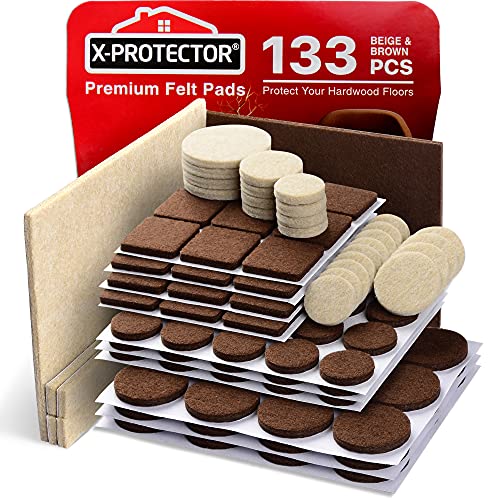
The 133-piece assortment offers the widest range of shapes and sizes here, making it useful when furniture around the home has different feet. It includes round pads in ¾-inch and 1-inch sizes, square pads, and larger pieces; the set is divided between brown and beige felt. Choose it for furniture that can take an adhesive pad and needs a soft felt contact point on a hard floor. The main limitation is that these are pads, not fitted caps or nail-in sliders, so check that each pad suits the leg shape and footprint.
Bottom line: Pick this assortment for multiple furniture pieces with varied leg shapes.
Ansible Square Silicone Felt Caps, 24-Pack

These silicone caps are the square-leg option: each slips over the foot and has a felt pad at the floor-contact point. The fit range is square sides from 1-1/16 to 1-5/8 inches, so measure both sides of a leg before choosing; a loose cap may not stay snug. The 24-piece set can suit chairs with square legs where adhesive pads are awkward to position. The tradeoff is limited compatibility: the maker says they are not designed for carpet, and round or out-of-range legs are not the intended fit.
Bottom line: Choose these for square legs that measure within the range.
Furnigear 1-Inch Nail-On PTFE Sliders
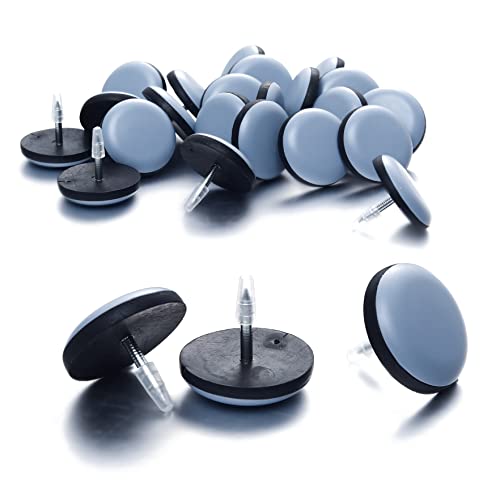
These 1-inch PTFE sliders prioritize easy furniture movement rather than a soft felt contact surface. Each is a nail-on glide about 0.96 inch across, and the 24-pack is intended for wooden furniture such as chairs, stools, and tables. They are a fit for a chair that needs to slide across a hard floor, provided the leg accepts a nail-in attachment. The limitation is installation: the maker recommends pre-drilling, and these are not fitted silicone caps, so check the chair-leg material and available contact area before attaching them.
Bottom line: Pick these when movement is the priority and the wooden legs accept nail-on glides.
GorillaFelt 1-Inch Tap-On Felt Glides

These round felt glides use five steel prongs plus adhesive backing, a more anchored attachment than a peel-and-stick pad alone. Each pad is 1 inch across and ¼ inch thick, and the 16-piece set is intended to protect four chairs. Choose them for hard floors when felt is preferred and the furniture feet are large enough to support the glide. They are not suitable for metal legs or furniture feet under 1 inch in diameter, so verify the base material and width before installation.
Bottom line: Choose these for qualifying chair legs when you want a tap-on felt pad.
GorillaGlides 1-Inch Furniture Glides
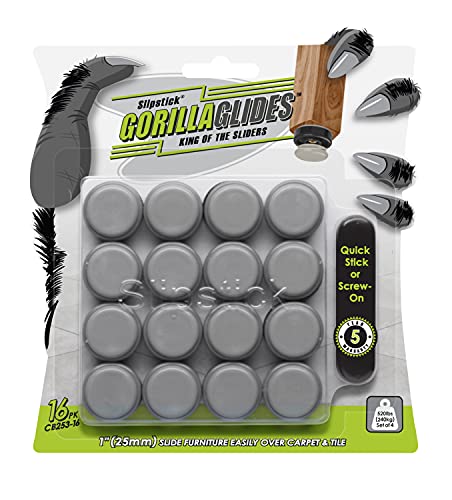
These glides are designed for low-friction movement on hard surfaces as well as low-pile carpet, unlike felt pads that add a softer contact layer. The 16-piece set fits furniture feet 1 to 1½ inches in diameter and uses a slick bottom with self-adhesive or screw-on attachment. Choose them when furniture needs to move smoothly between uses and the feet fall within that diameter range. Their limitation is the narrower fit: feet under 1 inch or over 1½ inches need a different size, and the slick surface is not the felt style.
Bottom line: Pick these for 1-to-1½-inch feet when low-friction sliding matters.
How to choose chair glides for hardwood floors
Start with leg shape and attachment: square slip-on caps, round tap-on pads, adhesive pads, and nail-on sliders solve different fit problems. Measure the foot at its base, because tapered legs can be wider or narrower where a glide sits than they are higher up. For a leg with a side or diameter outside the product’s fit range, choose a different size rather than forcing a cap or pad onto it. Also decide whether the chair should stay put or slide easily; felt adds a softer contact surface, while a slick glide is designed to move with less friction.
Hardwood finish and floor condition matter too. Grit trapped under a glide can scratch a finish, so clean the floor and the glide contact points when you inspect them. Check attached glides periodically for looseness, worn felt, or exposed fasteners; replace a damaged piece before it contacts the floor directly.
Felt pads, caps, and sliding glides compared
Felt pads are a practical choice for ordinary chair movement, while smooth sliders are made for easier repositioning. Fitted caps can cover the leg end, but their fit depends on leg shape and dimensions. The table matches common needs to glide styles so you can narrow the choice before measuring.
| Need | Glide style | Fit check |
|---|---|---|
| Soft floor contact | Felt pad or felt cap | Pad footprint or leg shape |
| Square leg coverage | Silicone felt cap | Measure both square sides |
| Frequent repositioning | PTFE or slick-bottom slider | Attachment and leg base |
Do not assume every glide that works on a hard surface will suit every floor or furniture leg. A nail-on glide needs a compatible base, while a cap needs a snug fit.
Measure chair legs before fitting glides
Measure the furniture foot where the glide will sit, not just the leg shaft above it. For round legs, measure the base diameter; for square legs, measure both sides. A difference of even a small fraction of an inch can make a slip-on cap loose or prevent it from fitting. Where a chair leg tapers, check whether the glide is meant to fit the foot’s actual shape rather than the narrower section above it.
Attachment also sets a fit rule: adhesive pads need a clean, flat contact area, while tap-on and nail-on styles require a leg base that can accept fasteners. Do not drive a fastener into a fragile or hollow leg without confirming its construction. After installation, move the chair gently and check that each glide stays aligned and no hard edge touches the floor.
Keep chair glides working on hardwood
Inspect chair glides every few months in frequently used rooms, and sooner if a chair starts scraping, rocking, or leaving marks. Felt compresses and collects grit; replace a pad when it is thin, torn, or no longer covers the furniture foot. Tighten or replace a loose fastener promptly, since an exposed nail or glide edge can damage flooring.
Clean debris from the floor and glide surface before sliding furniture. Lift chairs rather than dragging them over grit, especially when moving them between rooms. Rugs and floor mats can trap dirt at their edges, so keep glide contact points and nearby floor areas clear. If a glide repeatedly detaches, reassess the leg shape, surface cleanliness, and attachment style instead of adding layers that could shift under load.
Frequently Asked Questions
How do I measure a chair leg for a glide?
Measure the foot at the point where the glide will attach. Use the diameter for a round leg and both side lengths for a square leg; tapered legs may measure differently at the base than higher up.
Are felt glides or slick glides better for chairs?
Felt glides suit chairs that need a softer contact layer, while slick-bottom glides are designed to move more easily. Choose based on how often you reposition the chair and verify that the attachment fits the leg.
How often should I replace felt chair pads?
Inspect felt pads every few months in frequently used areas and replace them when worn through, torn, or loose. Grit trapped in the felt can scratch flooring, so clean the contact area during inspection.
Can chair glides scratch hardwood floors?
Yes; a worn glide, exposed fastener, or grit caught beneath a pad can scratch a finish. Inspect contact points regularly and lift chairs across gritty floors rather than dragging them.
Do nail-on chair glides work on every leg?
No; nail-on glides need a leg base that can accept a fastener. Check the foot’s material and construction first, and pre-drill where the glide maker recommends it.