
Best 3-Piece Golf Wedge Sets: 5 Sets Compared

The Black 52/56/60-Degree Wedge Set suits most golfers in this group because its 52-, 56-, and 60-degree lofts provide evenly spaced options for approach, sand, and high-loft shots. Choose another set if its finish, sole design, or loft range better matches your preferences and existing clubs.
We earn a commission if you buy through links on this page. As an Amazon Associate I earn from qualifying purchases. Products are compared on manufacturer specifications, not hands-on testing.
- Best overall: Black 52/56/60-Degree Wedge Set – Its 52/56/60-degree progression provides even 4-degree loft steps.
- Best for anti-dig design: XDriveMax 52/56/60-Degree Set – The product name calls out an anti-dig leading edge.
- Best for a blue finish: KVV Blue PVD 52/56/60-Degree Set – It pairs 52/56/60-degree lofts with an ionized blue PVD finish.
| Product | Best for | Lofts | Finish | Face or sole feature | Shop |
|---|---|---|---|---|---|
| Black 52/56/60-Degree Wedge Set | Even loft spacing | 52°, 56°, 60° | Black | CNC-milled grooves | Check Price on Amazon |
| XDriveMax 52/56/60-Degree Set | Anti-dig leading edge | 52°, 56°, 60° | White | CNC-milled face; anti-dig edge | Check Price on Amazon |
| KVV Blue PVD 52/56/60-Degree Set | Blue finish | 52°, 56°, 60° | Ionized blue PVD | CNC-milled face; wide sole | Check Price on Amazon |
| ALVO Golf Satin Chrome 3-Wedge Set | Satin chrome finish | 52°, 56°, 60° | Satin chrome | CNC-milled full-face grooves | Check Price on Amazon |
| Premium 50–60° Wedge Set | Broader loft range | 50°–60° | Silver | Full-face grooves; CNC-milled face | Check Price on Amazon |
3-piece golf wedge sets
Compare the loft progression and distinguishing design features before choosing a set to fill gaps in your short game.
Black 52/56/60-Degree Wedge Set

The black finish and 52/56/60-degree lofts distinguish this set, with four degrees between each club. It includes a gap wedge, sand wedge, and lob wedge for golfers seeking three common short-game lofts in one set. The maker says its CNC-milled grooves increase friction and its textured face is intended to improve control; it also describes the wedges as forged. The product name specifies right-handed clubs for men and women. The limitation is that the fit is right-handed, so left-handed golfers should choose another option.
Bottom line: Choose this set if you want right-handed 52/56/60-degree wedges and a black finish.
XDriveMax 52/56/60-Degree Set

The anti-dig leading edge is the feature that sets this right-handed XDriveMax set apart from the other choices. Its 52-, 56-, and 60-degree wedges supply the same four-degree loft steps as several sets here, and the finish is white. The maker says the face is CNC milled and the grooves are full-face; it also claims the edge helps limit digging. The set covers gap, sand, and lob wedge roles. The product name identifies the finish as white, while the maker calls it silver, so confirm the finish before ordering if color matters to you.
Bottom line: Pick this set if the anti-dig edge is a priority and you want 52/56/60-degree lofts.
KVV Blue PVD 52/56/60-Degree Set
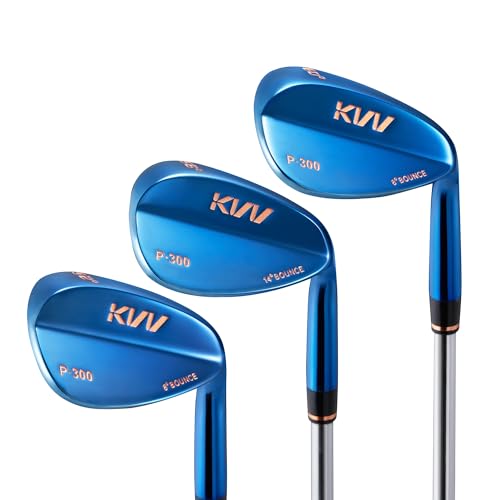
The ionized blue PVD finish makes the KVV set visually distinct, while its 52/56/60-degree lofts match a common short-game progression. The product name specifies right-handed clubs, and the maker says the finish has an anti-fingerprint layer intended to resist stains and corrosion. It also claims the CNC-milled face and wide sole support spin and forgiveness. This set is a fit for golfers who want a colored finish alongside three familiar wedge lofts.
Bottom line: Choose this set for a blue PVD finish with right-handed 52/56/60-degree wedges.
ALVO Golf Satin Chrome 3-Wedge Set
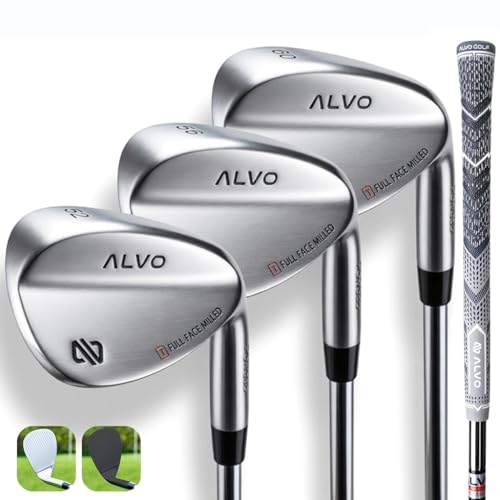
The satin chrome finish and full-face groove design distinguish this ALVO set. It is a three-wedge set, and its product name identifies 52-degree gap, 56-degree sand, and 60-degree lob wedges for right-handed golfers. The maker says the grooves are CNC milled and claims the wedges are forged, but its product name also mentions individual wedges, so verify that the selected option is the three-club set. The loft progression suits golfers seeking familiar roles; the right-handed fit is the key limitation for anyone who plays left-handed.
Bottom line: Pick this option if you want satin chrome and confirm the selected option includes all three clubs.
Premium 50–60° Wedge Set

The 50–60-degree range distinguishes this silver set from the 52/56/60-degree options. The maker says the face has full-face grooves and is CNC milled, and it describes the grip as moisture-controlling and tacky. The product name specifies right-handed clubs for men.
Bottom line: Choose this set only after confirming its individual lofts match your existing wedges.
How to choose wedge lofts
Start with the loft of your pitching wedge, then select wedges that leave manageable gaps rather than copying a set without checking your clubs. A common setup uses 4- to 6-degree loft intervals; the 52/56/60-degree pattern here uses four-degree steps. Many pitching wedges fall around 44 to 46 degrees, but stronger-lofted iron sets can shift that starting point. A 50-degree gap wedge may fit better after a 44- or 45-degree pitching wedge. A 52-degree wedge may suit a pitching wedge closer to 46 or 48 degrees. Compare loft stamps across your full set before choosing.
What wedge bounce and sole shape change
Bounce is the angle between a wedge’s sole and the ground, and common options range from about 4 to 14 degrees. More bounce generally helps the sole move through soft sand or turf; less bounce can suit firmer conditions and shallow delivery. Sole width also affects how the club interacts with the ground, so bounce number alone does not describe the whole fit. Match bounce and sole shape to your usual lies and swing: soft conditions or a steep attack often favor more bounce, while firm turf or a shallow attack often favor less. The maker identifies a wide sole on KVV Blue PVD 52/56/60-Degree Set and an anti-dig edge on XDriveMax 52/56/60-Degree Set, but does not provide bounce angles.
Compare three-wedge configurations
A useful three-wedge set fills distinct loft roles, but the loft stamps matter more than role labels alone. Gap wedges typically bridge the distance between a pitching wedge and sand wedge; sand wedges commonly sit near 54 to 56 degrees, while lob wedges often reach 58 to 60 degrees. Those ranges are broad conventions, not a guarantee of equal carry distances, because shaft, swing, and strike also affect yardage. The table shows which known loft progression is explicit and where checking the club selection matters.
| Loft setup | Typical use | Selection check |
|---|---|---|
| 50/54/58° | Smaller starting loft steps | Confirm pitching-wedge loft |
| 52/56/60° | Gap, sand, and lob roles | Check four-degree intervals |
| 50–60° range | Potentially broader coverage | Confirm each included loft |
Grooves, wear, and short-game expectations
Grooves help channel grass and moisture away from the ball-face contact area, but a milled face cannot guarantee a particular spin rate or stopping distance. On full swings, clean, dry grooves and a clean ball matter; grass between face and ball can reduce spin. Wedge grooves and face texture wear with use, especially when clubs are practiced from abrasive surfaces, so inspect the face periodically for rounded edges or damage. For competition, confirm the club conforms to the applicable rules before play; groove specifications are regulated under golf’s equipment rules. Choose based on loft, sole fit, and feel rather than a maker’s spin claim alone.
Frequently Asked Questions
How far apart should wedge lofts be?
A common wedge progression uses 4 to 6 degrees between lofts, and a 52/56/60-degree set uses four-degree steps. Check the pitching-wedge loft first, since some iron sets have stronger lofts that leave a different gap.
What loft should a sand wedge have?
Sand wedges commonly fall around 54 to 56 degrees. A 56-degree club is a familiar choice, but check its bounce and sole against your typical sand and turf conditions.
How much bounce is right for a wedge?
Wedge bounce commonly ranges from about 4 to 14 degrees. Softer turf or sand and a steeper swing often suit more bounce, while firm lies and a shallow delivery can favor less.
Do milled grooves make wedges spin more?
Clean grooves can help maintain contact by channeling grass and moisture, but milling alone does not guarantee a spin rate. Wet grass or debris between the face and ball can reduce friction.
When should golf wedges be replaced?
There is no single replacement interval because wear depends on practice volume and surface abrasiveness. Inspect the face and grooves regularly, and consider replacement when groove edges are visibly rounded or damaged.