
Robert Sorby Pro Edge System and Accessories Compared

The Robert Sorby ProEdge Sharpening System is the main choice for buyers seeking the belt-driven sharpener; its belt approach is the deciding difference from abrasive-wheel systems. Choose one of the accessories instead when you already have a compatible ProEdge and need a specific jig or replacement belt.
The ProEdge family includes a knife jig, a woodturning accessory kit and two 120-grit belts, but those parts do not replace the sharpening system itself.
We earn a commission if you buy through links on this page. As an Amazon Associate I earn from qualifying purchases. Products are compared on manufacturer specifications, not hands-on testing.
- Best overall: Robert Sorby ProEdge Sharpening System – The large system sharpens with belts rather than abrasive wheels.
- Best for repeat angles: Robert Sorby ProEdge Woodturning Kit – The woodturning accessory kit is described as holding the same sharpening angle each time.
- Best for long knives: Robert Sorby ProEdge Large Knife Jig – The jig is intended for knives over 8 inches long.
| Product | Best for | Item type | Size or fit | Dimensions | Shop |
|---|---|---|---|---|---|
| Robert Sorby ProEdge Sharpening System | Complete sharpening system | Belt sharpener | Large | 16.5 × 18.5 × 11.25 in. | Check Price on Amazon |
| Robert Sorby ProEdge Woodturning Kit | Repeatable tool angles | Woodturning accessory kit | Medium | 12 × 12 × 12 in. | Check Price on Amazon |
| Robert Sorby ProEdge Large Knife Jig | Knives over 8 inches | Knife sharpening jig | Over 8 in. knife length | 9.84 × 6.97 × 4.02 in. | Check Price on Amazon |
| Robert Sorby ProEdge Zirconium Belt | Zirconium belt replacement | Replacement belt | 120 grit | — | Check Price on Amazon |
| Sorby ProEdge Ceramic Belt, 120 Grit | Ceramic HSS belt | Replacement ceramic belt | 120 grit | 2 × 30.625 in. | Check Price on Amazon |
Robert Sorby Pro Edge Systems and Accessories
Choose the complete belt sharpener if you need a system; the other options are accessories for particular sharpening tasks.
Robert Sorby ProEdge Sharpening System
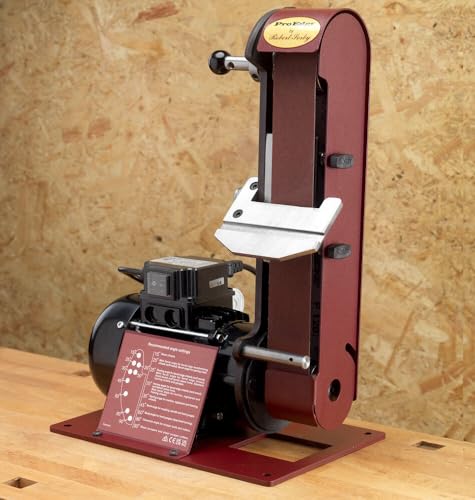
Unlike the other choices here, this is the complete ProEdge sharpening system rather than a jig or replacement belt. The system sharpens with belts instead of abrasive wheels, and the unit is the large, black version, measuring 16.5 inches high, 18.5 inches long and 11.25 inches wide. It suits a buyer who wants the core sharpener rather than an add-on. The limitation is its large footprint, which matters when bench space is tight; measure the intended work area before setting aside room.
Bottom line: Pick this if you need the complete belt-based sharpener, not an accessory.
Robert Sorby ProEdge Woodturning Kit

This woodturning accessory kit focuses on maintaining a repeatable sharpening angle, unlike the complete system or the knife-specific jig. Robert Sorby says it sharpens at exactly the same angle each time; the kit is medium-sized and measures 12 inches in each dimension. Choose it when the intended task is sharpening woodturning tools on a compatible ProEdge setup. The kit is an accessory rather than a standalone sharpener, so buyers without the system should account for that distinction before choosing it.
Bottom line: Choose this for repeatable woodturning-tool angles with a ProEdge system.
Robert Sorby ProEdge Large Knife Jig

Unlike the general woodturning kit, this large jig is made for knives longer than 8 inches. Its dimensions are about 9.84 inches long, 6.97 inches wide and 4.02 inches high, making fit at the knife length the key selection point. Choose it when knife sharpening is the task and the blade exceeds that threshold. The jig is not the complete sharpener, so it is a poor substitute for the main ProEdge system if you do not already have a compatible setup.
Bottom line: Pick this jig for knives longer than 8 inches and a compatible system.
Robert Sorby ProEdge Zirconium Belt
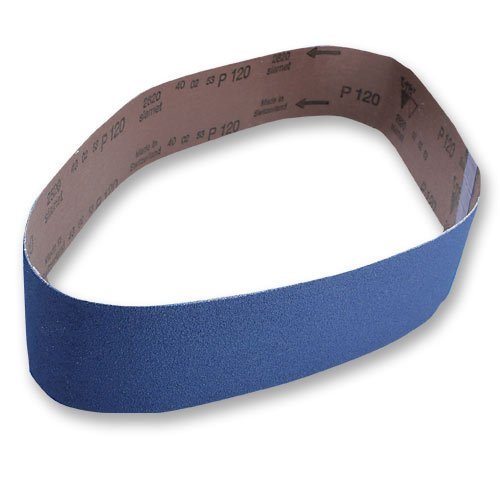
This zirconium belt is a belt replacement rather than the ceramic option or a sharpening tool. The name identifies it as 120 grit, while the product dimensions do not establish its working belt length or width. Choose it when you specifically need the zirconium material and compatible belt size for a ProEdge sharpener. That size compatibility is the important limitation: confirm the belt dimensions required by your system before ordering, because a grit value alone does not establish fit.
Bottom line: Choose it only when the zirconium belt format matches your system.
Sorby ProEdge Ceramic Belt, 120 Grit

Unlike the zirconium belt, this is a ceramic 120-grit belt for the ProEdge Deluxe Sharpening System, sold separately. Its size is 2 inches by 30-5/8 inches, and Robert Sorby says it is intended for cutting high-speed steel turning tools and outlasts aluminum oxide belts by approximately five to one. Choose it when ceramic material and HSS turning-tool sharpening match the task. Its fit is for the Deluxe system, so check compatibility if your sharpener is another ProEdge version.
Bottom line: Pick this ceramic belt for HSS turning tools when the system fit is confirmed.
How to choose a Robert Sorby Pro Edge
Start by deciding whether you need the machine or an accessory: only the large Sharpening System is the complete sharpener among these options. The other choices are a woodturning kit, a knife jig or belts. A belt sharpener uses a moving abrasive belt instead of a rotating abrasive wheel, so belt format and grit matter when selecting replacements. Match the accessory to the task before comparing size: a knife jig is for knives longer than 8 inches, while the woodturning kit focuses on repeatable tool angles. If you do not own a compatible system, prioritize the complete machine rather than an attachment or consumable.
Choosing a belt and grit
Grit indicates abrasive coarseness: lower grit numbers cut more aggressively, while higher numbers refine the edge. Both belts here are 120 grit, but they differ in material, and only the ceramic belt has a size of 2 by 30-5/8 inches. A ceramic belt can be selected for high-speed steel turning tools; Robert Sorby says this belt outlasts aluminum oxide by approximately five to one. Belt width and loop length must match the machine, so confirm both dimensions before replacing a belt. Do not assume two belts with the same grit are interchangeable when their material or fit differs.
Knife jig and turning-tool fit
Knife length is the measurable decision rule for the large jig: it is intended for knives over 8 inches long. A jig holds a tool at a controlled position against the abrasive, while a dedicated woodturning accessory kit is intended to make the sharpening angle repeatable. Longer knives also need adequate clearance around the jig and belt path, so check the work area as well as blade length. For turning tools, identify the tool shape and edge angle you want to preserve before sharpening; removing too much steel changes the profile. Use eye protection and keep hands clear of the moving abrasive belt.
Keeping a belt sharpener ready
Abrasive belts wear as grains dull or load with metal, and a belt that cuts slowly can tempt users to apply excess pressure. Let the abrasive do the cutting and replace a worn or damaged belt rather than forcing contact. Keep belts dry and store them flat or on their original backing to limit creases and edge damage. Match the belt’s width, loop length and abrasive material to the sharpener; grit alone is not enough to establish compatibility. Disconnect power before changing belts or adjusting a jig, and follow the system’s setup procedure before restarting.
Frequently Asked Questions
What does 120 grit mean for a sharpening belt?
A 120-grit belt is a coarse-to-medium abrasive suited to material removal rather than final polishing. The ceramic option is described for high-speed steel turning tools; use a finer abrasive for refining an edge when your sharpening setup allows it.
Will the large knife jig fit an 8-inch knife?
The jig is intended for knives over 8 inches long, so an 8-inch blade does not meet its fit threshold. Measure the blade length before choosing the large jig.
Can a ceramic belt sharpen high-speed steel tools?
Yes, the ceramic 120-grit belt is identified for high-speed steel turning tools. Its size is 2 by 30-5/8 inches, so confirm your sharpener accepts that belt format.
How often should I replace a sharpening belt?
Replace a belt when it is damaged or no longer cuts effectively; there is no single mileage or time interval for abrasive belts. Metal loading, pressure and the material being sharpened all affect wear, so inspect the abrasive before each sharpening session.