
OBD Port Locking Device: 5 Locks Compared by Fit

BBFLY K02 OBD Lock is the best starting point for most buyers who want a keyed OBD port lock, because its integrated key cylinder replaces screw fastening. Choose VTT OBD Lock, Non-GM instead if you drive a non-GM vehicle and want a 6061-T6 billet aluminum body, or consider a screw-secured design if you prefer a matching installation tool.
An OBD port lock is a removable physical cover for the vehicle’s diagnostic connector; confirm that the lock fits your port location and leaves enough clearance for installation.
We earn a commission if you buy through links on this page. As an Amazon Associate I earn from qualifying purchases. Products are compared on manufacturer specifications, not hands-on testing.
- Best overall: BBFLY K02 OBD Lock – Its integrated key cylinder locks and unlocks without screw fastening.
- Best for non-GM vehicles: VTT OBD Lock, Non-GM – It is designed for standard 16-pin ports and explicitly excludes GM vehicles.
- Best for two keys: OBD2 Port Lock with 2 Keys – It includes two double-groove security keys and tool-free installation.
- Best for screw fastening: NiwNiw OBD Port Lock – It uses security screws and includes a matching installation and removal tool.
| Product | Best for | Lock style | Body material | Dimensions (inches) | Shop |
|---|---|---|---|---|---|
| BBFLY K02 OBD Lock | Keyed access | Key cylinder | Aluminum alloy, reinforced ABS | 2.0 × 2.2 × 1.4 | Check Price on Amazon |
| VTT OBD Lock, Non-GM | Non-GM vehicles | Keyed, anti-tamper hardware | 6061-T6 billet aluminum | 2.0 × 2.0 × 1.0 | Check Price on Amazon |
| OBD2 Port Lock with 2 Keys | Two-key access | Double-groove keys | Aluminum alloy, POM | 2.75 × 1.96 × 3.14 | Check Price on Amazon |
| NiwNiw OBD Port Lock | Tool-assisted removal | Security screws | 6061 aluminum | 2.28 × 1.46 × 1.85 | Check Price on Amazon |
| OBD II Port Lock, Black | Aluminum and POM | Unique screws and keys | Aluminum, POM | 0.1 × 0.1 × 0.2 | Check Price on Amazon |
OBD port locking devices compared
Compare the fastening method, materials and stated dimensions to find a lock that suits your port and access needs.
BBFLY K02 OBD Lock
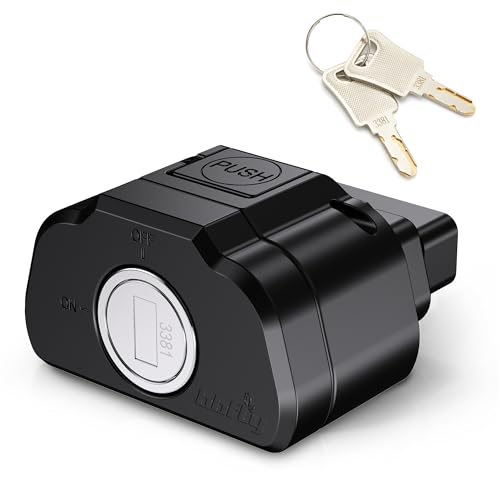
Unlike the screw-secured options, BBFLY K02 OBD Lock uses an integrated key cylinder for locking and unlocking. Its shell combines aluminum alloy with reinforced ABS, and the included key cylinder has a unique digital code, according to the manufacturer. The compact body measures 2.0 × 2.2 × 1.4 inches, so compare those measurements with the space around your diagnostic port before choosing it. This design suits buyers who want keyed access rather than a separate screw tool. The limitation is that installation still depends on a compatible port location and room for the lock body.
Bottom line: Choose this if you prefer a keyed lock over screw fastening.
VTT OBD Lock, Non-GM

VTT OBD Lock, Non-GM is the only option here that explicitly excludes GM vehicles; the maker directs GM owners to a separate GM version. The maker says it fits standard 16-pin OBD-II ports and uses multiple lock-and-key configurations within each production batch. Its body is CNC-machined 6061-T6 billet aluminum and measures 2.0 × 2.0 × 1.0 inches. That makes it a candidate for non-GM car, SUV, or truck owners seeking a solid aluminum cover. The key limitation is vehicle compatibility: do not choose this version for a GM vehicle.
Bottom line: Choose this for a non-GM vehicle with a standard 16-pin port.
OBD2 Port Lock with 2 Keys

OBD2 Port Lock with 2 Keys stands apart by including two double-groove security keys and offering tool-free installation. Its construction combines aluminum alloy and POM, and the body measures 2.75 × 1.96 × 3.14 inches. The maker says it fits most standard OBD-II ports, while cautioning that embedded ports may need a compatibility check. This suits buyers who want a spare key and do not want to fasten the cover with screws. Its comparatively tall stated dimensions make clearance especially important; measure around a recessed or crowded connector before settling on this design.
Bottom line: Choose this if a spare key and tool-free installation matter.
NiwNiw OBD Port Lock

NiwNiw OBD Port Lock uses security screws rather than a keyed cylinder, and includes the matching installation and removal tool. Its body is 6061 aluminum and measures 2.28 × 1.46 × 1.85 inches. Screw styles can differ by production batch, so keep the tool with the vehicle or in a known place for authorized removal. The maker says the cover helps restrict unauthorized access to the connector. This option fits buyers who prefer screw fastening and do not need frequent diagnostic access. Unlike a tool-free or key-cylinder lock, removal depends on having the matching tool available.
Bottom line: Choose this if you want screw fastening with a matching removal tool.
OBD II Port Lock, Black

OBD II Port Lock, Black pairs aluminum and POM construction with a screw-and-key locking approach; the maker says batches have unique screws and keys. The dimensions are 0.1 × 0.1 × 0.2 inches, unusually small for a port cover, so verify the actual fit and measurements before choosing it. The maker also claims the lock restricts access to vehicle data and the ECU; those are performance claims, not a substitute for vehicle-specific compatibility. This may suit a buyer seeking the materials and keyed hardware, but the tiny stated measurements are a substantial reason to check fit first.
Bottom line: Choose this only after confirming its dimensions match your port.
How to choose an OBD port locking device
Choose by port compatibility, fastening style and how often you need diagnostic access. OBD-II connectors use a standardized 16-pin shape, but vehicle trim, recessed mounting and nearby panels can affect whether a cover fits. A keyed cylinder can be unlocked with its key, while screw-secured covers require the matching tool. If you expect to use a scan tool regularly, prefer a design you can remove and replace without searching for a specialty tool. Physical covers block direct access while installed, but do not replace vehicle keys, alarms or other theft precautions. Check the port’s location and the available space around it before selecting a body with larger dimensions.
OBD-II port fit and clearance
Standard OBD-II connectors have 16 pins, but the port’s position and surrounding trim determine whether a lock can sit flush. Many vehicles place the connector beneath the driver-side dashboard, though some use a panel or recess that limits access. Measure the free space in front of and around the port, then compare it with the lock’s dimensions; height matters when the connector faces downward, and width matters near a knee panel or console. Do not force a cover onto a recessed connector or bend the port to make a lock fit. With less than the lock’s height available, choose a lower-profile option or verify fit before ordering.
Keyed locks versus screw-secured covers
Keyed locks and screw-secured covers differ mainly in how they are removed. A keyed cylinder offers direct unlocking with its matching key, while security screws call for a matching tool; either approach can obstruct diagnostic access while installed. Use the table to match the locking approach to how often you expect to access the port.
| Need | Locking approach | Trade-off |
|---|---|---|
| Frequent authorized access | Key cylinder or tool-free | Keep the key available |
| Tool-secured cover | Security screws | Keep the matching tool available |
| Standard 16-pin connector | Confirm the vehicle fit | Port recess and clearance can differ |
Regardless of style, keep the key or removal tool accessible to the vehicle owner so routine diagnostics do not become difficult.
When to remove an OBD port lock
Remove the cover before connecting a scan tool or having a technician access the diagnostic connector. The OBD-II port is used for vehicle diagnostics and emissions-related checks, so a lock left in place can prevent a plug from connecting. Before installation, park the vehicle and make sure the connector and cover are aligned; avoid pulling on the wiring harness if the lock does not seat easily. Store the key or matching screw tool where an authorized driver or technician can find it. A cover is a physical access barrier, not a guarantee against theft, and should be treated as one layer of vehicle security.
Frequently Asked Questions
Are OBD port locks universal for every vehicle?
No; standard 16-pin OBD-II ports share a connector shape, but recessed mounting and surrounding trim can interfere with a cover. Check the lock’s fit and measure available clearance before installation.
Will an OBD port lock prevent a scan tool from connecting?
Yes, while the cover is installed it blocks access to the diagnostic connector. Remove the cover with its key or matching tool before diagnostics or emissions-related service.
Can a screw-secured OBD lock be removed without its tool?
The intended removal method is the matching tool, so keep it accessible for authorized diagnostics. Screw designs can also differ, making the tool important.
Does a keyed OBD lock fit a recessed port?
Not necessarily; a recess can limit clearance around the lock body or interfere with its key cylinder. Compare the lock’s height, width and length with the free space at the connector.
Should I leave an OBD lock on during vehicle service?
No, remove the cover before a technician or scan tool needs the connector. Keep its key or matching removal tool available so routine service is not delayed.