
Best Automotive Air Conditioner Machine: 3 Types Compared

The 12V under-dash A/C kit is the best fit for most custom car installations because it combines cooling and heat with a 12,700-BTU capacity. Choose the truck cab unit for a dedicated 12V truck installation, or the vacuum pump and manifold set if you need A/C service equipment rather than cabin cooling.
We earn a commission if you buy through links on this page. As an Amazon Associate I earn from qualifying purchases. Products are compared on manufacturer specifications, not hands-on testing.
- Best overall: Universal 12V Under-Dash A/C Kit – Universal under-dash kit provides 12,700 BTU of cooling and heat on a 12V system.
- Best for truck cabs: VEVOR 12V Truck Cab A/C – Dedicated 12V cab unit provides 10,000 BTU and 400 m³/h airflow.
- Best for A/C servicing: XtremepowerUS HVAC Vacuum Pump Set – Includes a 3 CFM vacuum pump and automotive R-134a dispensing connection.
| Product | Best for | Cooling capacity | Power | Type | Shop |
|---|---|---|---|---|---|
| Universal 12V Under-Dash A/C Kit | Custom car installs | 12,700 BTU | 12V | Under-dash cooling and heat | Check Price on Amazon |
| VEVOR 12V Truck Cab A/C | Truck cab cooling | 10,000 BTU | 12V | Truck cab cooling | Check Price on Amazon |
| XtremepowerUS HVAC Vacuum Pump Set | A/C service work | — | — | Vacuum pump and manifold set | Check Price on Amazon |
Automotive Air Conditioner Machines
Match the machine to whether you need cabin cooling, a truck-specific system or A/C service equipment.
Universal 12V Under-Dash A/C Kit
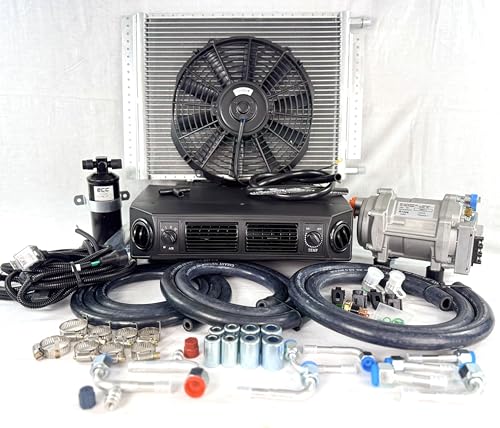
For a custom car installation, Universal 12V Under-Dash A/C Kit stands out with both cooling and heat in a 12V under-dash package. The kit includes an evaporator, thermostat, three-speed blower switch, mounting bracket, drain hose and T, plus an integrated electric scroll compressor specified for R-134a. Its 1.5-ton rating and 359 CFM blower output make it the higher-capacity cabin-cooling choice here. The limitation is fit: a universal kit still needs suitable mounting space and a compatible installation plan, so confirm the vehicle layout before choosing it.
Bottom line: Pick this for a custom 12V car installation needing both heat and A/C.
VEVOR 12V Truck Cab A/C
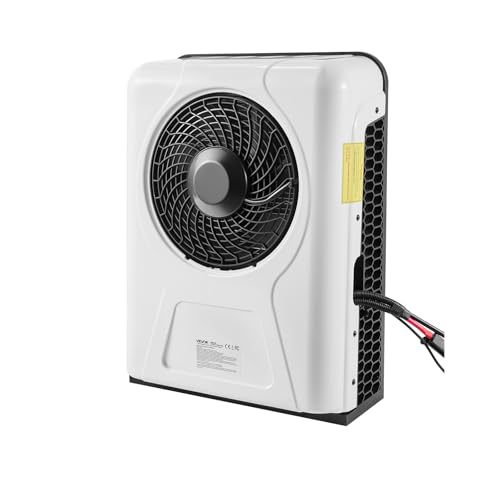
For a truck cab rather than a universal under-dash conversion, VEVOR 12V Truck Cab A/C is a dedicated 12V system with 10,000 BTU of cooling and 400 m³/h airflow. The maker says its inverter technology can run for 6–8 hours on a 12V battery and its noise level can be as low as 65 dB. Its ABS housing and compact cab-focused format distinguish it from the broader kit. The runtime depends on the battery and operating conditions; it is intended for vehicle cabs, not as a general residential room air conditioner.
Bottom line: Choose this for a dedicated 12V truck or work-vehicle cab.
XtremepowerUS HVAC Vacuum Pump Set

Unlike the cabin-cooling systems, XtremepowerUS HVAC Vacuum Pump Set is equipment for servicing an A/C circuit: it combines a 1/4 HP, 3 CFM, single-stage rotary vacuum pump with a manifold gauge set and an R-134a automotive dispensing connection. The pump has a die-cast aluminum-alloy casing and an internal cooling fan. This is the relevant option if your task is evacuating or diagnosing a system rather than adding air conditioning to a vehicle. The connection does not make it a self-contained refrigerant recovery machine, so it is not a substitute for recovery equipment.
Bottom line: Pick this for A/C evacuation or diagnosis, not cabin cooling.
How to Choose an Automotive Air Conditioner Machine
Choose by job first: a cabin unit cools the vehicle, while a vacuum pump and manifold set service the refrigerant circuit. For a custom car conversion, check available under-dash room, power supply and a route for condensate drainage before selecting a kit. For an overnight truck cab, compare the unit’s power draw and expected runtime with the battery capacity; a runtime estimate alone does not establish that a particular battery can support it. Refrigerant type matters too: automotive systems commonly use R-134a or R-1234yf, and service equipment and refrigerant must match the vehicle label. If the vehicle still has a sealed system, do not vent refrigerant; U.S. rules require recovery equipment when servicing motor vehicle A/C systems.
Under-Dash Kits and Truck Cab Units Compared
Under-dash kits are designed to add cabin heating or cooling to a vehicle, while truck cab units target dedicated cab installations. A generic label such as “automotive air conditioner machine” can also mean shop equipment, so distinguish a cooling system from a service tool before comparing capacities. BTU ratings describe cooling output; they do not show whether a unit fits a particular dashboard or mounting location. This table separates the three relevant jobs and helps narrow the choice. A service vacuum pump removes air and moisture from an evacuated system, but it does not cool occupants on its own.
| Need | Machine type | Deciding factor |
|---|---|---|
| Custom car cabin cooling | Under-dash kit | Mounting room and system compatibility |
| Truck cab cooling | Dedicated cab unit | 12V supply and cab fit |
| Evacuating or diagnosing A/C | Vacuum pump and manifold | Correct refrigerant connections and service process |
Vehicle Fit, Power and Refrigerant Checks
Confirm the vehicle’s electrical system and mounting location before choosing a vehicle A/C unit. A 12V unit must be installed with wiring and circuit protection sized for its actual current draw; never assume a battery’s voltage alone proves it can run a compressor for hours. Check clearance behind the dashboard or cab mounting area, plus access to drain condensate away from the passenger compartment. Refrigerant compatibility is equally important: do not mix refrigerants or connect service equipment to a system without verifying the refrigerant specified on the vehicle label. Because installation measurements and electrical requirements are vehicle-specific, confirm fit and circuit requirements before ordering.
Safe Automotive A/C Service Basics
Automotive refrigerant can cause severe cold burns, and a pressurized system should not be opened or vented. U.S. motor vehicle A/C service requires refrigerant recovery rather than release to the atmosphere; use equipment designed for the refrigerant in the vehicle. A vacuum pump is used after recovery and repair to evacuate air and moisture before charging, not to collect refrigerant. Do not treat a manifold gauge set or dispensing connector as a recovery device. Keep service work away from ignition sources and use eye protection and gloves, particularly when handling pressurized hoses or refrigerant containers.
Frequently Asked Questions
How many BTUs does a car air conditioner need?
Vehicle A/C output is typically sized as part of the system design, not chosen from room-size BTU charts. The two cabin units here are rated at 10,000 and 12,700 BTU, but vehicle size, sun exposure and insulation affect the required capacity.
Can a 12V truck air conditioner run overnight?
A 12V truck unit can run only as long as the battery can supply its electrical load. The truck unit maker gives a 6–8 hour runtime estimate, so verify usable battery capacity and charging arrangements before relying on overnight cooling.
Can I use a vacuum pump to recharge car AC?
No. A vacuum pump evacuates air and moisture from a system after service; it does not supply refrigerant. Charging requires the correct refrigerant and equipment, and refrigerant must not be vented during automotive A/C work.
How do I know which refrigerant my car uses?
Check the refrigerant label under the hood or the vehicle service documentation before connecting any equipment. R-134a and R-1234yf systems require compatible service connections, and refrigerants must not be mixed.
Does an under-dash air conditioner fit every car?
A universal kit does not guarantee a fit in every vehicle. Measure the available mounting area and confirm electrical, drain-routing and refrigerant-system requirements for the specific installation before ordering.