
Best Kanoodle Game to Start With: 4 Picks by Age

For most new players, Kanoodle Head-to-Head is the strongest starting point because its 80 puzzles support two-player play and it is made for ages 7 and up. For a younger child, choose Kanoodle Jr. instead: its 60 challenges are designed for ages 4–7; players looking for solo challenges can consider SmartGames IQ Puzzler Pro.
We earn a commission if you buy through links on this page. As an Amazon Associate I earn from qualifying purchases. Products are compared on manufacturer specifications, not hands-on testing.
- Best overall: Kanoodle Head-to-Head – Its two-sided board and 80 puzzles make it a social entry point for players ages 7 and up.
- Best for ages 4–7: Kanoodle Jr. – Six chunky pieces and 60 age-targeted challenges suit younger beginners.
- Best for solo play: SmartGames IQ Puzzler Pro – It offers 120 challenges in 2D and 3D for ages 6 to adult.
| Product | Best for | Age range | Challenges | Play format | Shop |
|---|---|---|---|---|---|
| Kanoodle Head-to-Head | Two-player starts | Ages 7+ | 80 | Two-player | Check Price on Amazon |
| Kanoodle Jr. | Younger beginners | Ages 4–7 | 60 | Solo | Check Price on Amazon |
| SmartGames IQ Puzzler Pro | Solo puzzle practice | Ages 6–adult | 120 | Solo; 2D and 3D | Check Price on Amazon |
| SmartGames IQ Deluxe: Hexagon | Teen and adult play | Ages 14+ | 120 | Solo | Check Price on Amazon |
Kanoodle and Similar Starter Puzzle Games
Start with age and solo-versus-group play, then compare the puzzle count and format that suit the player.
Kanoodle Head-to-Head

For a social starter Kanoodle, this version turns the puzzle into a two-player race rather than a solo activity. It includes a two-sided board, 16 pieces split between players, and 40 double-sided challenge cards for 80 puzzles. The maker says it is designed for ages 7 and up, making it a fit for school-age children or adults who want to solve alongside someone else. Its key limitation is the head-to-head format: a player seeking independent, quiet puzzles may prefer a solo game.
Bottom line: Pick it when the beginner wants to solve and compete with another player.
Kanoodle Jr.

For a younger beginner, Kanoodle Jr. shifts the focus to chunky pieces and age-targeted challenges rather than a two-player race. The set includes a puzzle board, six chunky pieces, a carry case, and a booklet with 60 challenges. The maker targets it to ages 4–7, so it suits preschool and early elementary puzzle play. The smaller challenge count and younger age range make it a different starting point from games aimed at older children; buyers choosing for a child outside that range should prioritize age fit over the title.
Bottom line: Choose it for a child ages 4–7 starting with chunky-piece puzzles.
SmartGames IQ Puzzler Pro
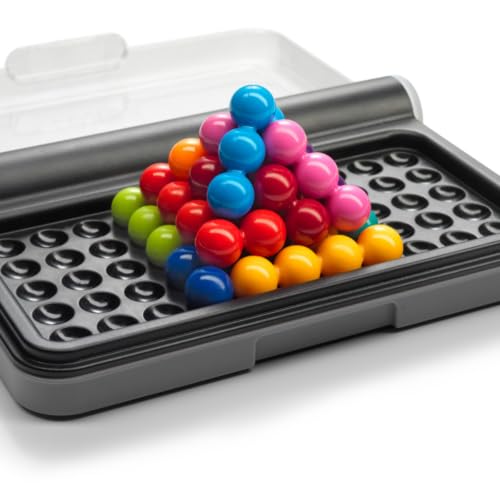
Unlike the Kanoodle-branded choices, IQ Puzzler Pro is a related solo logic game with both 2D and 3D challenges. It comes with 12 pieces, a compact board with transparent lid, and a booklet containing 120 puzzles ranging from easy to expert, according to the maker. Its age range of 6 to adult broadens its use for a household with mixed-age puzzlers. It is not a Kanoodle game, so choose it only if the goal is a similar portable spatial puzzle rather than that specific game line.
Bottom line: Pick it when solo 2D and 3D challenges matter more than the Kanoodle name.
SmartGames IQ Deluxe: Hexagon

For older starters, IQ Deluxe: Hexagon differs from the other choices with a six-sided board and an age target of 14 and up. The maker says its 120 puzzles range from simple to expert, and the larger deluxe travel case distinguishes it from compact beginner-oriented formats. Its format is aimed at teens and adults rather than young children, so it is a poor age match for a child seeking a first puzzle game. It also is not Kanoodle; consider it when a hexagonal logic puzzle is acceptable.
Bottom line: Choose it for a teen or adult who wants a hexagon-board logic challenge.
How to choose a starter Kanoodle game
Choose by the player’s age and whether they want to puzzle alone or race someone else. A two-player format adds turn-taking and comparison; a solo booklet lets one person work at an individual pace. For ages 4–7, choose the junior format; for ages 7 and up seeking shared play, choose the head-to-head format. A player who prefers solo solving can use an adjacent logic game instead, but that is not Kanoodle. As a practical rule, if the child is younger than 7, start with the age-targeted junior set rather than a competitive version made for older players.
What challenge counts tell you
Challenge count signals the number of starting prompts, not a guaranteed difficulty level or amount of play time. A booklet may progress from easier layouts to harder ones, and a player’s spatial reasoning changes how long each puzzle takes. Compare the age range alongside the count: 60 challenges designed for ages 4–7 and 120 challenges for ages 6 to adult serve different starters. For a beginner, favor a clear age match over the biggest number. Adults starting with a child should also consider whether the rules involve simultaneous competition or individual solving, since those create different kinds of help and pressure.
Solo and head-to-head puzzle play
Solo puzzle games let a player place pieces, check the target arrangement, and restart without waiting for another turn. Head-to-head puzzle games add a race, so speed and sharing the play space become part of the activity. A two-sided board and separate sets of pieces can help two players work in parallel, while a single board and booklet are more suited to individual practice. Pick head-to-head for a child who enjoys competition and can take turns; pick solo play for calm practice or for a single player. For young children, keep small puzzle pieces out of reach of children under 3 because they can pose a choking hazard.
Similar games that are not Kanoodle
Other spatial logic games may suit a beginner who values solo play or a different board shape, but they are alternatives rather than Kanoodle versions. IQ Puzzler Pro combines 2D and 3D puzzles, while IQ Deluxe: Hexagon uses a six-sided board and targets ages 14 and up. Board geometry changes how pieces fit and how a player reads the puzzle, so a hexagon format is not interchangeable with a standard Kanoodle board. Use the table to separate the branded game choices from similar puzzle formats.
| Need | Choose |
|---|---|
| Beginner ages 4–7 | Kanoodle Jr. |
| Two-player competition, ages 7+ | Kanoodle Head-to-Head |
| Solo 2D and 3D puzzles | IQ Puzzler Pro |
| Hexagon board for ages 14+ | IQ Deluxe: Hexagon |
Frequently Asked Questions
Is Kanoodle Jr. good for a starter puzzle game?
Kanoodle Jr. is designed for ages 4–7 and includes 60 challenges with six chunky pieces. Its age-targeted format makes it the more suitable Kanoodle starting point for younger children than a head-to-head game made for ages 7 and up.
Can one person play Kanoodle Head-to-Head?
Kanoodle Head-to-Head is designed as a two-player puzzle race, with eight pieces per player and 80 puzzles. A solo player may prefer a one-player puzzle format instead of the competitive setup.
What age can children start playing Kanoodle?
The junior version is aimed at ages 4–7, while Kanoodle Head-to-Head is for ages 7 and up. Keep small game pieces away from children under 3 because small parts can present a choking hazard.
Are IQ Puzzler Pro and Kanoodle the same game?
No, IQ Puzzler Pro is a separate solo logic game, not a Kanoodle product. It includes 120 2D and 3D challenges and is aimed at ages 6 to adult.
How should I choose between solo and two-player puzzles?
Choose solo puzzles for one player to work at an individual pace; choose a two-player format when the players enjoy racing or taking turns. For a young beginner, age fit should come first, with Kanoodle Jr. designed for ages 4–7.