
Sleds for Towing Behind Snowmobile: Hitch Options Compared

For a towable sled with side walls, the Extreme Max adjustable pin hitch is the closest match because its 19-to-32-inch width and backer plates are designed for sled mounting. The other hitch choices connect through a receiver, while the strap is for towing or recovery rather than a permanent sled hitch.
Choose a hitch only if the sled and snowmobile connection points are compatible; a tow strap suits occasional pulling but does not replace a mounted hitch.
We earn a commission if you buy through links on this page. As an Amazon Associate I earn from qualifying purchases. Products are compared on manufacturer specifications, not hands-on testing.
- Best overall: Extreme Max Universal Pin Hitch – Adjusts from 19 to 32 inches and mounts through sled side walls with backer plates.
- Best for stainless construction: SUONE 32-Inch Stainless Tow Hitch – Uses a 304 stainless steel drawbar and multiple pivot points.
- Best for occasional recovery: PAMASE 19-Foot Tow Strap – A 19-foot strap kit provides a flexible towing connection.
| Product | Best for | Connection type | Width or length | Material / construction | Shop |
|---|---|---|---|---|---|
| Extreme Max Universal Pin Hitch | Side-wall mounting | Pin hitch | 19–32 in wide | Powder-coated; stainless hardware | Check Price on Amazon |
| SUONE 32-Inch Stainless Tow Hitch | Receiver connection | Receiver hitch | 32 in | 304 stainless steel | Check Price on Amazon |
| Digger Anchor Multi-Pivot Tow Hitch | Quick removal | Receiver hitch | — | — | Check Price on Amazon |
| PAMASE 19-Foot Tow Strap | Flexible towing | Strap with hooks | 19 ft long | 1 in wide | Check Price on Amazon |
Sleds for Towing Behind Snowmobile: Hitch and Strap Options
Match the attachment to whether you need a sled-mounted hitch or a flexible towing strap.
Extreme Max Universal Pin Hitch

For a sled-mounted connection, this adjustable pin hitch stands out with its 19-to-32-inch width range and backer plates for side-wall mounting. Pivot points accommodate different vehicle heights without moving the hitch on the sled, and the kit includes mounting hardware. It connects to ATVs, UTVs, snowmobiles and lawn tractors. The hitch requires drilling or otherwise mounting through the sled walls, so it suits sleds built to accept that installation; it is not a complete sled.
Bottom line: Choose this when your sled can take a side-wall mount and its width falls within the adjustment range.
SUONE 32-Inch Stainless Tow Hitch

The SUONE hitch uses a 32-inch stainless-steel drawbar with multiple pivot points, rather than the adjustable side-wall pin setup. Its maker says it connects to receivers on ATVs, UTVs, snowmobiles and other hitch-equipped vehicles, and the 304 stainless-steel tube is intended to resist rust and low temperatures. At 4.41 pounds, it is the lightest rigid hitch option here with a weight. It is a hitch component, not the sled itself, so the sled’s attachment method must match.
Bottom line: Pick this if you need a receiver-connected stainless drawbar with pivoting movement.
Digger Anchor Multi-Pivot Tow Hitch
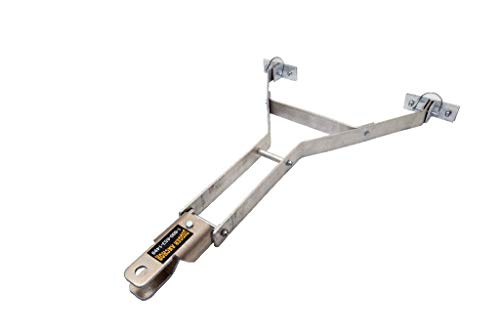
For quick removal, the Digger Anchor hitch specifies release pins and multiple pivot points but does not give an adjustment width. It is described for ice sleds and portable fish-house shelters and connects to a receiver on an ATV, UTV, snowmobile or similar vehicle. Its 3.54-pound weight is provided, but construction material and overall dimensions are not. That makes sled-side fit harder to judge before setup; verify the connection points and usable width before choosing it for a particular sled.
Bottom line: Choose this when quick-release pins and multi-pivot movement matter more than a specified width range.
PAMASE 19-Foot Tow Strap

Unlike the rigid hitches, the PAMASE is a flexible two-piece strap kit with a 19-foot working length and 1-inch width. Its maker gives a 4,400-pound break-strength figure and describes stainless-steel hooks; the kit is intended for snowmobiles, sleds and ATVs, including recovery situations. A strap does not control sled articulation like a mounted hitch, so it is better for flexible pulling or recovery than for a permanent tow connection. Use only where the vehicle and load attachment points are suitable.
Bottom line: Pick this for flexible towing or recovery when a mounted hitch is not the intended connection.
How to choose a snowmobile sled hitch
Choose a hitch by matching the sled-side mount first, then the vehicle-side connection. A side-wall pin hitch uses a different installation from a receiver-mounted drawbar, so the hitch type must match both ends. Width is a measurable gate: a sled mount that falls outside a hitch’s 19-to-32-inch range will not fit that adjustment span. Pivot points let the connection move as the vehicle and sled change relative height, but they do not compensate for incompatible mounting points. A flexible strap can pull a sled without a rigid mount, but it offers a different connection and is not a fixed hitch.
The table separates attachment style from use so you can narrow the choice before checking clearances.
| Need | Connection style | Check before choosing |
|---|---|---|
| Mount to sled walls | Pin hitch with backer plates | Sled width and wall mounting suitability |
| Connect at receiver | Receiver hitch | Receiver compatibility and sled-side attachment |
| Flexible pull or recovery | Tow strap | Attachment points and strap routing |
Receiver hitches versus side-wall pin hitches
A receiver hitch and a side-wall pin hitch solve different halves of the connection. Receiver designs attach to a vehicle’s hitch receiver, while a side-wall kit fastens through the sled and uses backer plates to resist pull-through. The Extreme Max design also has a 19-to-32-inch adjustment width; the SUONE and Digger Anchor descriptions instead emphasize receiver connection and pivot points. For terrain changes, pivoting can help the drawbar articulate, but it does not establish a load rating. Confirm the sled’s mount locations and vehicle receiver type before assembly.
Using a tow strap for a sled
A tow strap is a flexible alternative for pulling or recovery, not a rigid sled hitch. The PAMASE kit has a 19-foot working length and 1-inch width, and its maker states a 4,400-pound break strength; break strength is not a safe working-load limit. Keep the strap clear of skis, tracks and sharp edges, and use manufacturer-approved attachment points on both vehicles. Avoid shock loading: take up slack gradually rather than accelerating against a loose line. Keep people out of the line’s path because a strap or attachment can recoil if it fails.
Fit and safety checks before towing
Check the sled mount, receiver, hitch pins and fasteners before each trip; a loose connection can separate under load. A hitch’s pivot points allow movement, but the sled still needs enough clearance to turn without striking the snowmobile. Keep the load low and centered, and reduce speed on uneven ground because bumps increase pull forces. Do not infer a safe load from a material description or a strap’s break-strength figure; use the equipment maker’s working-load guidance when hauling a load. If the sled’s mount width or receiver fit is uncertain, confirm those measurements before setup.
Frequently Asked Questions
How wide does a sled need to be for an adjustable pin hitch?
The adjustable pin hitch here spans 19 to 32 inches. Measure across the intended sled mounting points, not the outside of unrelated trim.
Are tow strap break strength and working load the same?
No; break strength is the force at failure, not a recommended operating load. Use an explicit working-load limit for the strap and every connected component before hauling.
Why do snowmobile sled hitches have pivot points?
Pivot points let a hitch articulate as the sled and vehicle change relative height over uneven terrain. They do not replace correct mounting or establish how much weight the hitch can safely tow.
How should a sled tow strap be attached?
Attach the strap only to designated, secure tow points on both ends, keeping it clear of skis, tracks and sharp edges. Take up slack gradually and keep people away from the line of pull.