
Back of Heel Pads for Shoes: 4 Options Compared

For back of heel pads for shoes, choose Suede Heel Grips, 4 Pairs if you want four pairs of suede liners for roomy shoes; choose another style if a different cushion material or pack size better suits your shoes. Heel pads attach inside the shoe’s heel area to add cushioning and reduce movement, but they cannot make a shoe that is too small fit comfortably.
We earn a commission if you buy through links on this page. As an Amazon Associate I earn from qualifying purchases. Products are compared on manufacturer specifications, not hands-on testing.
- Best overall: Suede Heel Grips, 4 Pairs – Four pairs of suede liners cover multiple shoes and have self-adhesive backing.
- Best for contoured cushioning: Dr.Foot Foam Heel Grips, 2 Pairs – Foam topped with microsuede is shaped to follow the heel contour.
- Best for broad coverage: Memory Sponge Heel Pads, 6 Pairs – The 3.86-inch-long PU imitation pads have memory sponge cushioning.
| Product | Best for | Pack count | Top material | Adhesive | Shop |
|---|---|---|---|---|---|
| Suede Heel Grips, 4 Pairs | Multiple shoes | 4 pairs | Suede | Self-adhesive | Check Price on Amazon |
| Dr.Foot Foam Heel Grips, 2 Pairs | Contoured cushion | 2 pairs | Microsuede | CROWN #513 tape | Check Price on Amazon |
| Memory Sponge Heel Pads, 6 Pairs | Longer coverage | 6 pairs | PU imitation material | Mesh-backed adhesive | Check Price on Amazon |
| Suede Heel Grips, 4 Pairs, Beige/Black | Color choice | 4 pairs | Suede | Adhesive | Check Price on Amazon |
Back of Heel Pads for Shoes Compared
Compare pack size, cushion material, and backing to match the pad to your shoe and fit concern.
Suede Heel Grips, 4 Pairs

Four pairs make these suede liners a practical match when you want pads for several shoes or a spare pair. The manufacturer says the suede material is breathable and cushioned; the self-adhesive backs are peeled and pressed into the shoe’s heel area. The product is intended for new shoes and shoes that feel slightly large, including high heels and leather shoes. This is a straightforward liner rather than a shaped foam design, so buyers seeking a specifically contoured cushion may prefer another style. Check that the shoe still has enough room after adding a pad.
Bottom line: Choose this set if you want four pairs of self-adhesive suede liners.
Dr.Foot Foam Heel Grips, 2 Pairs
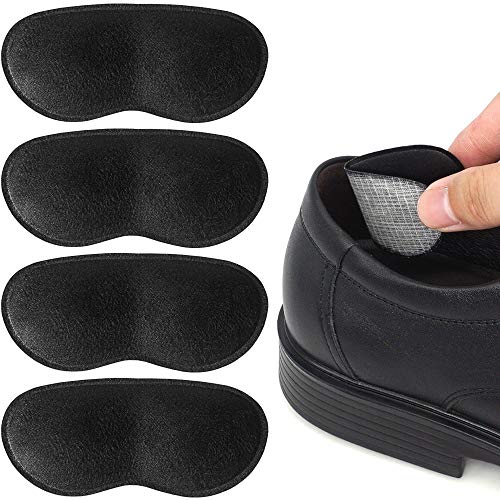
Foam cushioning topped with microsuede distinguishes these heel grips from the suede-only options. Dr.Foot says the ergonomic shape follows the heel contour and that its CROWN #513 double-sided tape helps keep the pads in place. The set includes two pairs and an extra shoe horn, making it a fit for someone who wants shaped cushioning rather than a larger multi-pair supply. Its smaller pad count may be less convenient if you plan to treat several shoes. Test the fit with your usual socks before wearing the shoes for a long stretch.
Bottom line: Pick these if a contoured foam cushion and microsuede top are priorities.
Memory Sponge Heel Pads, 6 Pairs

At 3.86 inches long and 2.05 inches wide, these pads offer a larger footprint than the other options, and the package includes six pairs. The product combines PU imitation material with memory sponge and uses a mesh-style adhesive backing. Its one-size-fits-most design is described for high heels, flats, leather shoes, and casual shoes, so it suits buyers who want coverage across several shoe styles. The larger dimensions may take up more space at the heel; check that the pad does not press your foot forward or crowd the shoe.
Bottom line: Choose these for a larger pad footprint and six pairs in the set.
Suede Heel Grips, 4 Pairs, Beige/Black

These four pairs combine soft suede with spongy padding, and the set includes beige and deep black colors for different shoe interiors. The product gives a 4-inch length and a 0.6-inch height, measurements worth comparing with the heel area inside your shoes before applying. The pads are intended to reduce friction and help fill shoes that feel loose. Their dimensions and thickness make fit-checking especially important: a pad that crowds the heel can create pressure rather than comfort. Choose this set when the two-color selection and padded suede construction suit your shoes.
Bottom line: Pick this set if two colors and padded suede fit your shoes.
How to choose back of heel pads
Match the pad to the problem: heel movement in a roomy shoe calls for a liner, while rubbing at the heel can call for a cushioned contact surface. Pads occupy interior space, so they are not a reliable fix for shoes that pinch at the toes or sides. Start with one shoe and check the fit while standing and walking; if the pad pushes your foot forward or creates pressure, remove it. A pad works best against a firm heel counter rather than a loose, collapsing fabric back. Also consider how many shoes need liners: the sets here range from two pairs to six, and their surface materials differ.
Where to place shoe heel pads
Place an adhesive heel pad on the inside rear wall of a clean, dry shoe, centered where the heel makes contact. Avoid putting it on the shoe’s footbed or wrapping it onto the sole, because that changes the intended contact area and can bunch the liner. Press the adhesive evenly against the heel counter, then try the shoe on before relying on it for a full day. A smooth, dry surface generally gives adhesive a better chance to hold than dusty or damp material. Follow the pad’s shape and trim only if its maker permits; cutting a cushioned edge can expose layers or weaken adhesion.
Heel liners versus shoe inserts
Heel liners address movement and rubbing at the back of a shoe; full-length insoles change support and available space across more of the foot. Use a heel pad when the shoe fits elsewhere but the heel slips slightly. Choose an insole only when the fit issue involves the footbed or broader volume, and recheck toe room because added material can reduce it. Heel pads cannot correct a shoe that is substantially too large, too narrow, or the wrong shape. The decision rule is simple: if a heel liner makes the toes feel compressed or causes new pressure, stop using it and reassess shoe fit rather than adding another layer.
Applying and caring for adhesive heel grips
Clean and dry the interior heel surface before applying a grip, and remove lint or loose debris so the backing contacts the shoe rather than residue. Align the top edge with the shoe’s heel counter; a crooked pad can rub one side of the heel. Adhesive performance can change with moisture, dust, and repeated removal, so check the edges periodically and replace a pad that lifts or bunches. Do not reposition an adhesive pad repeatedly if its backing loses tack. If rubbing persists or the skin becomes irritated, remove the pad and address the fit; a shoe accessory is not a treatment for a foot injury.
Frequently Asked Questions
Do heel pads make shoes that are too big fit?
Heel pads can reduce slight heel movement by taking up some space at the back, but they cannot reliably correct shoes that are substantially too large. If a pad crowds the toes or causes pressure, the shoe’s overall fit is still a problem.
Can heel grips stop blisters from forming?
A heel grip can reduce rubbing when the shoe slips slightly, but it cannot guarantee blister prevention. Blisters form from repeated friction and pressure, so stop wearing the shoe if rubbing continues or skin becomes irritated.
How do I keep adhesive heel pads in place?
Apply the pad to a clean, dry interior heel surface and press it evenly into contact. Check the edges for lifting after wear, since moisture, dust, and repeated repositioning can reduce adhesion.
Should heel pads go above or below the heel?
Heel pads attach to the inside back wall of the shoe, where the heel contacts the shoe counter. They are not intended to go under the foot, where they can change the fit and shift during walking.
Can I use heel grips in high heels?
Some heel grips are designed for high heels, but verify that the pad sits flat against the interior heel wall and does not crowd the foot. Try the shoe on and walk briefly before wearing it for an extended period.