
Best Silicone Grease for Plumbing: 3 Picks Compared

Danco Waterproof Silicone Faucet Grease, 0.5 oz is the best silicone grease for plumbing for most faucet repairs because its NSF 61 approval and stated compatibility with rubber O-rings target drinking-water fixtures. Choose a larger container or pool-focused grease instead for repeated filter and spa maintenance.
Plumber’s silicone grease is a water-resistant lubricant used on seals and moving faucet or valve parts; it is not a substitute for a damaged O-ring or a threaded-pipe sealant.
We earn a commission if you buy through links on this page. As an Amazon Associate I earn from qualifying purchases. Products are compared on manufacturer specifications, not hands-on testing.
- Best overall: Danco Waterproof Silicone Faucet Grease, 0.5 oz – NSF 61 approval and faucet, valve-stem, and cartridge use make it the clearest fit for household faucet repairs.
- Best for pool filters: KEZE Pool Lube, 8 oz – The 8-ounce container and pool, spa, and filter applications suit recurring equipment maintenance.
- Best for compact repairs: KEZE Waterproof Silicone Lubricant, 1 oz – The 1-ounce size offers a smaller container for occasional O-ring and faucet work.
| Product | Best for | Container size | Temperature range | Use focus | Shop |
|---|---|---|---|---|---|
| Danco Waterproof Silicone Faucet Grease, 0.5 oz | Faucet repairs | 0.5 oz | -40°F to 400°F | Faucets and valves | Check Price on Amazon |
| KEZE Waterproof Silicone Lubricant, 1 oz | Small O-ring jobs | 1 oz | -40°F to 400°F | Faucets and O-rings | Check Price on Amazon |
| KEZE Pool Lube, 8 oz | Pool maintenance | 8 oz | -40°F to 428°F | Pool filters and seals | Check Price on Amazon |
Silicone Grease for Plumbing
Match the grease to the seal material and plumbing task, then choose a container size that fits how often you maintain it.
Danco Waterproof Silicone Faucet Grease, 0.5 oz
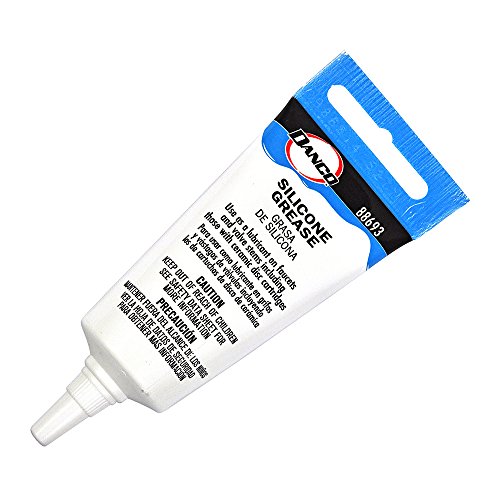
For faucet work, this 0.5-ounce grease is the most directly targeted option: the maker identifies faucet stems, valves, and cartridges, and says it is safe for nitrite/rubber O-rings. It carries NSF 61 approval and is described as odorless and colorless, useful when applying lubricant around a fixture. The maker says it retains consistency from -40°F to 400°F. The limitation is its small tube, which is better suited to occasional repairs than maintaining several pool or spa components.
Bottom line: Choose this for drinking-water faucet and valve repairs where the NSF 61 approval matters.
KEZE Waterproof Silicone Lubricant, 1 oz

The 1-ounce size gives occasional repair work a little more grease than a half-ounce tube, while keeping the container compact. The maker describes it as food-grade and NSF approved, odorless and colorless, and suitable for faucet stems, cartridges, gaskets, toilet gaskets, and rubber O-rings. It also claims water and oxidation resistance and a -40°F to 400°F operating range. The broad application list includes scuba gear and bearings, but buyers should match the grease to the specific seal material rather than assume every elastomer is compatible.
Bottom line: Pick this for varied small household O-ring and gasket repairs.
KEZE Pool Lube, 8 oz

The 8-ounce brush-top can is the largest container here, making it the more practical format for recurring pool or spa maintenance. The maker names filters, cartridges, unions, salt cells, valves, and O-rings, and says it is compatible with most rubber, plastic, and polymer materials. Its temperature range extends to 428°F, 28°F above the faucet-focused options. The limitation is that its pool-equipment emphasis and larger format are unnecessary for someone lubricating a single faucet cartridge.
Bottom line: Choose this for repeated pool-filter, spa, and valve seal maintenance.
How to choose silicone grease for plumbing
Match the lubricant to the material and the job: silicone grease is commonly used on rubber O-rings and plastic parts, while petroleum-based grease can damage some elastomers. For drinking-water fixtures, seek a specific potable-water approval such as NSF/ANSI 61 rather than relying only on a “food grade” claim. The products here make different claims: the faucet-focused option identifies NSF 61, while others use broader NSF or food-grade language. An O-ring needs a thin film of lubricant, not a packed cavity; excess grease can attract grit or interfere with assembly. If a fitting needs its threads sealed, use thread tape or a compatible thread sealant instead of treating grease as the seal.
Where plumber’s grease belongs
Plumber’s silicone grease belongs on seals and sliding parts, not every plumbing joint. A light coating can help an O-ring seat without twisting and can reduce friction as a faucet cartridge or valve stem moves. Grease does not restore a flattened, cracked, or stretched seal; replace a damaged O-ring with the correct size. Avoid coating drinking-water passages unless the product is approved for that use, and keep lubricant away from surfaces where the fixture maker prohibits it. Use only a thin, even film on the seal, then reassemble without forcing the parts. Cross-threading or overtightening can damage plastic housings even when the O-ring is lubricated.
Container size and temperature range
Choose a container based on how often the repair recurs: a 0.5- or 1-ounce tube covers occasional faucet work, while larger 5- and 8-ounce containers make more sense for multiple pool, spa, or sprinkler seals. Temperature claims differ across these options, from -40°F to 400°F on the faucet and compact O-ring greases to -40°F to 428°F on the pool and outdoor-focused choices. Treat those ranges as maker claims, not permission to use grease beyond the fixture’s own operating limits. Brush-top packaging can be convenient for repeated equipment work, but keep the applicator clean so dirt is not carried onto a sealing surface.
Common mistakes with plumbing grease
The most common mistake is choosing based only on a “food grade” label when the task specifically requires a recognized drinking-water approval. Another is using silicone grease as pipe-thread sealant: threaded connections usually require a compatible thread sealant or tape, and grease alone may not stop a leak. Do not mix old grease with a new formulation on a seal; clean residue first so grit and incompatible lubricant are not trapped. Inspect elastomers for swelling, flattening, or cracks before reassembly, and replace questionable seals rather than adding more grease. For a pool filter or outdoor valve, also check that the seal material and equipment maker permit the selected lubricant.
Frequently Asked Questions
Can silicone grease stop a plumbing leak?
Silicone grease can lubricate an O-ring so it seats smoothly, but it does not repair a cracked seal or replace thread sealant. Replace a damaged O-ring and use a compatible sealing method on threaded joints.
Is NSF approval the same as NSF 61?
No; NSF/ANSI 61 is a specific drinking-water system component health-effects standard. If a fixture requires that approval, verify the exact NSF 61 claim rather than relying on a general food-grade or NSF statement.
How much silicone grease should go on an O-ring?
Use a thin, even film over the O-ring rather than filling the groove with grease. Excess lubricant can collect dirt or interfere with assembly, especially in small faucet cartridges.
Can plumber’s silicone grease be used on plastic parts?
Some silicone greases are intended for plastic, but compatibility depends on the specific plastic and seal. Check the equipment maker’s material guidance before use, especially on pool filter housings and threaded plastic fittings.
Should silicone grease go on faucet threads?
Silicone grease is generally used to lubricate O-rings, cartridges, and moving valve parts, not to seal pipe threads. Use compatible thread tape or pipe sealant for threaded plumbing connections.