
Compass Laboratory Methylene Blue: 5 Options Compared

Compass Laboratory Methylene Blue 1% is the closest match for buyers seeking Compass Laboratory methylene blue because it is a 1% USP-grade solution in a 50 mL amber glass bottle. Choose Compass Laboratory Methylene Blue 0.5% instead if you specifically want the brand’s 0.5% version; the other options are different brands or formats.
Methylene blue is also a prescription drug, so supplement-style labeling does not make it appropriate for self-treatment; check with a clinician before taking any oral product.
We earn a commission if you buy through links on this page. As an Amazon Associate I earn from qualifying purchases. Products are compared on manufacturer specifications, not hands-on testing.
- Best overall: Compass Laboratory Methylene Blue 1% – A 1% USP-grade solution with a 50 mL amber glass bottle.
- Best for lower concentration: Compass Laboratory Methylene Blue 0.5% – The Compass Laboratory option is 0.5% in a 50 mL bottle.
- Best for glycerin formula: Lunakai Methylene Blue 1% – The formula names purified water and glycerin alongside USP-grade methylene blue.
| Product | Best for | Concentration | Bottle volume | Formula | Shop |
|---|---|---|---|---|---|
| Compass Laboratory Methylene Blue 1% | 1% brand match | 1% w/v | 1.69 fl oz | Methylene blue, purified water | Check Price on Amazon |
| Compass Laboratory Methylene Blue 0.5% | Lower concentration | 0.5% | 1.69 fl oz | USP-grade methylene blue | Check Price on Amazon |
| Lunakai Methylene Blue 1% | Glycerin formula | 1% | 1.69 fl oz | Purified water, glycerin, methylene blue | Check Price on Amazon |
| Earth Harmony Methylene Blue 2-Pack | Two-bottle package | — | 2 fl oz each | — | Check Price on Amazon |
| Heiltropfen Methylene Blue 1% 1000 mL | Large volume | 1% | 33.8 fl oz | Methylene blue trihydrate | Check Price on Amazon |
Compass Laboratory Methylene Blue and Alternatives
Compare the Compass Laboratory formulas first, then consider how other brands differ in concentration, ingredients and package size.
Compass Laboratory Methylene Blue 1%

Compass Laboratory Methylene Blue 1% is the 1% Compass Laboratory option, packaged in a 50 mL amber glass bottle. The formula is made with USP-grade methylene blue and purified water, with no other ingredients added. The maker says each lot is independently tested for identity, concentration and purity, and that a lot-specific certificate of analysis is available on request. This suits a buyer comparing the brand’s higher-concentration formula. The limitation is that a 1% solution is twice the concentration of the brand’s 0.5% option, so anyone comparing amounts per drop should verify the product’s dosing guidance with a clinician.
Bottom line: Choose this if you want the 1% Compass Laboratory formula in amber glass.
Compass Laboratory Methylene Blue 0.5%

Compass Laboratory Methylene Blue 0.5% is Compass Laboratory’s 0.5% formula, setting it apart from the brand’s 1% option by concentration. Its package is a 1.69 fl oz glass bottle, and the maker describes the contents as USP-grade methylene blue with no formaldehyde and independent testing. The product is labeled as a dietary supplement for humans, but that label does not establish that it is safe or suitable for a particular person. A lower concentration also does not make medication interactions disappear. This option is for shoppers comparing the same brand at a different strength; ask a clinician before oral use, particularly if taking prescription medication.
Bottom line: Choose this if a 0.5% Compass Laboratory formula is the strength you are comparing.
Lunakai Methylene Blue 1%
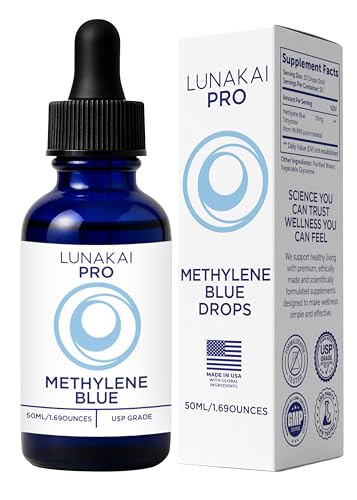
Lunakai Methylene Blue 1% differs from the Compass Laboratory formulas by including glycerin with purified water and USP-grade methylene blue. It is a 1% liquid in a 1.69 fl oz dropper bottle, and the maker describes it as vegan-friendly and free of several common allergens. The added glycerin matters to buyers seeking a formula other than water alone. This is a different brand, not a Compass Laboratory product, so it is only a partial match to a brand-specific search. The maker’s suggested daily-use framing is not individualized medical guidance; consult a clinician before taking methylene blue.
Bottom line: Choose this if you prefer a water-and-glycerin formula from another brand.
Earth Harmony Methylene Blue 2-Pack

Earth Harmony Methylene Blue 2-Pack is a two-bottle Earth Harmony package, making package format its clearest distinction from the single-bottle Compass Laboratory products. That makes a strength-to-strength comparison difficult. Buyers who need a specific concentration or want to avoid particular ingredients should confirm those points with the seller or manufacturer before choosing it. It is a different brand and a partial match for a Compass Laboratory search.
Bottom line: Choose this only if a two-bottle package matters more than comparing stated concentration.
Heiltropfen Methylene Blue 1% 1000 mL
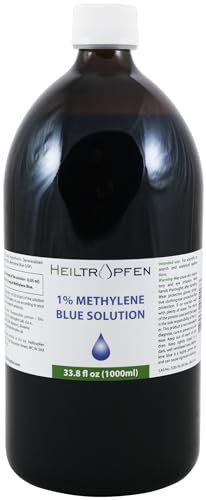
Heiltropfen Methylene Blue 1% 1000 mL stands apart for its 1000 mL bottle, far larger than the 50 mL Compass Laboratory options. The formula is 1% methylene blue trihydrate in demineralized water, and the maker says it is third-party tested and tested for heavy-metal contamination. The maker’s directions specify mixing 1 mL with 200 mL of water; do not treat those directions as personal medical advice. This product is a different brand and its large container is not a close format match for someone seeking a small Compass Laboratory bottle. Ask a clinician before oral use.
Bottom line: Choose this if you specifically need a 1% solution in a 1000 mL container.
How to Compare Methylene Blue Concentrations
Concentration is the first figure to compare: 1% w/v means 1 gram per 100 mL, or 10 mg per mL. A 0.5% w/v solution contains 5 mg per mL, so equal volumes do not contain equal amounts of methylene blue. Drop size can vary with the dropper, liquid viscosity and angle, so a number of drops is not a dependable substitute for measuring volume. If a product does not give concentration in a clear unit, confirm it before comparing doses. This page compares products by the concentration and package information provided, not by suitability for treating a condition.
What the Formula and Bottle Tell You
Liquid formulas may contain water alone or include other ingredients such as glycerin; those ingredients can matter if you are avoiding a particular substance. Amber glass reduces light exposure, but packaging alone does not establish purity or safety. For a supplement-like product, look for a lot-specific certificate of analysis that identifies the tested lot and the tests performed; testing claims should not be mistaken for approval to treat a medical condition. Choose only a volume you can store as directed and use within the labeled period. If concentration, ingredients, or intended route are unclear, confirm them before use rather than inferring them from the product name.
Methylene Blue Safety and Medication Interactions
Methylene blue is a prescription drug used for acquired methemoglobinemia, and medical use involves a clinician-selected dose and route. It can cause serious serotonin syndrome when combined with serotonergic medicines, including some antidepressants and opioids; people taking such medicines should not self-start methylene blue. It can also cause hemolytic anemia in people with G6PD deficiency. These risks apply regardless of whether a bottle is marketed as a supplement or describes its ingredients as USP grade. Do not use an oral liquid to treat symptoms or replace prescribed care. Ask a pharmacist or clinician to check your medications and health history before taking it.
Choosing a Bottle Size and Strength
Match both concentration and total volume to the purpose, rather than choosing by bottle size alone. A 50 mL bottle at 1% contains 500 mg of methylene blue in total, while a 50 mL bottle at 0.5% contains 250 mg; these calculations describe contents, not a recommended dose. A 1000 mL container holds much more liquid and should not be treated as a more suitable option just because the concentration matches. Use the maker’s exact unit when checking a product label, and confirm the concentration before comparing drop counts. For any intended oral use, seek individualized guidance from a qualified clinician.
Frequently Asked Questions
What does 1% methylene blue mean?
A 1% w/v solution contains 1 gram per 100 mL, equivalent to 10 mg per mL. A 0.5% solution contains 5 mg per mL, so the same measured volume contains half as much methylene blue.
Can methylene blue interact with antidepressants?
Yes. Methylene blue can trigger serious serotonin syndrome with serotonergic medicines, including some antidepressants. Do not combine them without guidance from the prescriber or a pharmacist.
Who should avoid methylene blue because of G6PD deficiency?
People with G6PD deficiency may be at risk of hemolytic anemia from methylene blue. A clinician should review this risk before any use.
Does USP grade mean methylene blue is safe to take?
No. USP-grade wording concerns a quality specification and does not establish that a product is safe or suitable for an individual. Methylene blue can have serious interactions and contraindications, so consult a clinician before taking it.
How much methylene blue is in a 50 mL bottle?
At 1% w/v, 50 mL contains 500 mg total; at 0.5%, 50 mL contains 250 mg total. These are total-content calculations, not dose recommendations.