
Best No Tears Dog Shampoo: 4 Gentle Picks Compared

Paul Mitchell Pet Tear-Free Shampoo suits most dogs because its tear-free cleanser is made for pets of all ages and comes in a manageable 16.9-ounce bottle. Choose Veterinary Formula Puppy Love Shampoo instead for a puppy over 6 weeks, or We Love Doodles Blueberry Facial Shampoo when you specifically want a concentrated facial shampoo.
“Tear-free” describes a formula claim, not permission to get shampoo in a dog’s eyes; keep every shampoo away from the eyes and rinse thoroughly.
We earn a commission if you buy through links on this page. As an Amazon Associate I earn from qualifying purchases. Products are compared on manufacturer specifications, not hands-on testing.
- Best overall: Paul Mitchell Pet Tear-Free Shampoo – The tear-free formula is for pets of all ages and the 16.9-ounce size suits routine bathing.
- Best for young puppies: Veterinary Formula Puppy Love Shampoo – Its formula is made for puppies over 6 weeks and is sulfate- and DEA-free.
- Best for bulk bathing: Bio-Groom So-Gentle Shampoo – The 1-gallon size is the largest option here, and the formula is soap-free and dye-free.
- Best for facial grooming: We Love Doodles Blueberry Facial Shampoo – The 16:1 concentrate is specifically presented as a tearless facial shampoo.
| Product | Best for | Size | Formula focus | Age or use | Shop |
|---|---|---|---|---|---|
| Paul Mitchell Pet Tear-Free Shampoo | Routine bathing | 16.9 fl oz | Oat protein; neutral pH | All ages | Check Price on Amazon |
| Veterinary Formula Puppy Love Shampoo | Young puppies | 17 oz | Sulfate-free; DEA-free | Puppies over 6 weeks | Check Price on Amazon |
| Bio-Groom So-Gentle Shampoo | Bulk bathing | 1 gal | Coconut oil; soap-free | Puppies and kittens | Check Price on Amazon |
| We Love Doodles Blueberry Facial Shampoo | Facial grooming | 16 oz | 16:1 concentrate; blueberry | Facial grooming | Check Price on Amazon |
No Tears Dog Shampoo Picks
Compare each tear-free option by its intended use, size, and formula focus before choosing a bathing routine.
Paul Mitchell Pet Tear-Free Shampoo
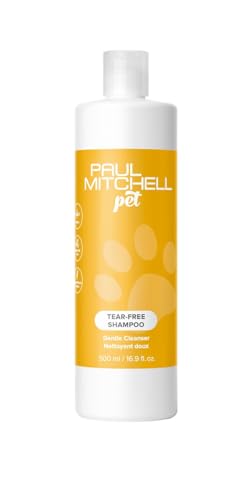
For an all-ages tear-free cleanser in a mid-size bottle, this 16.9-ounce option stands apart from the puppy-specific and gallon-size choices. Paul Mitchell says the shampoo uses oat protein, gentle cleansers, and deodorizers, while its neutral pH helps prevent irritation. That makes it a straightforward choice for households seeking one regular shampoo for pets at different life stages. The limitation is size: buyers bathing several large dogs often may prefer a gallon container to reduce how often they restock.
Bottom line: Choose this for regular baths across pets of different ages.
Veterinary Formula Puppy Love Shampoo

For a puppy-specific age range, this 17-ounce shampoo is the clearest fit: it is intended for puppies over 6 weeks, unlike the all-ages options. The maker says its sulfate-free, DEA-free formula is pH-balanced, suited to frequent use, and will not wash away topical flea and tick treatments; it also describes the scent as light baby powder. That age limit matters: do not assume it is suitable for a puppy younger than 6 weeks. Its puppy focus is less useful if you need one formula for every animal in a mixed-age household.
Bottom line: Pick this when bathing a puppy older than 6 weeks.
Bio-Groom So-Gentle Shampoo

The one-gallon format makes this the bulk choice, rather than a small bottle for occasional baths. The maker says the tearless formula is hypoallergenic, pH-balanced, soap-free, dye-free, and paraben-free, with coconut and palm-kernel oils. It is described as suitable for puppies and kittens, so it may suit a home bathing multiple young pets. The tradeoff is storage and handling: a gallon container takes more room and is less convenient to carry into a bathing area than a 16- or 17-ounce bottle.
Bottom line: Choose this if you want a large supply for frequent household use.
We Love Doodles Blueberry Facial Shampoo

Unlike the full-bath shampoos, this 16-ounce product is positioned for facial grooming, with a 16:1 concentrated formula. The maker says it is tear-free and intended to clean and deodorize while addressing eye debris, crust, and tear stains; those are product claims, not a reason to put shampoo in or near the eyes. Its focused purpose suits someone adding a facial wash to a grooming routine. It is not the most versatile choice if you need a general-purpose shampoo for washing the entire coat.
Bottom line: Pick this for a concentrated wash intended for facial grooming.
How to Choose No Tears Dog Shampoo
Choose by the dog’s age and the area you plan to wash, not by the tear-free wording alone. A puppy-specific shampoo with an age cutoff should only be used once the puppy reaches that age; this matters especially for puppies under 6 weeks. Facial shampoos and full-coat shampoos serve different tasks, so a product aimed at facial grooming may not be the practical choice for an entire bath. Dog skin is generally less acidic than human skin, with typical pH around 6.2 to 7.4, which is why a dog-formulated, pH-balanced shampoo is preferable to human shampoo. No tear-free label makes direct eye contact harmless: keep shampoo out of the eyes and rinse promptly if contact occurs.
Dog Shampoo Sizes and Concentrates
Choose a bottle size based on how often you bathe and how much storage space you have. A 16- to 17-ounce container is easier to handle for occasional baths, while a gallon container suits households that go through shampoo regularly but needs more storage room. A 16:1 concentrate is not equivalent to 16 ounces of ready-to-use shampoo: it is mixed according to its product directions, so check the dilution before measuring. Most dogs do not need a weekly bath; many can be bathed every 4 to 6 weeks, with coat type, outdoor activity, and veterinarian advice changing the interval. Bathing too often can dry the skin, so use the shortest routine that keeps the coat clean.
Safe Bathing Around a Dog’s Eyes
Keep shampoo away from the eyes even when the product is called tear-free. Tear-free generally signals a gentler formulation claim, not an eye medication or a guarantee against irritation. Wet the coat with lukewarm water, apply shampoo away from the face, and use a damp cloth to clean around the eyes rather than pouring shampoo over the head. Rinse until the coat no longer feels slick; leftover cleanser can irritate skin. If shampoo gets in an eye, flush with clean lukewarm water, and seek veterinary guidance for ongoing redness, squinting, or discomfort. A dog that resists facial handling may be safer to groom in short sessions than to hold still through a full face wash.
When to Bathe a Dog More or Less Often
For many dogs, bathing every 4 to 6 weeks is a reasonable starting interval, not a fixed rule. A short-coated indoor dog may need less frequent bathing, while a dog that swims or gets muddy may need an extra rinse or bath sooner. Long or dense coats may need more brushing between baths to prevent tangles and help dirt release; shampoo alone does not remove mats safely. Dogs with persistent itching, odor, or flaky skin need veterinary advice rather than increasingly frequent shampooing, because those signs can have causes a bath will not address. If a topical flea or tick product is being used, confirm its bathing directions and timing with its label or veterinarian before changing the wash schedule.
Frequently Asked Questions
Can tear-free dog shampoo go directly in a dog’s eyes?
No; keep shampoo out of the eyes even if the formula is labeled tear-free. If shampoo gets into an eye, flush with clean lukewarm water and seek veterinary advice if redness or squinting continues.
How often should I bathe a dog with shampoo?
Many dogs can be bathed every 4 to 6 weeks, although coat type and activity change the interval. Weekly baths may dry some dogs’ skin, so use brushing or a water rinse between shampoo baths when appropriate.
When can I use shampoo on a puppy?
Use a puppy shampoo only once the puppy reaches its minimum age; the puppy-specific option here is for puppies over 6 weeks. Keep very young puppies warm and ask a veterinarian about bathing if they are soiled or unwell.
Is concentrated dog shampoo used straight from the bottle?
A 16:1 concentrate needs dilution rather than automatic use at full strength. Measure the water-to-product ratio given for that formula, since concentrated products can be applied incorrectly if treated like ready-to-use shampoo.
Should I use human shampoo on my dog?
Dog-formulated shampoo is the better choice because dog skin typically has a pH around 6.2 to 7.4, while human skin products are made for a different skin environment. A dog shampoo labeled pH-balanced is more appropriate for routine coat washing.