
Queenmew Bark Control Devices Compared by Coverage

For a Queenmew bark control device, choose the dual-emitter model if Type-C charging matters; its claimed range is 50 feet. The four-transmitter Queenmew model also claims 50 feet and offers three adjustable frequencies, so it may suit buyers prioritizing frequency settings.
Ultrasonic bark deterrents emit high-frequency sound when barking is detected; choose another training approach if your dog has hearing issues or reacts fearfully to sound.
We earn a commission if you buy through links on this page. As an Amazon Associate I earn from qualifying purchases. Products are compared on manufacturer specifications, not hands-on testing.
- Best overall: Queenmew Dual-Emitter 50FT – It combines dual emitters, Type-C charging and a claimed 50-foot range.
- Best for frequency options: Queenmew Four-Transmitter 50FT – It has four transmitters, three adjustable frequencies and a claimed 50-foot range.
- Best for solar charging: Solar and Type-C 64FT Deterrent – It offers solar and Type-C charging with a claimed 64-foot range.
| Product | Best for | Claimed range | Emitter design | Power | Shop |
|---|---|---|---|---|---|
| Queenmew Dual-Emitter 50FT | Type-C charging | 50 ft | 2 emitters | Type-C rechargeable | Check Price on Amazon |
| Queenmew Four-Transmitter 50FT | Frequency settings | 50 ft | 4 transmitters | — | Check Price on Amazon |
| Solar and Type-C 64FT Deterrent | Solar charging | 64 ft | 3-direction coverage | Solar, Type-C | Check Price on Amazon |
| Rechargeable 1500mAh Auto Deterrent | Battery runtime | — | — | 1500mAh rechargeable | Check Price on Amazon |
| 33FT Rechargeable Deterrent | Shorter-range placement | 33 ft | — | Rechargeable | Check Price on Amazon |
Queenmew Bark Control Devices
Compare the Queenmew models with related ultrasonic bark deterrents by range, emitter design and power options.
Queenmew Dual-Emitter 50FT
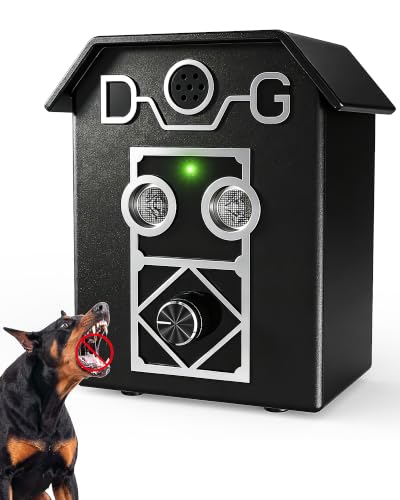
The Queenmew dual-emitter model is the only Queenmew option here whose features specify Type-C charging. The maker says its two emitters provide wider signal coverage and gives a 50-foot range; it also describes three adjustable modes. This setup may suit someone placing the unit in a yard or patio and wanting rechargeable power. Its suitability excludes dogs with hearing issues, so choose a different approach for those animals. Ultrasonic deterrents are training aids, not substitutes for finding why a dog is barking or rewarding quiet behavior.
Bottom line: Pick this if Type-C charging and dual emitters suit your placement.
Queenmew Four-Transmitter 50FT
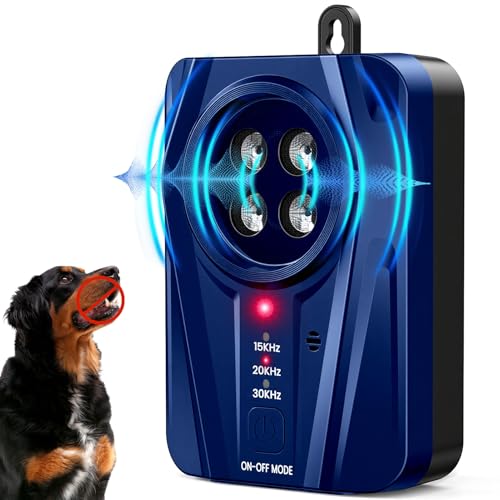
The Queenmew four-transmitter model stands apart with three adjustable frequencies from 15 to 30 kHz. The maker gives it a 50-foot range and says the unit activates when it detects pet barking; its features also advise allowing two weeks for training. That makes it a fit for buyers who want frequency choices, rather than the Type-C power detail given for the other Queenmew model. Keep it as one part of a consistent, reward-based training plan.
Bottom line: Choose this for its four transmitters and adjustable frequency range.
Solar and Type-C 64FT Deterrent

This non-Queenmew deterrent offers solar charging in addition to Type-C, unlike the Queenmew models described here. Its name gives a 64-foot range, and its features describe three-direction signal coverage and three modes. It may suit an outdoor placement where solar supplementation is useful. The fields identify the color as navy blue and size as SM, but do not give battery capacity or runtime, so those may matter if you need predictable operation through cloudy periods. Keep the unit positioned within its claimed range and use it alongside training that rewards quiet behavior.
Bottom line: Pick this if solar supplementation and three-direction coverage fit your setup.
Rechargeable 1500mAh Auto Deterrent

This non-Queenmew option is the only model in this comparison with a battery capacity and runtime claim: 1,500 mAh and up to 30 days on a full charge. The maker describes it as an automatic ultrasonic unit for indoor and outdoor placement, including a fence, tree or table. It may suit buyers who value a specific battery figure over a distance. Check placement and response during supervised use rather than relying on the device alone.
Bottom line: Choose this if battery capacity and the runtime matter most.
33FT Rechargeable Deterrent

This non-Queenmew model is the only option here with a 33-foot range in its name, which can help narrow placement for a smaller area. The maker presents it as an indoor and outdoor ultrasonic deterrent. It may suit a buyer who wants a shorter stated range rather than the 50- or 64-foot claims elsewhere in this group.
Bottom line: Pick this for a placement where a 33-foot claimed range is adequate.
How to choose a Queenmew bark control device
Choose by the feature that changes your placement or routine: emitter design, claimed range, or charging. In this group, both Queenmew devices claim 50 feet, while one specifies dual emitters and Type-C charging and the other specifies four transmitters and a 15–30 kHz adjustable frequency range. A range figure is a maker claim, not a guarantee through walls, fences or other obstacles; place a unit with a clear path toward the barking area. Ultrasonic devices respond to sound, so nearby barking may also trigger a unit depending on its detection design. Start with supervised, short sessions and pair quiet moments with rewards. Avoid sound deterrents for dogs with known hearing problems or marked sound fear.
Where to place an ultrasonic bark deterrent
Place a bark deterrent within its claimed range and orient its sound path toward the area where barking starts. The Queenmew models here claim 50 feet, while the other ranges are 33 and 64 feet; these distances help compare intended coverage, but obstacles can reduce practical reach. A device at the far end of a yard may not serve a dog separated from it by a wall or dense barrier. Keep the unit out of weather unless its instructions allow the specific exposure, and mount it securely where children and pets cannot chew or knock it down. If more than one dog is nearby, identify which animal is barking before relying on an automatic trigger.
Ultrasonic deterrents and reward-based training
Use an ultrasonic deterrent as a cue within training, not as the whole solution. Dogs may bark from alarm, boredom, separation distress or a need to communicate, and the trigger affects what training will help. Reward quiet behavior immediately with a treat or attention, and teach an alternate action such as settling on a mat. A deterrent that activates around several dogs can interrupt the wrong animal or create confusion. Avoid repeatedly exposing a dog that hides, trembles or tries to escape; those responses signal that the sound is causing distress. For persistent barking linked to fear or being alone, a veterinarian or qualified behavior professional can help assess the cause.
Common setup mistakes with bark control devices
Putting a unit too far away or behind an obstruction is a common setup mistake; compare the actual placement with the claimed range in feet before deciding it does not work. Another mistake is expecting an automatic bark detector to distinguish one dog from another when several animals are within earshot. Check the unit’s mode and position, then observe its response while you are present. Do not use sound deterrents on dogs with hearing issues, and stop if the dog shows distress. Barking is normal communication, so the goal should be reducing a specific unwanted trigger rather than silencing every bark. Consistent rewards for an alternative behavior make the training message clearer.
Frequently Asked Questions
Can an ultrasonic bark device affect other dogs nearby?
Yes, other dogs within hearing range may hear the sound even if they are not barking. Supervise use around multiple dogs and stop if any dog shows fear or distress.
How far away should a bark deterrent be placed?
Keep it within the unit’s claimed range and aim its sound path at the barking area; the Queenmew models here claim 50 feet. Walls and other barriers can make the practical reach shorter.
How long does bark deterrent training usually take?
Training time depends on the dog’s trigger and consistent follow-through; one Queenmew model’s features advise allowing two weeks. Pair the cue with immediate rewards for quiet behavior rather than relying on the sound alone.
Are ultrasonic bark deterrents suitable for every dog?
No, avoid them for dogs with hearing issues or strong sound fear. Stop use if a dog hides, trembles or tries to escape, and consider a reward-based plan instead.
Can these devices stop barking when nobody is home?
An automatic unit may detect barking, but it does not address causes such as separation distress or boredom. If barking occurs only when a dog is alone, identify and address that trigger rather than depending on an unattended sound cue.