
Valvoline 5W-30 Full Synthetic Oil API SP Compared

Valvoline MaxLife Full Synthetic 5W-30 is the strongest match for Valvoline 5W-30 full synthetic oil with API SP when your engine has 75,000 miles or more, because its formula is specifically designed for high mileage engines and meets API SP. Choose Valvoline Advanced Full Synthetic 5W-30 instead for a regular full synthetic formula in a 1-quart container; drivers who need a synthetic blend or deposit-focused formula should compare Valvoline MaxLife High Mileage 5W-30 Blend or Valvoline Restore & Protect Full Synthetic 5W-30 and verify API SP before choosing.
We earn a commission if you buy through links on this page. As an Amazon Associate I earn from qualifying purchases. Products are compared on manufacturer specifications, not hands-on testing.
- Best overall: Valvoline MaxLife Full Synthetic 5W-30 – Full synthetic 5W-30 meets API SP and is designed for engines with 75,000 miles or more.
- Best for a 1-quart size: Valvoline Advanced Full Synthetic 5W-30 – Advanced full synthetic 5W-30 meets API SP and comes in a 1-quart container.
- Best for high-mileage blend: Valvoline MaxLife High Mileage 5W-30 Blend – Synthetic blend 5W-30 is formulated for engines with 75,000 miles or more and meets API SP.
- Best for deposit removal focus: Valvoline Restore & Protect Full Synthetic 5W-30 – Full synthetic 5W-30 centers on piston deposits, though API SP fit needs verification.
| Product | Best for | Oil type | API SP | Container size | Shop |
|---|---|---|---|---|---|
| Valvoline MaxLife Full Synthetic 5W-30 | High mileage engines | Full synthetic | Yes | 5 qt | Check Price on Amazon |
| Valvoline Advanced Full Synthetic 5W-30 | Quart-size top-offs | Full synthetic | Yes | 1 qt | Check Price on Amazon |
| Valvoline Restore & Protect Full Synthetic 5W-30 | Deposit-focused care | Full synthetic | Verify | 5 qt | Check Price on Amazon |
| Valvoline MaxLife High Mileage 5W-30 Blend | High mileage blend | Synthetic blend | Yes | 5 qt | Check Price on Amazon |
Valvoline 5W-30 full synthetic oil API SP options
Compare the matching full synthetic oils first, then consider related formulas if their specific focus fits your engine.
Valvoline MaxLife Full Synthetic 5W-30
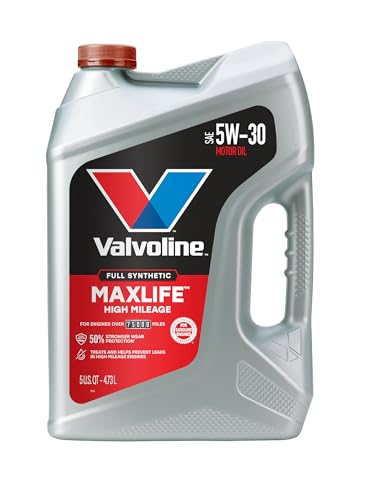
Valvoline MaxLife Full Synthetic 5W-30 is the high mileage-focused choice among these full synthetics: it is designed for engines with 75,000 miles or more and comes in a 5-quart container. Valvoline says its seal conditioners help prevent leaks and reduce oil consumption, and that it meets API SP as well as ILSAC GF-7A. This makes it a direct fit for a buyer seeking both 5W-30 full synthetic oil and the API SP specification. Its mileage focus is the limitation for drivers who do not need that emphasis and prefer a standard full synthetic formula.
Bottom line: Choose this if your priority is full synthetic oil for an engine with 75,000 miles or more.
Valvoline Advanced Full Synthetic 5W-30

Valvoline Advanced Full Synthetic 5W-30 is the straightforward full synthetic alternative, with a 1-quart container instead of the 5-quart size of Valvoline MaxLife Full Synthetic 5W-30. Valvoline says the oil meets API SP and ILSAC GF-7A, and highlights cold-temperature flow alongside wear, deposit, and heat protection. That combination suits someone who needs a smaller amount or wants a general-use 5W-30 formula rather than a product centered on high mileage engines. The quart size may be inconvenient when a vehicle’s oil capacity requires more than one container.
Bottom line: Pick this for a standard full synthetic 5W-30 formula in a one-quart container.
Valvoline Restore & Protect Full Synthetic 5W-30

Valvoline Restore & Protect Full Synthetic 5W-30 differs from the API SP-confirmed choices by emphasizing piston-deposit removal and continued deposit defense in a 5-quart full synthetic formula. Valvoline claims it can remove up to 100% of piston deposits over four consecutive oil changes and describes its anti-wear protection relative to GF-6-qualified oil. Those claims make it relevant if deposit control is your main reason for considering a different formula. The product facts do not confirm API SP, so verify that specification on the container before choosing it for an API SP requirement.
Bottom line: Consider this when deposit-focused claims matter, after confirming API SP on the container.
Valvoline MaxLife High Mileage 5W-30 Blend
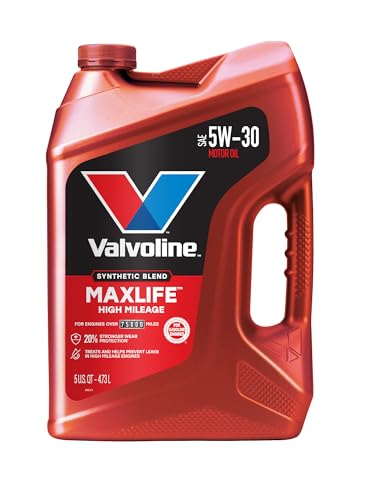
Valvoline MaxLife High Mileage 5W-30 Blend is the related high mileage option that changes the oil type: it is a synthetic blend, not a full synthetic. The 5-quart formula is designed for engines with 75,000 miles or more, and Valvoline says it meets API SP and ILSAC GF-7A. Seal conditioners and extra detergents are among its described features, making the high mileage focus clear. Since the search calls for full synthetic oil, this is a partial match; choose it only if a blend is acceptable for your vehicle and its required oil specification.
Bottom line: Choose this only if a high mileage synthetic blend fits your vehicle’s requirements.
How to choose Valvoline 5W-30 oil
Start with the viscosity and specification in your owner’s manual, then choose the oil type and formulation focus. SAE 5W-30 describes viscosity grades: the 5W portion addresses cold-temperature performance, while 30 is the hot-temperature grade. API SP is a gasoline-engine oil service category; an oil carrying a newer API gasoline category is generally designed to cover earlier categories, but always match the vehicle maker’s requirement. For this set, Valvoline MaxLife Full Synthetic 5W-30 and Valvoline Advanced Full Synthetic 5W-30 explicitly meet API SP, while Valvoline MaxLife High Mileage 5W-30 Blend is a blend rather than full synthetic. If your vehicle requires full synthetic, do not treat the blend as equivalent merely because the viscosity matches.
What API SP means for a 5W-30 oil
API SP identifies an engine-oil performance category, not a viscosity or a guarantee that every 5W-30 formula has the same approvals. API’s starburst mark indicates an oil meets the applicable ILSAC requirements, while the API donut can show the service category and viscosity; look for the exact marks and wording required by your vehicle. ILSAC GF-7A is a gasoline-engine specification associated with API SP-era oils, and both Valvoline MaxLife Full Synthetic 5W-30 and Valvoline Advanced Full Synthetic 5W-30 identify it alongside API SP. Specifications on packaging can change with a formula revision, so confirm the category printed on the container when the vehicle manual calls for API SP.
Full synthetic versus synthetic blend 5W-30
Full synthetic and synthetic blend describe base-oil formulation, whereas 5W-30 describes viscosity; these labels answer different questions. Valvoline MaxLife High Mileage 5W-30 Blend is the only synthetic blend here, despite sharing the 5W-30 grade and API SP claim with the full synthetic options. Blend formulas combine synthetic and conventional base stocks, while full synthetic oils use synthetic base stocks; neither label overrides a vehicle maker’s required viscosity or specification. For everyday selection, follow the manual first, then weigh the purpose of the formula: high mileage seal conditioners, general full synthetic protection, or deposit-focused claims. A matching API category does not make a different oil type an exact match for a full synthetic request.
How much 5W-30 oil to keep on hand
Choose container quantity from the engine’s oil capacity and the amount needed between changes, not just from the product’s focus. A 1-quart container of Valvoline Advanced Full Synthetic 5W-30 is practical when you need a small amount, while the 5-quart sizes of Valvoline MaxLife Full Synthetic 5W-30, Valvoline MaxLife High Mileage 5W-30 Blend, and Valvoline Restore & Protect Full Synthetic 5W-30 hold five times as much. Passenger-car oil capacities commonly fall around 4 to 6 quarts, but engine design and filter change can shift the exact amount. Check the owner’s manual for capacity and fill in stages, checking the dipstick on level ground; overfilling can contribute to foaming or pressure problems, so do not assume a full container is the correct fill.
Frequently Asked Questions
Can I use API SP oil in an older car?
API SP oil is generally backward compatible with earlier API gasoline categories, but the manual’s viscosity and any manufacturer-specific approval still control. Match the required grade, such as 5W-30, as well as the service category.
Does 5W-30 work in cold weather?
The 5W grade is intended to meet cold-temperature viscosity requirements, but the suitable oil still depends on the vehicle maker’s temperature chart. Use the manual’s permitted grades for the lowest temperatures you expect.
How many quarts does a typical car need?
Many passenger cars use roughly 4 to 6 quarts for an oil change, though engine size and filter replacement change the capacity. Confirm the exact amount in the owner’s manual and check the level after filling.
Can I mix synthetic and conventional motor oil?
Most modern engine oils are compatible for an emergency top-off, but mixing can reduce the benefits of a particular formulation. For a routine oil change, use the viscosity and specification required by the manual.
How often should I change full synthetic oil?
Many modern vehicles use oil-change intervals around 5,000 to 10,000 miles with suitable synthetic oil, but the automaker’s schedule and oil-life monitor determine the correct interval. Severe use such as frequent short trips, towing, or dusty roads can shorten the interval.