
Best Waterproof Tape for Leaking Pipes: 3 Types Compared

XFasten Self-Fusing Silicone Tape, 1 in. x 36 ft. is the best fit for most pipe leaks because its 1-inch self-fusing silicone tape can wrap around small pipes and tight joints. Choose X-Treme Tape Self-Fusing Silicone, 1 in. x 10 ft. for a shorter roll and a wider temperature range, or SQKM Clear Rubberized Waterproof Tape, 3.94 in. x 9.8 ft. for a broad rubberized tape intended for dry-surface repairs.
Waterproof tape can help with a temporary leak repair, but it is not a replacement for a properly rated plumbing fitting or pipe repair. Shut off the water before wrapping a pressurized pipe.
We earn a commission if you buy through links on this page. As an Amazon Associate I earn from qualifying purchases. Products are compared on manufacturer specifications, not hands-on testing.
- Best overall: XFasten Self-Fusing Silicone Tape, 1 in. x 36 ft. – Its 1-inch self-fusing silicone format is made to conform around pipe joints and small diameters.
- Best for temperature range: X-Treme Tape Self-Fusing Silicone, 1 in. x 10 ft. – Its silicone tape is described as suitable from -80°F to 500°F.
- Best for broad coverage: SQKM Clear Rubberized Waterproof Tape, 3.94 in. x 9.8 ft. – Its rubberized tape is nearly 4 inches wide and is intended for dry-surface pipe repairs.
| Product | Best for | Tape type | Width | Length | Shop |
|---|---|---|---|---|---|
| XFasten Self-Fusing Silicone Tape, 1 in. x 36 ft. | Pipe joints | Self-fusing silicone | 1 in. | 36 ft. | Check Price on Amazon |
| X-Treme Tape Self-Fusing Silicone, 1 in. x 10 ft. | Hot or cold lines | Self-fusing silicone | 1 in. | 10 ft. | Check Price on Amazon |
| SQKM Clear Rubberized Waterproof Tape, 3.94 in. x 9.8 ft. | Wide dry patches | Rubberized waterproof tape | 3.94 in. | 9.8 ft. | Check Price on Amazon |
Waterproof Tape for Leaking Pipes
These options differ in how they wrap, bond and cover a pipe leak.
XFasten Self-Fusing Silicone Tape, 1 in. x 36 ft.
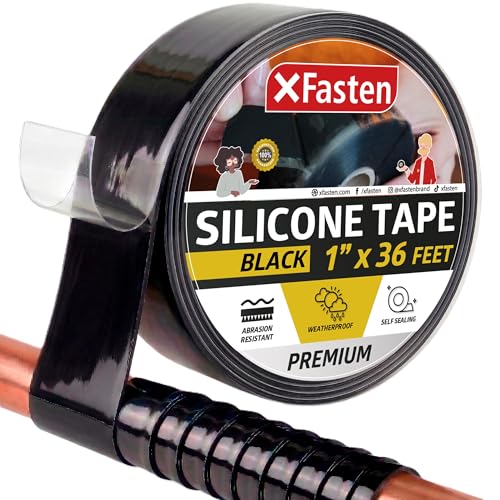
For long wraps around pipe joints, this 36-foot roll offers more tape than the 10-foot option. XFasten says its silicone tape stretches around small diameters and tight corners, and claims a tensile strength of 900 PSI; that figure is not a pipe-pressure rating. Self-fusing tape bonds to itself rather than relying on a sticky adhesive, so it needs to be stretched and overlapped as it is wrapped. Its 1-inch width suits narrow areas, but covering a broad split takes more wraps.
Bottom line: Pick this for a narrow pipe or joint where a long, conforming wrap is useful.
X-Treme Tape Self-Fusing Silicone, 1 in. x 10 ft.

For a silicone wrap with a wide temperature range, this 10-foot roll is the shorter alternative to XFasten Self-Fusing Silicone Tape, 1 in. x 36 ft.. The maker says it withstands -80°F to 500°F and forms a waterproof, airtight seal when wrapped under tension. Like other self-fusing tape, it has no adhesive layer, so the wrap must be pulled tight and layered over itself; a loose wrap may not seal. The compact length suits a localized repair, while a larger leak or several pipe joints may use it up quickly.
Bottom line: Choose this for one localized repair where the temperature range matters.
SQKM Clear Rubberized Waterproof Tape, 3.94 in. x 9.8 ft.

For a broad patch rather than a narrow wrap, this clear rubberized tape is nearly 4 inches wide. SQKM says to apply it to a clean, dry surface and allow 24 to 48 hours before water exposure for underwater repairs. That wait makes it a poor match for a leak that must go back into service immediately. Its wide backing can cover a larger surface area than the 1-inch silicone wraps, but it may be awkward to apply around a very small pipe.
Bottom line: Choose this for a wide patch on a dry pipe surface when the cure wait is workable.
How to choose waterproof tape for a pipe leak
For a narrow pipe or joint, self-fusing silicone is usually easier to wrap than a broad adhesive patch. Self-fusing tape bonds to itself: stretch it as you wrap and overlap each pass so the layers form one continuous sleeve. Rubberized patch tape is better suited to covering a larger surface, but its backing needs broad contact with the pipe. For either type, shut off the water and dry the repair area before application; a wet, pressurized leak can undermine contact and make wrapping difficult. Treat tape as a temporary measure, not a substitute for replacing a damaged section or installing a proper repair fitting. If water cannot be shut off, use a plumber rather than relying on tape over an active leak.
Pipe size and wrap fit
Measure the pipe’s outside diameter and the length of damaged area before choosing tape. A 1-inch-wide roll can wrap around small pipes and tight joints, while a roughly 4-inch-wide patch covers more surface but can be difficult to fold neatly around a narrow pipe. For a self-fusing wrap, stretch the tape and overlap each layer; cover the leak and extend the wrap beyond its edges on both sides. A very short split may still need several turns to build a continuous sleeve. Keep tape off threaded connections that need to be disassembled, and do not assume a tape width or tensile-strength claim establishes a safe working pressure.
Self-fusing silicone and rubberized patch tape
Self-fusing silicone tape adheres to itself under tension, so it is useful for wrapping curves, hoses and narrow pipe joints. Rubberized waterproof patch tape uses a broad backing to cover cracks or gaps on a surface. The right choice depends on whether the damage calls for a wrap or a patch, and whether the pipe can remain dry during application. Use this comparison to match the repair shape to the tape format.
| Repair need | Tape format | Key condition |
|---|---|---|
| Narrow joint or small pipe | Self-fusing silicone | Stretch and overlap the wrap |
| Broad surface patch | Rubberized waterproof tape | Clean and dry the surface |
| Active pressurized leak | Neither as a permanent fix | Shut off water and repair the pipe |
Safe application and common mistakes
Turn off the water supply and relieve pressure before applying tape to a leaking line. A wrap applied over an active stream may fail to bond, and a tape seal is not a pressure-rated plumbing repair unless its maker specifically identifies it for that use. Remove dirt, oil and moisture, then follow the tape’s required wrap tension and overlap; avoid stretching a broad patch tape unless its instructions call for it. Observe any cure or water-exposure wait: one option here calls for 24 to 48 hours before water exposure. If the pipe is split, corroded, bulging or still leaking after a temporary seal, replace the damaged part or call a plumber.
Frequently Asked Questions
Can waterproof tape permanently fix a leaking pipe?
Waterproof tape is best treated as a temporary repair, not a permanent replacement for a damaged pipe or fitting. Shut off water and pressure first; persistent leakage or a split pipe calls for a proper plumbing repair.
Should I apply pipe repair tape while water is flowing?
No, shut off the supply and relieve pressure before wrapping the pipe. A moving stream can interfere with a seal, and tape over an active leak is not a reliable repair.
How much should I overlap self-fusing tape?
Stretch the tape and overlap each pass so the layers bond into a continuous sleeve. Extend the wrap beyond the damaged spot on both ends rather than ending directly at the leak.
Can waterproof tape go on a wet pipe?
Dry the pipe before applying tape unless the tape’s instructions specifically allow wet application. The SQKM rubberized tape calls for a clean, dry surface and a 24-to-48-hour wait before water exposure.
Does a tape strength claim give a pipe pressure rating?
No, a tensile-strength figure describes the tape material and does not by itself establish a safe plumbing pressure. Use a repair product specifically rated for the pipe and service conditions when a permanent pressure seal is needed.