
Vinyl Wrap for Appliances: Finishes and Sizes Compared

For a larger appliance front, CRE8TIVE Brushed Black Appliance Wrap is the closest fit because its 24-inch width can reduce seams; choose LXCREAT Black Brushed Appliance Wrap for a narrower roll or Cohoo Home Silver Appliance Contact Paper for a silver finish. Appliance vinyl wrap is adhesive film for updating smooth surfaces, and the size and surface condition determine fit.
We earn a commission if you buy through links on this page. As an Amazon Associate I earn from qualifying purchases. Products are compared on manufacturer specifications, not hands-on testing.
- Best overall: CRE8TIVE Brushed Black Appliance Wrap – The 24-inch-wide, 118-inch roll covers about 19.67 square feet.
- Best for narrow panels: LXCREAT Black Brushed Appliance Wrap – Its 15.7-inch-wide roll suits smaller sections and has grid lines for cutting.
- Best for silver finish: Cohoo Home Silver Appliance Contact Paper – The silver finish offers an alternative to the black rolls.
| Product | Best for | Roll size | Coverage | Finish | Shop |
|---|---|---|---|---|---|
| CRE8TIVE Brushed Black Appliance Wrap | Large appliance fronts | 24 × 118 in | 19.67 sq ft | Brushed black | Check Price on Amazon |
| LXCREAT Black Brushed Appliance Wrap | Narrower black panels | 15.7 × 78 in | — | Brushed black | Check Price on Amazon |
| Cohoo Home Silver Appliance Contact Paper | Silver appliance finish | 17.7 × 78.7 in | 9.71 sq ft | Silver | Check Price on Amazon |
Vinyl Wrap for Appliances Compared
Compare roll dimensions and finish first, then match the film to a smooth, clean appliance surface.
CRE8TIVE Brushed Black Appliance Wrap

The 24-inch width distinguishes this roll for larger appliance fronts where fewer seams are useful. The vinyl has a brushed black metallic finish, and the 118-inch roll covers about 19.67 square feet. The maker says the film is waterproof, oil-resistant, heat-resistant and easy to wipe clean; its features also describe strong adhesion. A smooth, clean front is the practical target for adhesive film. The roll is wider than the other appliance-specific options, but large-sheet installation is easier with two people, so solo application may be awkward.
Bottom line: Choose this for a wide black finish when you can handle a large sheet with help.
LXCREAT Black Brushed Appliance Wrap

The narrower 15.7-inch roll is easier to plan around small sections than a 24-inch sheet. It measures 78 inches long and has a brushed black metallic look; the film is 0.26 mm thick. The maker says it is waterproof, oil-resistant and heat-resistant, and its backing has grid lines intended to help with measuring and cutting. It suits a smaller fridge or dishwasher area where the narrow width is useful. Its shorter roll offers less length than CRE8TIVE Brushed Black Appliance Wrap, so a broad front may require more joins.
Bottom line: Pick this when narrow sections and a cut guide matter more than a wide sheet.
Cohoo Home Silver Appliance Contact Paper
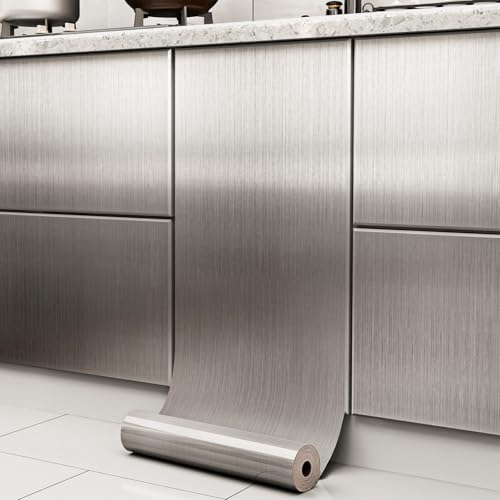
The silver finish sets this roll apart from the black options, making it the choice for a chrome-like look on an appliance front. The 17.7-by-78.7-inch sheet covers 9.71 square feet and uses PVC material. The maker says it is waterproof and removable, and the backing has grid lines for measuring and trimming without professional tools. It is intended for smooth surfaces such as refrigerators, countertops and cabinets. The roll is shorter and narrower than CRE8TIVE Brushed Black Appliance Wrap, so measure the full area and plan seams before choosing it for a large door.
Bottom line: Choose this for a silver look on a measured, smooth appliance surface.
How to choose appliance vinyl wrap
Choose appliance wrap by panel width, finish, and surface condition. Measure the flat area in inches, including the height and width, then compare the usable roll size; plan extra material for trimming and alignment. A roll wider than the panel can avoid a lengthwise seam, while a narrower roll may need multiple strips. Smooth, clean, dry surfaces are the intended target for self-adhesive films; texture, grease, or loose coatings can interfere with adhesion. Appliance fronts also have handles, edges, and seams, so map those before cutting. Leave enough film to wrap or trim edges neatly, and avoid covering vents, controls, seals, or other parts that need to move or stay open.
Appliance wrap sizes and seam planning
For a single flat front, compare the roll width with the front width before cutting; if the roll is narrower, calculate how many strips will be needed and where each seam will land. A 24-inch roll can cover wider areas per strip than a 15.7-inch roll, but the actual panel dimensions decide whether either fits. Use a tape measure and mark the film’s backing before peeling it. Work from one edge gradually, pressing the film down as you go to limit trapped air. For broad sheets, a second person can help keep the film aligned and supported; pulling or stretching the film may distort its texture or pattern.
Preparing and applying peel-and-stick film
Adhesive vinyl works best on a clean, smooth, dry surface, so remove grease and dust and let the panel dry fully before application. Cut film slightly larger than the target area, align one edge, then peel the backing gradually while smoothing outward to push air toward an open edge. Grid lines on a backing can aid straight cuts, but they do not replace measuring the appliance. Use a soft squeegee or cloth to smooth the film without scratching it, and trim carefully around handles and edges. Do not apply film across vents, seals, hinges, or controls; keep those functional areas unobstructed.
Appliance film versus decorative contact paper
Appliance-specific films in this group are marketed for refrigerator, dishwasher, or kitchen surfaces, while decorative contact paper may prioritize texture or room décor instead. The table separates those uses so the finish and intended surface are clear. Smooth appliance panels are the relevant target for wrap; cabinet drawers and other décor surfaces can have different needs. Heat-resistant wording is not a substitute for a temperature rating or permission to cover a hot area. Keep any film away from stovetop burners, oven vents, and other high-heat zones, and do not assume a self-adhesive covering is suitable for every appliance surface.
Use this distinction to narrow the material by intended surface and look.
| Film type | Typical use | What to compare |
|---|---|---|
| Appliance wrap | Smooth fridge or dishwasher fronts | Roll width, finish, stated suitability |
| Decorative contact paper | Cabinet or drawer surfaces | Texture, surface fit, roll dimensions |
| Application tools | Smoothing and trimming film | Tool edges and cutting control |
Frequently Asked Questions
Can vinyl wrap go on a refrigerator door?
Appliance-specific adhesive film is intended for smooth refrigerator surfaces. Clean and dry the door first, measure its width and height, and avoid covering seals, controls, or vents.
How do I avoid seams on an appliance wrap?
Use a roll at least as wide as the panel for a single-strip cover. If the roll is narrower, plan the seam placement before peeling and align each strip carefully.
Can I put vinyl wrap near an oven?
Keep adhesive film away from burners, oven vents, and other high-heat areas. A maker’s heat-resistant claim does not provide a temperature limit for every appliance location.
How should I prepare an appliance before wrapping it?
Remove grease and dust, then let the surface dry completely before applying film. Adhesive film is intended for smooth surfaces, and residue or texture can undermine the bond.
Does appliance wrap come off cleanly?
Removability depends on the specific film and surface; the silver Cohoo paper is described by its maker as removable. Test an inconspicuous area first if surface damage would be a concern.