
Gravel Parking Pad for RV: 5 Grid Options Compared

For most RV gravel pads, TRUEGRID PRO LITE Permeable Paver is the clearest match because its product name specifies an RV pad and its pack covers 72 square feet. These products are grids that help hold gravel or soil in place; choose another option if you need a complete pad design, since grid alone does not establish the required base depth or pad dimensions.
We earn a commission if you buy through links on this page. As an Amazon Associate I earn from qualifying purchases. Products are compared on manufacturer specifications, not hands-on testing.
- Best overall: TRUEGRID PRO LITE Permeable Paver – Specifically named for RV pads and supplied as 18 panels covering 72 square feet.
- Best for larger areas: Standartpark Vodaland EasyPave – The 126-unit system covers 315 square feet, with a load capacity dependent on base and fill.
- Best for slopes: Sunnyglade 2-Inch Geocell Ground Grid – Its 2-inch-deep geocell grid is described for slopes as well as flat areas.
| Product | Best for | Package coverage | Grid depth | Unit size | Shop |
|---|---|---|---|---|---|
| TRUEGRID PRO LITE Permeable Paver | RV pad projects | 72 sq ft | 1 in | 24 × 24 in | Check Price on Amazon |
| Standartpark Vodaland EasyPave | Broad coverage | 315 sq ft | 2 in | 24 × 16 in | Check Price on Amazon |
| Sunnyglade 2-Inch Geocell Ground Grid | Sloped sites | Approx. 160 sq ft | 2 in | Approx. 10 × 10 in cells | Check Price on Amazon |
| Briwooody 16-Inch Permeable Pavers | Small DIY areas | Approx. 21.7 sq ft* | — | 16 × 16 in | Check Price on Amazon |
| Premier Geo Grid 12-Piece Ground Stabilization Mats | Mud control | — | 1.5 in | 19.68 × 19.68 in | Check Price on Amazon |
Gravel Parking Pad for RV Grid Options
Compare coverage and grid style, then size the pad and prepare the base for your RV and site conditions.
TRUEGRID PRO LITE Permeable Paver
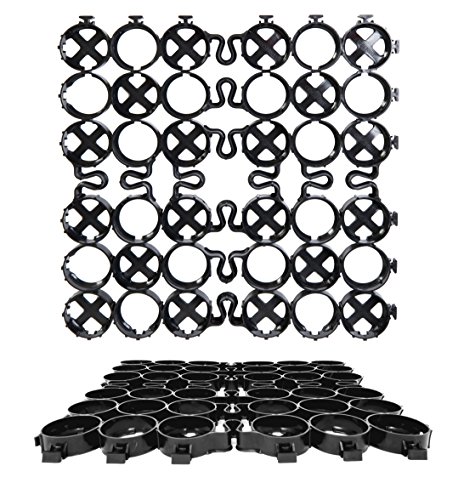
For an RV pad, this is the only option here whose product name explicitly identifies RV pads as a use. The 18 black HDPE panels cover 72 square feet, measure 24 × 24 inches, and are 1 inch high. The manufacturer describes the pavers as permeable and suitable for all-weather use. That package area may be too small for a full parking footprint, so calculate the pad area before choosing it; extra coverage may require multiple packs.
Bottom line: Choose this if you want a permeable paver grid explicitly identified for an RV pad and can plan around 72-square-foot packs.
Standartpark Vodaland EasyPave

This system covers the largest area here: 315 square feet across 126 units, each 24 × 16 inches and 2 inches deep. It is made from recycled plastic and intended for gravel or grass driveways and parking areas. The maker gives a load capacity of up to 80,000 pounds, but says that depends on the base and fill used, so do not treat that figure as a guarantee for every installation. Its green color may also matter where the grid remains visible.
Bottom line: Choose this when broad coverage and a 2-inch grid suit the planned pad, and the base and fill can be matched to the maker’s load condition.
Sunnyglade 2-Inch Geocell Ground Grid

This is the option specifically described for both sloped and flat ground: its expandable geocell grid is 40 feet long by 4 feet wide, for about 160 square feet of coverage. The cells are approximately 10 inches square and 2 inches deep, and are intended to be filled with gravel or soil. Its rating is 1,880 pounds per square foot for light-load reinforcement. That makes the rating’s area basis important; do not compare it directly with a total-load figure.
Bottom line: Choose this for a site with a slope or where a 2-inch-deep geocell layout fits the design.
Briwooody 16-Inch Permeable Pavers

This pack is a smaller-format choice: it contains 12 green polypropylene pavers measuring 16 × 16 inches, with snaps intended to connect the pieces. The maker identifies RV parking among its uses, alongside walkways, patios, lawns, and shed bases. Its package-area figure is internally inconsistent with twelve 16-inch-square panels, so use the panel dimensions to plan coverage and verify the pack’s actual quantity and fit before ordering. The small panel format can mean more joints across a broad pad.
Bottom line: Choose this for a small connected grid area, after confirming the pack quantity and coverage.
Premier Geo Grid 12-Piece Ground Stabilization Mats

This product is presented as ground-stabilization mats for mud control and drainage, rather than as a named permeable-paver system. The 12 black pieces measure 19.68 inches square and are 1.5 inches high; the maker describes their open-cell structure as allowing water through while distributing vehicle and foot traffic. RV pads are among the intended applications. No package coverage figure is supplied in the specifications, so calculate the footprint from the dimensions and confirm the actual layout before committing to a pad plan.
Bottom line: Choose this if mud control is the priority and you can plan the mat layout from its dimensions.
How to Size an RV Gravel Pad
Size an RV gravel pad from the vehicle’s parked footprint, not from the grid pack area. Measure the RV’s overall length and width, including mirrors or accessories that must clear nearby obstacles, then add room for turning and safe access. A rectangle’s area is length multiplied by width; for example, a 40-by-12-foot space is 480 square feet. Divide that area by the coverage per package and round up, allowing extra for cuts and irregular edges. Grid coverage alone does not tell you how deep the aggregate base should be. Before buying, confirm local drainage rules and whether the site has enough room for the RV to enter without cutting across unsupported edges.
How to Prepare the Base for Gravel Grids
A stable gravel pad starts below the grid: remove organic topsoil and soft material, then shape and compact the subgrade before placing aggregate. The required base thickness depends on soil strength, drainage, climate, and vehicle load; weak or wet ground generally needs more structural support than firm, well-drained ground. Use a compactable, angular aggregate for the base rather than relying on rounded decorative stone to lock together. Keep the finished surface slightly crowned or sloped so water does not pool, while directing runoff away from buildings and neighboring property. For a heavy RV or soft soil, have a local paving or excavation professional assess the base design instead of treating grid load claims as a substitute.
Choose Gravel and Grid Depth for the Site
Grid depth affects how much fill the cells can hold, but it does not by itself determine the pad’s total structural capacity. A 2-inch grid holds a deeper layer within its cells than a 1-inch grid, while the underlying base carries much of the load. Common compactable base aggregates include well-graded crushed stone; the surface fill should fit the grid openings and stay contained rather than spilling across the top. Avoid assuming every gravel size works with every cell: check the grid maker’s permitted fill size and installation method. On slopes, use a system intended for sloped applications and plan how the grid will be anchored; gravity and runoff can move loose fill downhill even when the cells are filled.
Compare Grid Types for RV Parking
Permeable panels and geocells both help confine fill, but their layouts and published capacity figures are not directly interchangeable. Panel systems use individual connected units; geocells expand into a larger cellular sheet. Match the product footprint and design conditions to the site, not just the headline capacity. A capacity stated per square foot is different from a total-load class, and manufacturer capacity can depend on base and fill. Use the table to compare the configurations, then check the exact installation requirements for the chosen system.
| Grid format | Example fit | Useful distinction |
|---|---|---|
| Connected panels | Compact or modular areas | Individual units join into a planned layout |
| Expandable geocell | Broad or sloped areas | Cell sheet expands across the prepared ground |
| Ground-stabilization mats | Muddy outdoor surfaces | Open cells are described for drainage and traffic |
Drainage and Safety Checks Before Parking
Drainage planning matters because trapped water can soften the ground beneath an RV and contribute to ruts or movement. Keep surface runoff directed away from foundations, septic areas, and neighboring lots, and avoid blocking existing drains. Before driving onto a new pad, confirm the base is compacted, the grid is fully filled as intended, and no edges are exposed where tires could catch or push material outward. Never exceed the RV’s tire or axle ratings, and do not infer that a grid’s load claim alone makes an unprepared site safe. If the pad will sit on a steep slope or near a retaining edge, get site-specific guidance on anchoring and support.
Frequently Asked Questions
How much gravel do I need for an RV pad?
Calculate the pad’s length times width to get square feet, then multiply by the planned gravel depth in feet to estimate cubic feet. Divide by 27 for cubic yards; a 40-by-12-foot pad with 4 inches of gravel needs about 5.9 cubic yards before allowance for compaction and waste.
What gravel size works in a parking grid?
Use fill that fits the grid cell openings and is allowed by the grid maker; oversized stone will bridge cells instead of filling them. Angular, compactable aggregate generally interlocks better than rounded decorative gravel, while the structural base should be designed separately from the surface fill.
Does a gravel grid replace a compacted base?
No, a grid is not a substitute for a stable prepared base under a heavy RV. Remove soft topsoil, compact the subgrade, and select aggregate depth for soil, drainage, climate, and vehicle load.
Should an RV pad slope for drainage?
Yes, the surface should shed water rather than hold puddles, but direct runoff away from buildings and neighboring land. The needed slope depends on the site, and a steep slope may also require grid anchoring and professional design.
How do I compare load ratings on gravel grids?
Check whether the figure is a total load or a load per square foot, and whether it depends on a specified base and fill. Those measures are not interchangeable, and the prepared ground and the RV’s axle and tire ratings remain important.