
Screen for Litter Box: Compare 3 Privacy Screens

For most homes, PetFusion ModestCat Screen, White is a practical screen for a litter box because its 48-inch width and 36-inch height offer broad coverage while keeping the floor open. Choose Rantila Four-Panel Screen, Gray instead if you need a wider, shorter screen, or PetFusion Privacy Screen, Walnut if walnut brown better suits your room.
We earn a commission if you buy through links on this page. As an Amazon Associate I earn from qualifying purchases. Products are compared on manufacturer specifications, not hands-on testing.
- Best overall: PetFusion ModestCat Screen, White – Its 48-inch width and 36-inch height provide broad coverage with an open floor design.
- Best for wide areas: Rantila Four-Panel Screen, Gray – Its four-panel screen spans 68 inches and folds for storage.
- Best for walnut finish: PetFusion Privacy Screen, Walnut – It has the same 48-by-36-inch dimensions as the white screen, in walnut brown.
| Product | Best for | Width × height | Frame | Panel material | Shop |
|---|---|---|---|---|---|
| PetFusion ModestCat Screen, White | Broad room coverage | 48 × 36 in. | Bamboo | Plastic | Check Price on Amazon |
| PetFusion Privacy Screen, Walnut | Walnut room match | 48 × 36 in. | Bamboo | Plastic | Check Price on Amazon |
| Rantila Four-Panel Screen, Gray | Wide low screen | 68 × 24 in. | Steel | Polyester fabric | Check Price on Amazon |
Screens for a litter box
Compare screen dimensions and materials, then make sure the setup leaves your cat a clear route to the box.
PetFusion ModestCat Screen, White

At 48 inches wide and 36 inches tall, this white PetFusion screen is the tallest option here and suits rooms where a taller visual barrier is useful. Its bamboo frame and scratch-proof plastic panels create a freestanding screen rather than a closed box, and the open floor design leaves multiple entry and exit points. The semi-transparent panels also preserve some visibility through the barrier. Brand says the panels are easy to clean and flexible. The 0.6-inch listed width makes this a slim screen, so it may not stand securely without careful placement in a busy walkway.
Bottom line: Choose it for a tall, broad screen with an open floor plan.
PetFusion Privacy Screen, Walnut
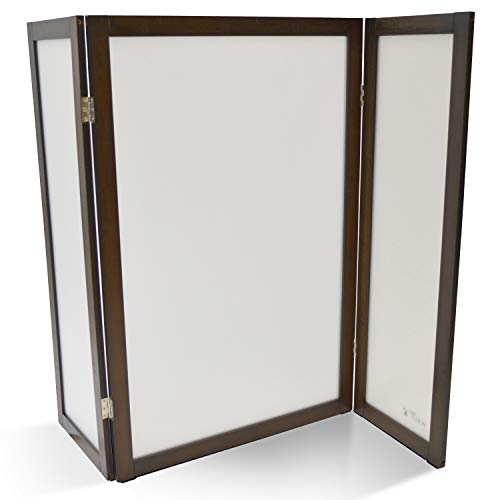
The walnut-brown finish distinguishes this 48-by-36-inch PetFusion screen from the white version, while the bamboo frame and plastic panels keep the basic setup similar. Multiple entry and exit points and semi-transparent panels make it a screen rather than an enclosed litter-box cabinet. It can help visually separate a box in a high-traffic room without blocking floor-level access. Brand says the panels are scratch-proof and easy to clean. The slim 0.6-inch width means it covers a sightline, not a deep area around the box, so measure the space and leave an unobstructed path around the ends.
Bottom line: Pick it when the walnut finish better fits your room.
Rantila Four-Panel Screen, Gray

The Rantila screen is the widest and shortest option here: 68 inches across and 24 inches tall. Its four gray polyester panels sit on a steel frame, and the fabric is described as breathable and washable. The open floor design gives cats access without making the screen a closed enclosure; the panels can also fold for storage. Brand says assembly requires a screwdriver. Its 24-inch height provides less visual coverage than the 36-inch PetFusion screens, so it is a better fit when a long, low barrier matters more than height.
Bottom line: Choose it for a wider barrier that folds away for storage.
How to choose a screen for a litter box
Choose a screen by matching its width and height to the sightline you want to block while preserving an easy route to the box. A screen changes visibility, not the litter box’s usable interior, so it is different from a covered enclosure. Measure the box and the floor area around it before choosing a 48-inch or 68-inch span. Leave an open approach rather than creating a narrow dead end; cats need to be able to enter, turn, and leave without being trapped by furniture or the screen. For a busy walkway, place the screen outside the normal walking line so people do not knock into its panels.
Screen dimensions and litter-box fit
A screen’s width describes its span, not the space available inside a box. The 48-inch screens are 36 inches tall, while the 68-inch screen is 24 inches tall, so choose by the area and height of the view you need to block. As a general litter-box sizing rule, aim for a box about 1.5 times the cat’s length from nose to the base of the tail; a screen cannot compensate for a box that is too small. Measure the box, the cat’s route, and nearby walls together. With less than 48 inches of clear span, do not assume a 48-inch screen will fit; check the available floor width before setting it up.
Open screens versus enclosed litter-box furniture
An open screen hides part of the box from view while leaving the top and floor-level access open; an enclosure surrounds the box more fully and may change ventilation and access. Fabric panels can be folded for storage, while plastic panels offer a wipe-clean surface according to the maker. Neither screen width nor material tells you whether a cat will accept a new setup. Avoid blocking the box’s usual approach or placing it in a tight corner. A cat that hesitates at a changed route may need the screen repositioned. Keep enough room around the box for scooping and routine cleaning.
Cleaning and placement for litter screens
Place the screen on a stable, level floor and keep the box entrance clear; a slim panel should not be treated as a deep enclosure. The fabric panels on the Rantila screen are described as washable, while the PetFusion plastic panels are described as easy to clean, so match the material to the cleanup routine you prefer. Scoop the box daily and replace litter regularly, since a privacy barrier does not control odor by itself. Avoid positioning a screen where a door, appliance, or frequent foot traffic can strike it. If you move the box, give the cat a direct, familiar route to the new location.
Frequently Asked Questions
How wide should a screen for a litter box be?
Choose a width that blocks the intended sightline without obstructing the cat’s route or your access for cleaning. Measure the open floor span first; the options here range from 48 to 68 inches wide.
Will a litter-box privacy screen stop litter scatter?
A screen may intercept some scatter in the direction its panels cover, but an open-floor design does not surround the box. For less scatter, a high-sided box or a mat at the exit can address areas a screen leaves open.
Does a privacy screen make a litter box less stressful?
A screen can reduce visual exposure while keeping the box open, but cats differ in how they respond to changes around their toilet area. Keep the entrance and exit clear, and avoid putting the box into a tight, dead-end corner.
How much space does a cat need in its litter box?
A common sizing rule is a box about 1.5 times the cat’s length from nose to the base of the tail. Check that the cat can turn around comfortably; a privacy screen does not increase the box’s interior space.
Can I put a litter screen in a hallway?
A hallway works only if the screen and box leave a clear walking path and an unobstructed cat approach. Measure the floor width before setup, especially for a screen spanning 48 or 68 inches.