
Best Korean Skincare for Melasma: 3 Options Compared

Melasma Cica Cream is the most directly targeted choice because its name identifies it as a melasma cream and its formula includes 5% niacinamide. Choose a different option if you prefer a serum or want a formula with tranexamic acid; topical skincare can support a routine, but melasma often needs clinician-guided care.
Melasma is a form of facial hyperpigmentation that can worsen with sunlight and visible light, so daily sun protection is central to any routine.
We earn a commission if you buy through links on this page. As an Amazon Associate I earn from qualifying purchases. Products are compared on manufacturer specifications, not hands-on testing.
- Best overall: Melasma Cica Cream – Its purpose is melasma care, with 5% niacinamide and 2% cica.
- Best for a TXA serum: Anua Niacinamide 10 + TXA 4 Serum – Combines 4% tranexamic acid with 10% niacinamide and 2% arbutin.
- Best for a cream format: TOSOWOONG Arbutin 7% + TXA 4% Cream – Pairs 7% arbutin with 4% tranexamic acid in a cream.
| Product | Best for | Format | Key actives | Size | Shop |
|---|---|---|---|---|---|
| Melasma Cica Cream | Direct melasma focus | Cream | 5% niacinamide; 2% cica | 1.4 fl oz | Check Price on Amazon |
| Anua Niacinamide 10 + TXA 4 Serum | TXA serum routine | Serum | 10% niacinamide; 4% TXA; 2% arbutin | 1.01 fl oz | Check Price on Amazon |
| TOSOWOONG Arbutin 7% + TXA 4% Cream | High-active cream | Cream | 7% arbutin; 4% TXA | 1.69 fl oz | Check Price on Amazon |
Korean Skincare for Melasma
Compare the products by format and listed brightening ingredients, and use them as part of—not instead of—a sun-protective routine.
Melasma Cica Cream
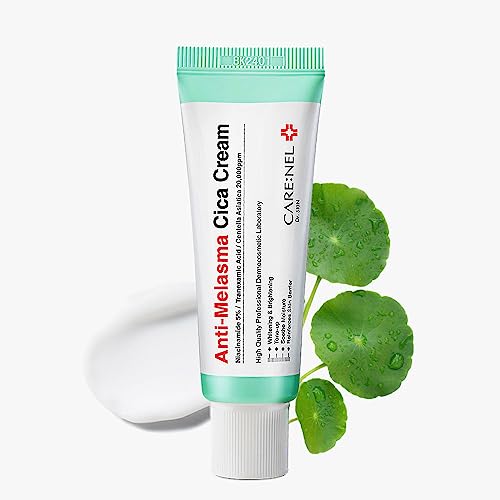
Melasma Cica Cream is the most explicitly aimed at melasma: its name identifies that concern, and the formula combines 5% niacinamide with 2% cica. The cream is a fit for shoppers who prefer a cream texture and want cica alongside a brightening ingredient. The maker says niacinamide targets the appearance of dull, uneven tone, while cica is intended to soothe skin. Those are cosmetic claims, not a guarantee of melasma improvement. The available ingredient information does not establish how the formula performs alongside prescription treatment, so ask a dermatologist before combining it with a medicated routine.
Bottom line: Choose this if you want a cream explicitly positioned for melasma with niacinamide and cica.
Anua Niacinamide 10 + TXA 4 Serum

Anua Niacinamide 10 + TXA 4 Serum stands apart as a lightweight serum with three named actives: 10% niacinamide, 4% tranexamic acid and 2% arbutin. It also contains hyaluronic acid and ceramides, and the maker says the watery texture layers with moisturizer and sunscreen. Its format suits someone who wants a serum rather than a cream. The maker describes it as fragrance-free and suitable for morning and night; introduce any new active gradually, especially if your skin is sensitive. This is dark-spot care, not a substitute for sun protection or a clinician’s melasma plan.
Bottom line: Pick this if you prefer a serum and want tranexamic acid alongside niacinamide and arbutin.
TOSOWOONG Arbutin 7% + TXA 4% Cream

TOSOWOONG Arbutin 7% + TXA 4% Cream is a cream option with 7% arbutin and 4% tranexamic acid, plus niacinamide and glutathione. The maker says it is intended to address post-inflammatory hyperpigmentation and other pigmentation concerns, and describes its finish as fast-absorbing and non-sticky. This combination may appeal if you want arbutin and tranexamic acid in one cream rather than a serum. The claims do not establish that it treats melasma, and the ingredient list does not give a full routine compatibility picture. Patch-test new skincare and seek professional advice for persistent or spreading pigmentation.
Bottom line: Choose this cream if the combination of arbutin and tranexamic acid is your priority.
How to choose skincare for melasma
For melasma, choose a routine that prioritizes sun protection and a small number of tolerated topical products. Broad-spectrum SPF 30 or higher is a practical baseline; tinted sunscreen containing iron oxides can also help limit visible-light exposure, which may contribute to melasma. Reapply sunscreen about every two hours outdoors and after swimming or sweating, and add a brimmed hat when possible. Among these options, compare the active ingredients and formats rather than assuming that a product labeled for dark spots is a melasma treatment. If pigmentation is new, changing, or persistent, a dermatologist can confirm the diagnosis and discuss stronger options; facial brown patches can have causes other than melasma.
A measurable routine rule is to use broad-spectrum SPF 30+ every morning, even when using a brightening product at night.
Melasma creams, serums and pads compared
Format determines how a product fits into a routine, but it does not establish which formula will work best for an individual. Creams can combine treatment-oriented ingredients with a moisturizing step; serums are generally layered under moisturizer; toner pads add a wipe-on step. This comparison summarizes the formats and actives, not head-to-head clinical results. Start only one new active product at a time and pause if persistent burning or irritation develops. Scrubbing pads or stacking several strong actives can irritate skin, and irritation may worsen the appearance of discoloration.
The table is a format guide, not a ranking of clinical effectiveness.
| Format | Routine role | Practical choice |
|---|---|---|
| Cream | Moisturizing step with actives | Choose if you want a cream texture |
| Serum | Layer beneath moisturizer | Choose if you prefer a lightweight step |
| Toner pads | Wipe-on application | Apply gently; avoid friction |
Sun protection for melasma-prone skin
Sun protection is essential because ultraviolet exposure can darken melasma, and visible light can also contribute, particularly in darker skin tones. Use broad-spectrum SPF 30 or higher each morning, apply enough to cover exposed skin, and reapply every two hours during outdoor exposure. A tinted sunscreen with iron oxides offers visible-light protection that an untinted sunscreen may not provide. A wide-brim hat and shade add practical barriers, especially during long periods outside. No brightening cream or serum replaces these measures. If sunscreen stings, try a fragrance-free formula or mineral filters, and seek medical advice for a persistent reaction rather than leaving skin unprotected.
When melasma needs professional care
Melasma can be persistent and often needs more than over-the-counter brightening care. A dermatologist can confirm whether facial discoloration is melasma and discuss options such as prescription hydroquinone, azelaic acid, or combination treatment; the right choice depends on the diagnosis, pregnancy status, skin sensitivity, and other medicines. Do not start prescription-strength lightening agents or mix them with multiple exfoliants without clinical guidance. Improvement usually takes weeks to months, and sun exposure can cause recurrence. Seek prompt evaluation for a spot that changes quickly, bleeds, or has an irregular shape, since not every dark mark is melasma.
Frequently Asked Questions
Can Korean skincare products clear melasma completely?
No over-the-counter product can promise complete clearance of melasma. Sun exposure can trigger recurrence, so broad-spectrum SPF 30+ and ongoing sun protection remain important even when pigmentation looks lighter.
Should I use melasma skincare in the morning or evening?
Follow the product’s labeled use, and put broad-spectrum SPF 30+ on in the morning. If you are adding a new active, begin with one product and a limited frequency to see whether irritation develops.
Does tinted sunscreen help protect melasma-prone skin?
Tinted sunscreen with iron oxides can provide protection against visible light as well as UV when it is broad-spectrum SPF 30+. Reapply about every two hours outdoors, since one morning application does not cover a full day outside.
How long can melasma treatment take to show results?
Melasma treatment commonly takes weeks to months, and results vary with the diagnosis, treatment and sun exposure. A dermatologist can set a realistic timeline and adjust care if pigmentation is not improving.
Can I combine brightening products with prescription cream?
Ask the prescribing clinician before combining several brightening actives with prescription cream. Irritation from stacked products can disrupt the skin barrier, so add one new topical at a time.