
Best Beach Umbrella Sand Anchor: 4 Options Compared

dig-git Shovel-to-Anchor is the best beach umbrella sand anchor for most beachgoers because its shovel-to-anchor design accepts 1.25- to 1.5-inch poles and is made for soft or coarse sand.
Choose a spiral auger instead if you prefer to screw an anchor into the sand; match the pole diameter before buying, and do not treat a maker-claimed wind limit as a safe operating guarantee.
We earn a commission if you buy through links on this page. As an Amazon Associate I earn from qualifying purchases. Products are compared on manufacturer specifications, not hands-on testing.
- Best overall: dig-git Shovel-to-Anchor – Its shovel-to-anchor design fits 1.25- to 1.5-inch poles and is intended for soft or coarse sand.
- Best for a compact plastic auger: AMMSUN ABS Five-Spiral Anchor – The five-spiral ABS design accepts poles up to 1.5 inches and weighs 0.6 pound.
- Best for a metal auger: AMMSUN Steel Ground Screw Anchor – The steel ground screw comes with a carry bag and weighs 1.78 pounds.
- Best for poles up to 1.6 inches: DUUDO ABS Five-Spiral Anchor – The five-spiral ABS anchor accommodates umbrella poles up to 1.6 inches.
| Product | Best for | Pole fit | Anchor type | Maker-claimed wind limit | Shop |
|---|---|---|---|---|---|
| dig-git Shovel-to-Anchor | Loose beach sand | 1.25–1.5 in. | Shovel-to-anchor | 30 mph gusts | Check Price on Amazon |
| AMMSUN ABS Five-Spiral Anchor | Lightweight plastic auger | Up to 1.5 in. | ABS five-spiral auger | 50 mph gusts | Check Price on Amazon |
| AMMSUN Steel Ground Screw Anchor | Metal auger design | Universal; verify diameter | Steel ground screw | 60 mph winds | Check Price on Amazon |
| DUUDO ABS Five-Spiral Anchor | Wider pole compatibility | Up to 1.6 in. | ABS five-spiral auger | 50 mph winds | Check Price on Amazon |
Beach umbrella sand anchors compared
Compare pole fit and anchor construction first, then choose a design that suits how you want to set it in sand.
dig-git Shovel-to-Anchor

Unlike the spiral models, this anchor uses a patented shovel-to-anchor design for setup in soft or coarse beach sand. It accepts umbrella poles from 1.25 to 1.5 inches in diameter, so measure the pole rather than assuming a universal fit. The 18-inch-long, 6-inch-wide anchor is travel-ready and rust-resistant. The maker says it withstands wind gusts up to 30 mph; that claim is not a safe wind threshold, since gusts and sand conditions can change quickly. This is the clearest match for someone who wants a beach-specific digging design instead of twisting an auger into place.
Bottom line: Pick this if its 1.25- to 1.5-inch pole range matches your umbrella and you want a shovel-style setup.
AMMSUN ABS Five-Spiral Anchor

This is the lightest anchor here with a weight, at 0.6 pound, and it uses a five-spiral ABS plastic auger rather than the shovel-style design. The maker says the anchor withstands gusts up to 50 mph and resists rust from sand or salt water. Its pole limit is 1.5 inches or less, making it a fit for many common umbrella poles, but check the diameter first. The compact 12-inch length suits buyers prioritizing portability. The wind figure is a maker claim, not a reason to leave an umbrella open in conditions that feel unsafe.
Bottom line: Choose this for a lightweight spiral anchor when your umbrella pole is no more than 1.5 inches.
AMMSUN Steel Ground Screw Anchor

Among these anchors, this one is the metal ground screw option and the only one that includes a carry bag. It weighs 1.78 pounds and measures about 14.96 inches high, 9.06 inches long, and 4.92 inches wide. The maker claims wind resistance up to 60 mph, but an anchor claim cannot establish safe beach conditions; take the umbrella down if wind becomes difficult to manage. This option suits buyers who specifically want a metal auger and are willing to carry more than the lighter plastic model.
Bottom line: Pick this if you prefer a metal ground screw and can confirm that your umbrella pole fits.
DUUDO ABS Five-Spiral Anchor
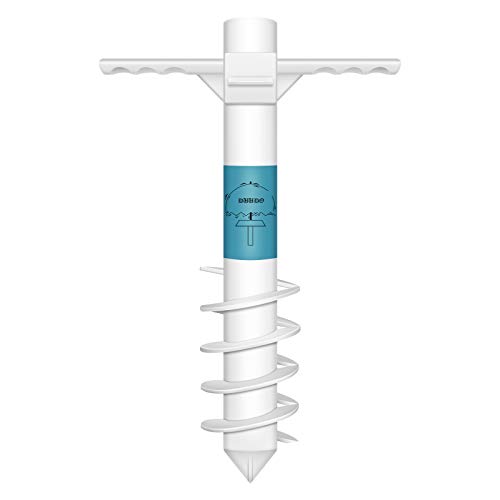
This five-spiral anchor accepts poles up to 1.6 inches, giving it the widest pole limit among the standalone anchors here. Its body is 0.16-inch ABS plastic, and the maker claims resistance to winds up to 50 mph. The five-spread spiral design is meant to hold in sand, while its rust-free construction suits beach use. Weight and dimensions are not supplied, so buyers who need a particular packed size should confirm those measurements. Choose this model when the umbrella pole is over 1.5 inches but no more than 1.6 inches, rather than assuming every supposedly universal holder fits.
Bottom line: Choose this when your pole is between 1.5 and 1.6 inches and you want a plastic spiral anchor.
How to choose a beach umbrella sand anchor
Start with pole diameter and how you want to install the base. A shovel-style anchor can be dug or pressed into sand, while a spiral auger twists down and uses its helical surface to resist pullout. Check the umbrella pole with a ruler or caliper; a difference of a fraction of an inch can prevent a clamp from closing securely. As a practical rule, if your pole measures over 1.5 inches, choose only a model explicitly rated to accept that diameter, such as an anchor with a 1.6-inch limit. Wind ratings are maker claims, not universal safety ratings. Take down an umbrella when wind makes the canopy hard to control, and never leave it unattended.
Anchor installation and beach safety
Install an anchor deeply and vertically, then check that it resists a firm hand pull before fitting the umbrella. Spiral anchors work by engaging sand along their length; loose, dry sand offers less resistance than damp, compact sand, so a shallow installation can loosen. Keep people clear while rotating or driving the anchor, and secure the umbrella pole without forcing it into a collar that is too small. Umbrellas can lift or become airborne in gusts, even when the anchor stays in place. Lower or remove the canopy when wind rises, and never use a gust limit as permission to leave it set up in hazardous weather.
Shovel anchors and spiral augers compared
Shovel-style anchors suit buyers who prefer digging or pressing a base into sand; augers suit buyers who want to screw a holder into the ground. The table summarizes the meaningful design differences in this group. Pole fit still decides whether any anchor works with a specific umbrella, so measure before choosing.
| Anchor approach | What to compare | Best fit |
|---|---|---|
| Shovel-to-anchor | Digging or pressing setup | Beach sand where you want a shovel-style installation |
| Plastic spiral auger | ABS body and stated pole limit | Portability and a twist-in design |
| Metal ground screw | Metal construction and confirmed pole fit | Buyers seeking a metal auger |
| Umbrella with anchor | Complete shade set rather than separate base | Replacing the umbrella and anchor together |
Matching an anchor to the umbrella pole
Measure the pole at the section that enters the anchor, not at a thicker joint or decorative sleeve. Use the anchor’s maximum diameter only when the pole is at or below that limit; a nominally universal label does not replace a measurement. Check whether a locking knob or collar tightens securely without crushing or slipping on the pole. If you already own an umbrella and need only a holder, avoid a bundled umbrella set unless replacing both is your goal. Keep the assembly stable and upright, and remove the umbrella rather than relying on a larger wind number when conditions become difficult.
Frequently Asked Questions
How deep should a beach umbrella sand anchor go?
Set the anchor as deeply as its design allows and keep it upright; a spiral needs enough of its helix engaged to resist pulling out. Loose dry sand may shift more readily than damp, compacted sand, so test the installed base with a firm hand pull before attaching the umbrella.
How do I measure an umbrella pole for an anchor?
Measure the pole’s outside diameter at the part that will sit inside the holder, in inches. A pole over 1.5 inches requires an anchor with a greater stated capacity, such as a 1.6-inch limit; do not rely on a universal-fit label alone.
Are beach umbrella wind ratings safe limits?
No; maker-claimed wind figures are not a universal safety standard for beach use. Wind strength, gusts, anchor depth, and sand firmness all affect stability, so take the canopy down whenever it is difficult to control or conditions feel unsafe.
Does a spiral anchor work in dry sand?
A spiral can engage dry sand, but loose sand may shift more easily than damp, compact sand. Twist the auger down vertically, engage as much of its spiral as possible, and check for movement before installing the umbrella.
Can I leave a beach umbrella unattended?
No; an umbrella can lift or become airborne when a gust catches its canopy, even if the base initially holds. Stay nearby, lower or remove the canopy as wind increases, and take it down before leaving the beach.