
Kitchen Sink Rubber Gasket: Drain Seals Compared

For a 3.5-inch sink drain repair, 3.5-Inch Drain Gasket Set is the closest match because it includes rubber and paper washers sized for that drain.
A kitchen sink drain gasket seals the strainer assembly to help keep water from leaking beneath the sink; measure the drain and match the gasket’s intended position before replacing parts.
We earn a commission if you buy through links on this page. As an Amazon Associate I earn from qualifying purchases. Products are compared on manufacturer specifications, not hands-on testing.
- Best overall: 3.5-Inch Drain Gasket Set – The 3.5-inch drain-seal set includes two rubber and two paper washers.
- Best for stated sink range: Phivan 3.5-Inch Drain Gasket Kit – Its fit covers 3.5-inch drains and one-, two-, or three-compartment sinks.
| Product | Best for | Washer material | Pack count | Shop |
|---|---|---|---|---|
| 3.5-Inch Drain Gasket Set | sink strainer seals | Rubber and paper | 4 washers | Check Price on Amazon |
| Phivan 3.5-Inch Drain Gasket Kit | multi-basin sinks | Rubber and paper | 4 washers | Check Price on Amazon |
| EPE and Rubber Strainer Seal Kit | putty-free sealing | EPE and rubber | 4 pieces | Check Price on Amazon |
Kitchen sink rubber gasket options
Match the gasket to the joint you are sealing: strainer assembly, disposal opening, or drain-pipe connection.
3.5-Inch Drain Gasket Set

For a conventional sink-strainer seal, this set pairs two flexible rubber washers with two paper washers for 3.5-inch drains. The maker says it is designed for installation without plumber’s putty, and it is intended for single-, double-, or triple-compartment sink setups. That makes it a fit to consider when replacing washers around a strainer rather than sealing a pipe joint or disposal throat. Confirm the washer profile and drain assembly dimensions before ordering; drain diameter alone does not establish that every gasket belongs in the same position.
Bottom line: Choose this when a 3.5-inch sink-strainer assembly needs replacement washers.
Phivan 3.5-Inch Drain Gasket Kit
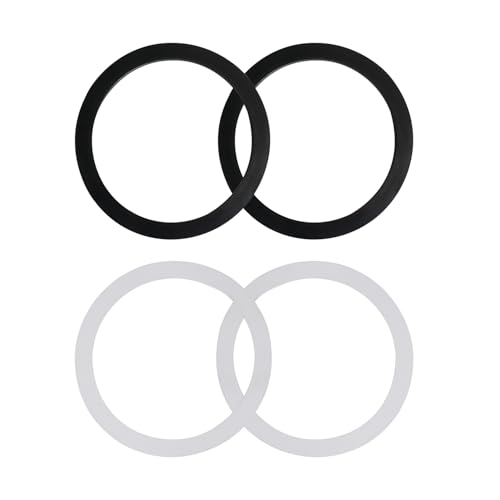
This kit specifies a 3.48-inch inner diameter and 4.25-inch outer diameter, giving a more precise dimensional reference than a nominal 3.5-inch size alone. It includes two rubber and two paper washers and is intended for one-, two-, or three-compartment sink strainers, including top-mount and undermount sinks. The maker says the installation does not require plumber’s putty. Its fit remains limited to common 3.5-inch strainers, so measure the existing sealing surface and check that the washer shape matches the joint being repaired.
Bottom line: Pick this when the 3.48-inch inner and 4.25-inch outer diameters match your assembly.
EPE and Rubber Strainer Seal Kit

Unlike a set made only of rubber and paper washers, this kit combines EPE foam with rubber sealing rings for a 3.5-inch sink-strainer application. It contains two O-rings and two seal-ring washers, and the maker says its twist-on installation needs no plumber’s putty. The material pairing may suit a repair where the kit’s particular ring arrangement matches the strainer.
Bottom line: Choose this if the EPE-and-rubber ring arrangement matches your strainer.
How to choose a sink drain gasket
Choose by the joint being sealed first, then by diameter and washer shape. A sink strainer uses a larger assembly seal, while the drain tailpiece and slip-joint connections use smaller pipe washers; the 3.5-inch strainer kits and 1.5-inch pipe rings here are not interchangeable. Measure the sealing surface across its inside and outside edges where possible, because a nominal drain size does not specify every washer dimension. A gasket belongs in the position intended by the strainer or pipe fitting, and stacking mismatched washers can leave gaps or prevent proper tightening.
For many strainer replacements, the seal sits beneath the sink against the drain body; the basket flange at the sink surface is a separate joint that may use a different sealant. If the repair involves a disposal, identify its make and series rather than assuming the splash guard is a drain gasket.
Sink strainer gaskets versus pipe washers
Strainer gaskets seal the sink drain assembly, while pipe washers seal downstream connections. The distinction is practical: a 3.5-inch kit is sized for a sink strainer, whereas a 1.5-inch cone washer is meant for a drain-pipe joint. A disposal splash baffle sits at the disposal throat to manage splash and is not a gasket for the sink-to-strainer connection.
The table separates the common repair target from the size clue; confirm that the measured joint and washer profile correspond before fitting anything.
| Repair target | Typical size clue | Part type |
|---|---|---|
| Sink strainer assembly | 3.5-inch drain | Rubber, paper, or foam seal kit |
| Drain pipe joint | 1.5-inch pipe | Cone or slip-joint washer |
| Disposal opening | Disposer-specific opening | Splash guard or baffle |
Measure the drain before replacing a gasket
Measure the drain opening and the old gasket’s inner and outer diameters; the Phivan kit, for example, gives 3.48 inches inside and 4.25 inches outside for its 3.5-inch application. A 3.5-inch drain fit is a useful starting point, but gasket thickness, profile, and placement also affect whether a seal seats correctly. For pipe washers, measure the pipe connection separately: 1.5 inches is not the same measurement as a sink strainer opening.
Remove residue from the sealing faces before installing replacement parts, then tighten the assembly evenly rather than forcing one side down first. Run water and inspect beneath the sink for leakage; if a joint still drips, stop and check washer orientation and fit before tightening further.
When putty-free sink gasket kits make sense
Putty-free kits are useful when the included gasket system is designed to seal the strainer without plumber’s putty, as the makers claim for several 3.5-inch sets here. They do not mean that every sink drain joint uses the same sealing method: the strainer flange, underside gasket, and pipe connection are distinct interfaces. Match the gasket stack to the kit’s intended installation and the drain assembly rather than adding putty automatically.
For a repair involving a garbage disposal, keep the splash guard separate from water-sealing washers. A splash guard controls access and upward splashing at the disposer opening; it does not make a leaking tailpiece or sink-strainer connection watertight. Turn off power to a disposal at the breaker or unplug it before reaching into the opening, and never put a hand into a disposer throat.
Frequently Asked Questions
How do I know which sink drain gasket size I need?
Measure the drain assembly and the gasket’s inner and outer diameters rather than relying only on a nominal size. A 3.5-inch strainer kit and a 1.5-inch pipe washer serve different joints.
Can I use a pipe washer as a sink strainer gasket?
No, pipe washers and strainer gaskets seal different parts of the drain. A 1.5-inch cone washer is for a pipe connection, not the larger sink-strainer assembly.
Does a putty-free gasket need plumber’s putty?
A kit designed to seal without putty should be installed using its gasket arrangement. The sink flange and the underside strainer seal are separate interfaces, so do not assume one product covers both.
How can I stop a sink drain gasket from leaking?
First check that the washer is in its intended position and that its profile matches the joint. Clean sealing faces and tighten evenly; if leakage continues, recheck fit rather than overtightening.
Is a disposal splash guard the same as a sink gasket?
No, a splash guard fits at the disposal opening to control splashing, while a sink gasket seals a drain or pipe joint. Confirm the disposer series and opening size when replacing a baffle.