
Best Boat Seat Protectant: 3 Options Compared

303 Marine Aerospace Protectant, 32 oz suits most boat-seat owners because it provides UV protection for marine vinyl and dries to a smooth, matte finish without oily residue. Choose Marine 31 Vinyl Cleaner & Conditioner, 32 oz instead if your seats need cleaning as well as protective care, or Babe’s Seat Saver, 1 Gallon if you want a gallon-sized, silicone-free vinyl conditioner.
We earn a commission if you buy through links on this page. As an Amazon Associate I earn from qualifying purchases. Products are compared on manufacturer specifications, not hands-on testing.
- Best overall: 303 Marine Aerospace Protectant, 32 oz – Provides UV protection for marine vinyl and dries to a smooth, matte, non-greasy finish.
- Best for cleaning: Marine 31 Vinyl Cleaner & Conditioner, 32 oz – Cleans dirt, body oils and spills while adding protective care in one step.
- Best for larger quantities: Babe’s Seat Saver, 1 Gallon – The 1-gallon size suits buyers who want more vinyl conditioner at hand.
| Product | Best for | Primary use | Finish or formula | Size | Shop |
|---|---|---|---|---|---|
| 303 Marine Aerospace Protectant, 32 oz | Matte UV care | Protects marine vinyl | Matte, non-greasy | 32 oz | Check Price on Amazon |
| Marine 31 Vinyl Cleaner & Conditioner, 32 oz | Cleaning and care | Cleans and conditions vinyl | Water-based, non-greasy | 32 oz | Check Price on Amazon |
| Babe’s Seat Saver, 1 Gallon | Gallon-size conditioning | Conditions marine vinyl | Non-silicone | 1 gallon | Check Price on Amazon |
Boat Seat Protectants Compared
Choose among a versatile marine surface spray, a one-step upholstery cleaner, and a gallon-sized vinyl conditioner.
303 Marine Aerospace Protectant, 32 oz
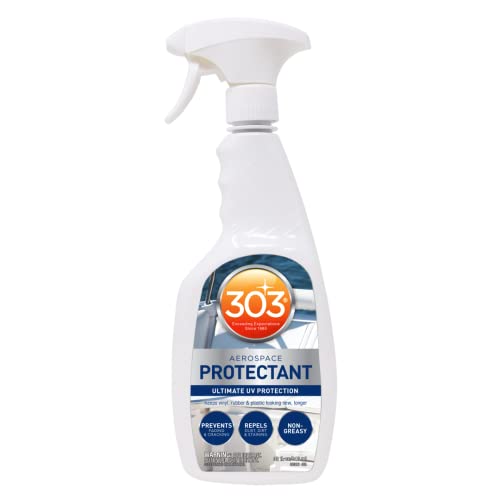
For a matte, non-greasy finish on marine vinyl, 303 Marine Aerospace Protectant, 32 oz provides UV protection and helps repel dust, dirt and staining. The 32-ounce spray is also described for use on other watersports surfaces, so it can suit owners caring for more than seats. It does not combine cleaning and conditioning in one step; choose Marine 31 Vinyl Cleaner & Conditioner, 32 oz if removing dirt, body oils or spills is part of the job. Use this when protecting vinyl and keeping its appearance natural matter more than an all-in-one cleaner.
Bottom line: Pick this for UV care with a smooth, matte finish.
Marine 31 Vinyl Cleaner & Conditioner, 32 oz

Unlike a protectant-only spray, Marine 31 Vinyl Cleaner & Conditioner, 32 oz combines cleaning and conditioning for marine vinyl upholstery. Its water-based formula removes dirt, body oils, stains and food spills while adding protective care, which makes it a practical fit when seats need routine cleanup as well as UV defense. The 32-ounce size is smaller than the gallon option from Babe’s Seat Saver, 1 Gallon. Choose another formula if a one-step cleaner is not a priority and a matte-finish surface spray is more useful.
Bottom line: Choose this when seat cleaning and care need to happen together.
Babe’s Seat Saver, 1 Gallon

With a 1-gallon container, Babe’s Seat Saver, 1 Gallon is the largest-format choice among these options. Its silicone-free formula is designed to condition and protect marine vinyl, with UV inhibitors and a soft, smooth finish that avoids a sticky or greasy feel. The instructions say to spray onto seats and wipe with a soft towel. This product is focused on conditioning and protection rather than stain removal, so choose Marine 31 Vinyl Cleaner & Conditioner, 32 oz when cleaning spills and body oils is equally important.
Bottom line: Pick this if you want a larger supply of silicone-free vinyl conditioner.
How to choose a boat seat protectant
Start with whether the seats need cleaning, conditioning, or mainly surface protection. One-step cleaners combine soil removal and care; separate protectant sprays are better suited to applying a protective finish after cleaning. Marine vinyl is commonly made with a PVC topcoat, and harsh solvents or abrasive pads can dull or damage that surface. Use a product labeled for marine vinyl, and test it on a hidden area before treating the whole seat. If seats have visible grime or food residue, clean them first or select a formula that includes cleaning; applying a protectant over soil can leave it trapped beneath the finish.
Cleaning and protecting marine vinyl seats
Marine vinyl benefits from regular rinsing and prompt cleanup of sunscreen, body oils, and spills, which can build up on exposed seating. Use a soft cloth or sponge and a mild soap-and-water solution for routine soil; rinse away cleaner residue before applying a protectant. Let seats dry before treatment so the finish can spread evenly rather than mix with standing water. A useful decision rule is to choose a cleaner-conditioner when seats have visible dirt or stains, and a dedicated protectant when already-clean vinyl mainly needs UV care. Avoid stiff brushes and abrasive cleaners, which can scuff the vinyl surface and seams.
Marine vinyl care by seat condition
Match the product to the seat’s condition instead of applying more product to solve every problem. The table separates common needs by the task they call for.
| Seat condition | Useful product type | Why |
|---|---|---|
| Visible dirt or spills | Cleaner and conditioner | Combines soil removal with protective care |
| Clean vinyl needing UV care | Marine vinyl protectant | Focuses on surface protection and finish |
| Large amount of vinyl to maintain | Gallon-format conditioner | Provides a larger container for repeated care |
Sun exposure, salt spray, and frequent use increase the need for routine cleaning and protection. Inspect seams and high-contact areas as well as seat faces; dirt and oils can collect where cushions meet stitching. Reapply care after cleaning rather than layering new product over a slick or dusty surface.
Frequently Asked Questions
How often should boat vinyl seats be cleaned?
Rinse marine vinyl after outings and clean visible grime or spills promptly. A weekly wipe-down during frequent use helps limit sunscreen, salt and body-oil buildup.
Can I use a protectant on dirty boat seats?
Clean dirty marine vinyl first so soil does not sit beneath the protective finish. For visible spills or body oils, a cleaner-conditioner can combine those steps.
Should boat seats be wet before protectant is applied?
Apply protectant to clean, dry marine vinyl for an even finish. Standing water can dilute or spread the product unevenly, so let seats dry after rinsing.
What should I use to clean marine vinyl?
A soft cloth or sponge with mild soap and water handles routine marine-vinyl soil. Avoid abrasive pads and stiff brushes, which can scuff the surface.