
Best Anti Pollen Glasses: 5 Options Compared

SooGree Anti-Pollen Safety Goggles is the clearest match for pollen exposure because its maker specifically names pollen and says it has side and top shields. Choose another option if you need eyewear that fits over prescription glasses, adjustable arms, or a particular lens feature; those alternatives describe dust or debris protection rather than pollen specifically.
We earn a commission if you buy through links on this page. As an Amazon Associate I earn from qualifying purchases. Products are compared on manufacturer specifications, not hands-on testing.
- Best overall: SooGree Anti-Pollen Safety Goggles – Its side and top shields are explicitly described as protection against pollen.
- Best for prescription glasses: NoCry Over-Glasses Safety Goggles – It is designed to fit over most prescription eyewear and has a soft gasket.
- Best for adjustable fit: TICONN Adjustable Safety Glasses – Its temples adjust in angle and length, with rubber nose pads and tips.
| Product | Best for | Pollen coverage | Prescription fit | Lens or frame features | Shop |
|---|---|---|---|---|---|
| SooGree Anti-Pollen Safety Goggles | Pollen coverage | Side and top shields | Myopia frame | Detachable lens; TR90 frame | Check Price on Amazon |
| NoCry Over-Glasses Safety Goggles | Prescription eyewear | Dust protection | Fits most prescription glasses | TPR gasket; UV380 | Check Price on Amazon |
| NoCry Over-Glasses Safety Glasses | Wide frames | Dust and debris | Fits frames up to 5.7 in wide | UV400; adjustable temples | Check Price on Amazon |
| TICONN Adjustable Safety Glasses | Adjustable temples | Particles and debris | — | Polycarbonate; anti-fog | Check Price on Amazon |
| Alsenor Anti-Fog Protective Eyewear | UV coating | Dust protection | — | Polycarbonate; 99% UV coating | Check Price on Amazon |
Anti pollen glasses compared
Compare the coverage and fit each option describes before choosing eyewear for pollen exposure.
SooGree Anti-Pollen Safety Goggles
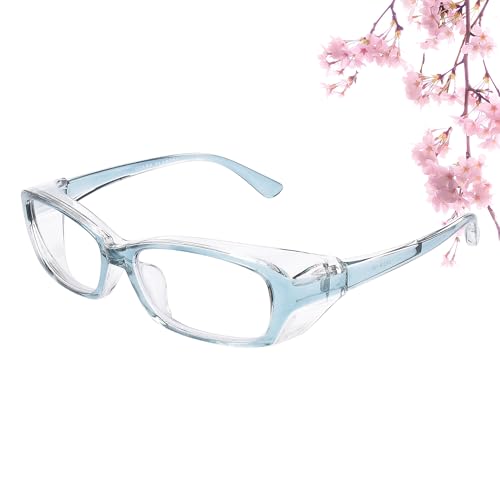
SooGree Anti-Pollen Safety Goggles is the only option here that specifically names pollen protection, with side and top shields intended to help block pollen, dust, debris, and splashes. Its myopia frame accepts replacement lenses, and the product also describes a removable lens and a flexible TR90 frame. That makes it a fit for buyers seeking coverage with a prescription-lens option. The main limitation is that the specifications do not establish a sealed fit around every face; people relying on close coverage should check how the frame sits against their own face before use.
Bottom line: Choose this if explicit pollen coverage and a replaceable-lens frame are priorities.
NoCry Over-Glasses Safety Goggles
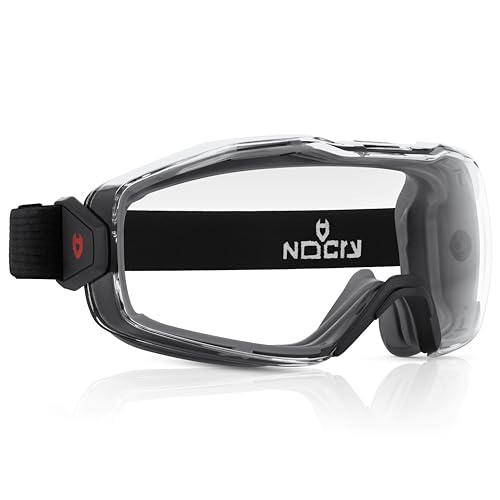
NoCry Over-Glasses Safety Goggles stands out for its soft TPR gasket and design intended to fit over most prescription glasses. The panoramic clear lens has a UV380 rating, and the product describes anti-fog and scratch-resistant coatings. Its purpose centers on dust and safety use, not pollen, so buyers seeking pollen-specific coverage may prefer the model that names pollen and has top and side shields. The one-size design also means that prescription frames and face shapes can affect comfort and coverage.
Bottom line: Pick this if wearing your prescription glasses underneath matters most.
NoCry Over-Glasses Safety Glasses

NoCry Over-Glasses Safety Glasses gives a fit limit of prescription frames up to 5.7 inches wide, making that measurement its most useful distinction. Its wraparound lens has integrated side shields, adjustable temples, and UV400 coating; the product says the lenses protect against dust and debris. It does not specifically claim pollen protection, so its side coverage should not be treated as proof of a sealed fit. Measure the outside width of your glasses before choosing it.
Bottom line: Choose this when your prescription frames are wide and within its fit limit.
TICONN Adjustable Safety Glasses

TICONN Adjustable Safety Glasses differs from the over-glasses choices with temples adjustable in both angle and length, plus rubber nose pads and tips. Its polycarbonate lenses are described as impact resistant and anti-fog, and the product names work settings such as construction, labs, and outdoor use. The specifications do not say that the glasses fit over prescription eyewear or specifically block pollen. Buyers who need broad coverage around the sides and top should favor eyewear with that coverage explicitly described.
Bottom line: Pick this for adjustable arms rather than a pollen-specific design.
Alsenor Anti-Fog Protective Eyewear

Alsenor Anti-Fog Protective Eyewear is distinguished by its 99% UV protection coating and blue-light-blocking coating, alongside polycarbonate lenses and an anti-fog coating. The product also names anti-dust protection, but does not specifically describe pollen coverage or side and top shields. That makes it a less direct match for buyers prioritizing pollen exposure. Its medium size is given, so confirm the fit against your face if close coverage is important.
Bottom line: Choose this if its UV coating is more important than pollen-specific coverage.
How to choose anti pollen glasses
For pollen exposure, prioritize coverage around the sides and above the eyes, not just a lens labeled UV or anti-fog. Pollen grains commonly fall in the roughly 10–100 micrometer range, and gaps around open-sided glasses can let airborne particles reach the eye. Close-fitting goggles or glasses with substantial side and top shields are more relevant than impact protection alone. A useful decision rule is to favor a design that explicitly describes side and top coverage when pollen is the main concern. UV ratings address ultraviolet light, while anti-fog coatings address condensation; neither feature by itself establishes pollen coverage.
Prescription glasses and frame fit
Over-glasses designs are made to sit over prescription frames, while a myopia frame is intended to hold prescription lenses within the protective frame. Those are different arrangements, so decide whether you want to keep your everyday glasses on or use lenses mounted in the eyewear. Measure your prescription frames at their widest point and compare that with any maximum width; NoCry Over-Glasses Safety Glasses gives a 5.7-inch limit. For any design, check that the frame does not press painfully on temples or nose and that the shields do not leave large gaps. An adjustable strap or temple may improve stability but cannot guarantee a seal on every face.
Safety ratings and pollen coverage
ANSI Z87.1 is an impact-safety marking, not a pollen-seal rating. That distinction matters because protection against flying debris does not by itself tell you how closely eyewear fits around the eyes. A wraparound lens, side shields, or gasket can add coverage, but the shape and fit still determine whether gaps remain. Use impact-rated eyewear when the work involves impact hazards, and assess pollen coverage separately by looking for top and side shielding or a close-fitting goggle design. UV coatings and anti-scratch lenses serve other purposes and should not be used as substitutes for coverage features.
Using eye protection during pollen exposure
Protective eyewear can reduce direct contact with airborne particles, but it does not eliminate pollen exposure through the nose or mouth. Frames that shift, sit away from the face, or leave broad side gaps offer less coverage than a close-fitting design. Keep lenses clean with a soft cloth and follow the maker’s care directions; abrasive wiping can scratch plastic lenses and coatings. If eye irritation or vision changes persist, seek qualified medical advice rather than relying on eyewear alone. For dusty or high-impact tasks, choose eye protection suited to that hazard as well as the coverage you want for pollen.
Frequently Asked Questions
Do anti-pollen glasses need to seal around the eyes?
Closer coverage generally leaves fewer openings around the eyes than open-sided glasses. Look for top and side shields or a close-fitting goggle shape, while recognizing that fit varies by face.
Are safety glasses with UV protection enough for pollen?
No; UV coatings address ultraviolet light, not the gaps through which pollen can reach the eyes. Favor side and top coverage when pollen is the concern.
Can I wear pollen goggles over prescription glasses?
Yes, if the eyewear is designed to fit over glasses and accommodates your frame dimensions. Measure your frames and check for pressure or large gaps once worn.
What is the difference between over-glasses and myopia-frame protection?
Over-glasses eyewear sits over your regular prescription frames, while a myopia frame holds prescription lenses within the protective frame. Choose based on whether you want to keep your everyday glasses on.
Does an ANSI Z87.1 rating mean glasses block pollen?
No; ANSI Z87.1 concerns impact protection rather than a pollen seal. Check separately for side and top coverage or a close-fitting design.