
Carbon Crystal Wall Panels: Types and Fit Compared

For a rigid carbon crystal wall panel, choose CIIHOO Carbon Crystal 23.62-Inch Panels: its 23.62-inch square PVC composite panels are 0.27 inch thick. The other options are peel-and-stick marble-look panels, so choose one of them if you want flexible or self-adhesive sheets rather than rigid panels.
Carbon crystal wall panels are decorative wall cladding, not a substitute for ceramic tile in every wet area. CIIHOO Carbon Crystal 23.62-Inch Panels is specifically intended for indoor dry areas, while the alternatives differ in material, dimensions and attachment.
We earn a commission if you buy through links on this page. As an Amazon Associate I earn from qualifying purchases. Products are compared on manufacturer specifications, not hands-on testing.
- Best overall: CIIHOO Carbon Crystal 23.62-Inch Panels – Rigid, three-layer PVC composite panels sized 23.62 inches square.
- Best for PVC sheets: Gray Marble PVC Foam Panels, 10-Pack – Ten 23.6-by-11.8-inch PVC foam panels with a peel-and-stick format.
- Best for larger coverage: Haimin Marble-Look PET Panels, 20-Pack – Twenty flexible PET and IXPE panels cover 38.7 square feet.
- Best for small squares: WADILE Gold Marble-Look PVC Panels, 20-Pack – Twenty self-adhesive PVC foam panels measure 11.8 inches square.
| Product | Best for | Panel size | Material | Installation | Shop |
|---|---|---|---|---|---|
| CIIHOO Carbon Crystal 23.62-Inch Panels | Rigid dry-area walls | 23.62 × 23.62 in | 3-layer PVC composite | Extra adhesive required | Check Price on Amazon |
| Gray Marble PVC Foam Panels, 10-Pack | PVC peel-and-stick | 23.6 × 11.8 in | PVC foam, 2.5 mm | Peel and stick | Check Price on Amazon |
| Haimin Marble-Look PET Panels, 20-Pack | Broad wall coverage | 23.6 × 11.8 in | PET and IXPE foam | Self-adhesive | Check Price on Amazon |
| WADILE Gold Marble-Look PVC Panels, 20-Pack | Small square panels | 11.8 × 11.8 in | PVC foam | Peel and stick | Check Price on Amazon |
Carbon Crystal Wall Panels and Alternatives
Compare panel construction and attachment style before choosing a wall finish for your room.
CIIHOO Carbon Crystal 23.62-Inch Panels

Unlike the peel-and-stick alternatives, these are rigid, 0.27-inch-thick, three-layer PVC composite panels. Each measures 23.62 inches square, and the six-pack comes in white gold. The manufacturer describes a high-temperature, nine-layer co-extrusion process and a waterproof surface; the panels are intended for indoor dry areas and can be wiped with a damp cloth.
Choose this set for a TV or accent wall when you want larger rigid pieces. Installation requires extra construction adhesive, which is not included, and these panels are not for shower enclosures with constant running water.
Bottom line: Pick this set for rigid, large-format panels in an indoor dry area where you can supply construction adhesive.
Gray Marble PVC Foam Panels, 10-Pack

This option uses narrower, 2.5-millimeter PVC foam sheets rather than the rigid square composite panels. The ten gray marble-look panels cover 19.4 square feet, according to the product name, and are designed as peel-and-stick backsplash or wall decor rather than real tile.
The maker says the panels resist water and heat, but also rules out high-humidity shower rooms and floor use. That limitation matters if you need a finish for a constantly wet area or a walking surface. Choose these for a kitchen or living-room wall when a slim, adhesive-backed marble-look fits the project.
Bottom line: Choose these for a PVC peel-and-stick wall finish outside shower rooms and off floors.
Haimin Marble-Look PET Panels, 20-Pack
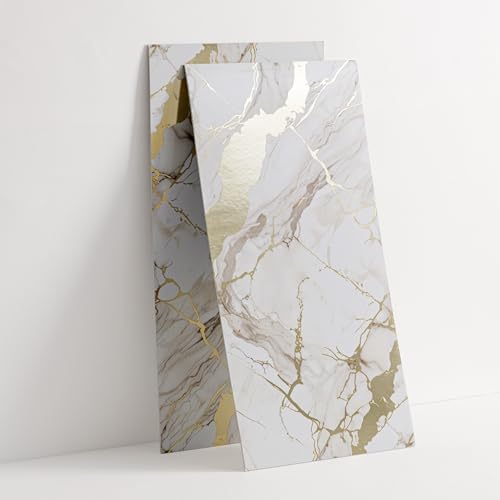
These flexible PET-and-IXPE panels are the largest set by coverage: 20 pieces cover 38.7 square feet. Each 23.6-by-11.8-inch sheet has a white-gold marble-look, but it is not real marble or rigid ceramic tile. The maker describes the panels as lightweight and self-adhesive, with no extra glue needed.
Choose this set for a smooth, flat surface where broad coverage and easier application matter more than a rigid finish. The panels may bend slightly when handled without support, so they are a poor fit if you need hard tile-like rigidity. The maker identifies furniture, counters and walls as possible surfaces.
Bottom line: Choose this set when flexible, self-adhesive sheets and its coverage suit the wall.
WADILE Gold Marble-Look PVC Panels, 20-Pack

Unlike the rectangular sheets, these gold marble-look PVC foam panels are square, measuring 11.8 inches on each side. The 20-piece set is self-adhesive and intended as decorative wall panels, so it offers a smaller repeating format than the 23.6-inch-wide alternatives.
Choose the squares when you want a compact tile-like pattern and an adhesive-backed panel. The product calls the panels waterproof and heat-resistant, but they are not real tile; that distinction matters if the project requires a hard tile surface rather than lightweight wall decor. A small piece of tape at a backing-paper corner can help start peeling it away.
Bottom line: Pick these for a gold marble-look pattern made from compact, adhesive-backed squares.
How to Choose Wall Panels for Your Project
Start with the finish you need: rigid composite panels and flexible peel-and-stick sheets install differently and do not behave like ceramic tile. Measure wall width and height in inches, multiply them for square inches, then divide by 144 for square feet; add roughly 10% for cuts and layout waste. For example, a 48-by-36-inch area is 12 square feet before waste, so plan for about 13.2 square feet of material. That allowance is a planning rule, not a guarantee, because corners, outlets and pattern alignment change cut loss. If you need hard tile, do not treat a lightweight faux-tile panel as equivalent. Check the room’s moisture exposure before deciding: surface water resistance does not establish suitability for continuous shower spray.
Panel Size and Wall Layout
Panel dimensions affect seams and waste more than the printed pattern alone. A 23.6-by-11.8-inch rectangle covers about 1.93 square feet before cuts, while an 11.8-inch square covers about 0.97 square foot; larger pieces mean fewer seams across the same area. Lay out a dry grid on paper or with removable marks before applying adhesive, and center a pattern on the most visible wall rather than leaving a narrow sliver at one edge. Measure around outlets, cabinets and trim individually. Keep cut edges out of wet zones when possible, and do not assume a decorative panel is approved as a shower surround just because its face resists splashes.
Rigid Composite Versus Peel-and-Stick Panels
Rigid panels require a compatible adhesive and a sound substrate; self-adhesive sheets rely on both the backing and the wall surface. Dust, grease, loose paint and uneven texture can undermine adhesion, so clean and dry the wall and address loose material before installation. Use this comparison to match installation style to the room and project.
| Panel type | Typical attachment | Best fit |
|---|---|---|
| Rigid PVC composite | Construction adhesive | Dry-area accent wall |
| PVC foam sheet | Peel-and-stick backing | Smooth wall or backsplash |
| PET and IXPE foam | Self-adhesive backing | Flat surface needing flexible decor |
Adhesive performance depends on substrate condition, temperature and installation directions, so avoid bonding over damp or freshly painted walls. A decorative panel is not a replacement for a waterproofing system behind tile in a wet enclosure.
Moisture Limits and Installation Mistakes
Water-resistant facing and a waterproof wall assembly are not the same thing. A panel face may repel splashes while seams, cut edges and the wall behind remain vulnerable; use panels only in the conditions their maker allows. In particular, the rigid carbon crystal set is intended for indoor dry areas, not a shower with continuous running water. A common mistake is skipping a test fit: mark the first row level, check the full layout, and cut around outlets before removing adhesive backing or spreading construction adhesive. For any product requiring added adhesive, use a compatible product and allow its cure time before loading or cleaning the surface.
Frequently Asked Questions
Can carbon crystal wall panels go inside a shower?
The CIIHOO panels are intended for indoor dry areas and are not for shower enclosures with constant running water. A waterproof-looking face does not by itself make the seams or wall assembly suitable for a continuously wet enclosure.
How much extra panel material should I plan for?
A common planning allowance is about 10% beyond the measured wall area for cuts and waste. Complex layouts, many outlets or a centered repeating pattern can require more, so calculate the layout before installation.
What wall surface works best for peel-and-stick panels?
A clean, dry, smooth, sound surface is the safest starting point for adhesive-backed panels. Dust, grease, texture and loose paint can reduce contact, so prepare the substrate before removing the backing.
Are marble-look wall panels made from real stone?
The marble-look options here are not real marble or real tile. Their materials include PVC foam or PET with IXPE foam, so choose actual tile if the project requires a hard stone or ceramic surface.
Do rigid carbon crystal panels include installation adhesive?
No, the CIIHOO set requires extra construction adhesive, which is not included. Plan for that separate material and confirm compatibility with the wall surface before installation.