
Best Bandages for Face: 4 Options Compared

RHYZIA Clear Round Bandages suits most people seeking the best bandages for the face because its clear round design comes in three sizes for small, visible wounds. Choose Welly Face Savers Hydrocolloid Patches instead for a blemish rather than a cut, or BAND-AID Sensitive Skin Assorted Bandages if gentle removal for sensitive skin is the priority.
We earn a commission if you buy through links on this page. As an Amazon Associate I earn from qualifying purchases. Products are compared on manufacturer specifications, not hands-on testing.
- Best overall: RHYZIA Clear Round Bandages – Three clear round sizes provide discreet coverage for small facial wounds.
- Best for blemishes: Welly Face Savers Hydrocolloid Patches – Hydrocolloid patches cover pimples and absorb fluid without medication.
- Best for sensitive skin: BAND-AID Sensitive Skin Assorted Bandages – The maker says the bandages are hypoallergenic and peel off without pain.
| Product | Best for | Count | Shape or type | Sizes | Shop |
|---|---|---|---|---|---|
| RHYZIA Clear Round Bandages | Small visible cuts | 100 | Clear round | 7/8, 1, 1-3/16 in | Check Price on Amazon |
| Welly Face Savers Hydrocolloid Patches | Pimple coverage | 36 | Hydrocolloid spot patches | Small spot shape | Check Price on Amazon |
| 120-Piece Small Fabric Bandage Assortment | Shape variety | 120 | Round, oval, square | 6 sizes | Check Price on Amazon |
| BAND-AID Sensitive Skin Assorted Bandages | Sensitive skin | 20 | Assorted adhesive strips | Assorted sizes | Check Price on Amazon |
Best bandages for face
Choose a regular adhesive strip for a cut and a hydrocolloid patch for a blemish.
RHYZIA Clear Round Bandages

Three clear round sizes make this set a fit for small facial cuts or shaving nicks where a fabric strip would stand out. The 100 individually wrapped bandages use medical-grade acrylic adhesive, and the maker says the adhesive provides a secure hold during normal daily activity. Choose the smallest size that fully covers the wound without placing the pad over uninjured skin. The round shape is less useful for a long scrape or a blemish that needs a hydrocolloid patch; for those jobs, a different format is a better match.
Bottom line: Pick this when a small wound needs discreet, round coverage in multiple sizes.
Welly Face Savers Hydrocolloid Patches

Unlike ordinary wound strips, these clear hydrocolloid patches are made for blemishes rather than cuts. The maker says they support a moist healing environment, form a barrier against dirt and germs, and absorb pus, oil, and fluid; the patch turns white as it absorbs. The 36-count patches are drug-free and latex-free, with no harsh chemicals or drying formulas. They can also cover a spot to discourage touching. They are not a substitute for an adhesive bandage on a cut, scrape, or wound that needs broader coverage.
Bottom line: Choose these for a small blemish when you want a low-profile cover that absorbs fluid.
120-Piece Small Fabric Bandage Assortment
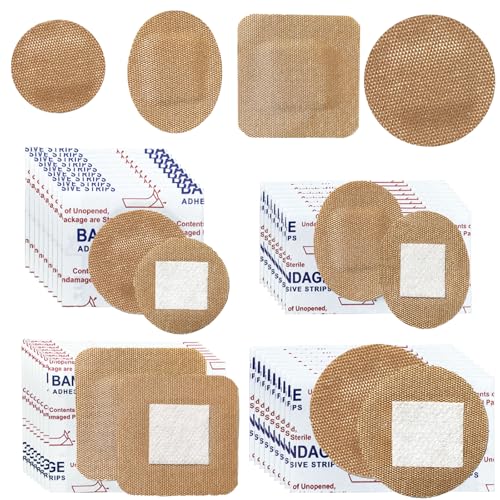
This assortment stands out for its mix of six sizes and three shapes, including round, oval, and square pieces for small areas such as the nose or fingertips. The bandages are primarily breathable fabric, which flexes more readily than a clear plastic dot. With 120 pieces, the set offers more shape choices than the small clear-round option. Fabric is more visible on the face, so choose another option if a discreet look matters most. The assortment is intended for small areas and may not cover a longer scrape evenly.
Bottom line: Pick this when shape variety and flexible fabric matter more than a nearly invisible finish.
BAND-AID Sensitive Skin Assorted Bandages

For buyers focused on sensitive skin, this assortment differs from the clear face-specific styles with its emphasis on gentle removal and broader wound protection. The maker says its hypoallergenic bandages suit sensitive and eczema-prone skin, and that Sensi-Layer Technology stays on for up to 24 hours while peeling off without pain. Larger sizes have a four-sided seal. This is a general minor-wound option rather than a discreet round face dot, so it may be more noticeable on the face than the clear styles.
Bottom line: Choose this when gentle removal and sensitive skin suitability outweigh a discreet shape.
How to choose face bandages
Match the cover to the wound: use an adhesive bandage for a small cut or scrape and a hydrocolloid patch for a blemish. Hydrocolloid absorbs fluid and forms a gel as it takes it up, while a standard bandage protects with an absorbent pad and adhesive edges. For a visible facial wound, choose a pad just large enough to cover it and an adhesive area that stays on intact skin. For a pimple, do not substitute a regular wound strip for an acne patch if you want the patch to absorb fluid. Avoid covering deep, heavily bleeding, or infected wounds with a small face bandage; those need appropriate medical attention.
Face bandage sizes and placement
A small bandage should cover the wound completely, with the adhesive anchored on clean, dry skin rather than over the wound itself. For round styles, the available diameters of 7/8, 1, and 1-3/16 inches offer different coverage for small spots; select the smallest one that leaves the wound covered. Curved facial areas such as the nose can loosen an oversized or poorly placed strip, so smooth the adhesive onto dry skin without stretching it. Replace a bandage if it becomes wet, dirty, or loose. Keep adhesive away from the eyes and avoid placing it over irritated skin.
Cleaning and changing a facial bandage
Rinse a minor cut with clean running water and gently clean around it before applying a fresh bandage. Soap can be used on the surrounding skin, but avoid getting it into the wound; hydrogen peroxide and rubbing alcohol can irritate tissue. Change a standard bandage at least once a day and whenever it gets wet or dirty. Hydrocolloid patches are designed to stay in place while absorbing fluid, so follow the product’s wear guidance and remove one if it loosens or causes irritation. Seek care for a wound that is deep, won’t stop bleeding, or shows spreading redness, worsening pain, or pus.
Bandage types for face wounds and blemishes
Clear round bandages cover small cuts with less visual bulk, while fabric assortments offer more shapes and flex around small areas. Sensitive skin strips prioritize gentler removal, and hydrocolloid spot patches are designed for blemishes rather than open cuts. Use the table to match the format to the job; a patch that suits a pimple is not automatically suitable for a cut.
| Need | Type to choose | Reason |
|---|---|---|
| Small visible cut | Clear round bandage | Discreet, wound-covering pad |
| Pimple or blemish | Hydrocolloid spot patch | Absorbs surface fluid |
| Curved small area | Flexible fabric shape | Multiple shapes and sizes |
| Gentle removal priority | Sensitive skin strip | Made for sensitive skin |
Frequently Asked Questions
Can regular bandages go on facial skin?
Yes, a regular adhesive bandage can cover a small, clean cut on the face if the pad fully covers the wound. Place adhesive only on intact skin and keep the strip away from the eyes.
How often should I change a face bandage?
Change a standard bandage at least daily and sooner if it gets wet, dirty, or loose. A hydrocolloid blemish patch is different; follow its wear guidance and replace it if it lifts or irritates your skin.
Are hydrocolloid patches the same as bandages?
Hydrocolloid patches are a type of adhesive covering, but acne patches are made for blemishes rather than cuts. They absorb surface fluid and should not be used as a substitute for covering a wound that needs a protective pad.
How do I keep a bandage on my nose?
Apply a bandage to clean, fully dry skin and press its adhesive edges onto intact skin. A small shape that follows the area is less likely to lift than an oversized strip; replace it if it loosens.
When should a facial cut get medical care?
Seek medical care for a deep facial cut, bleeding that will not stop, or signs of infection such as spreading redness, worsening pain, or pus. A small adhesive bandage is for minor wounds, not those conditions.