
Que Bella Face Masks: Three Formats Compared for Fit

Que Bella Citrus Surge Sheet Mask suits most people choosing a Que Bella face mask because its thin citrus-scented sheet comes with aloe vera, chamomile, and a vitamin C serum. Choose a different format if you prefer an in-shower gel treatment or a scrub-and-peel mask.
Face masks are topical skincare treatments; the format determines whether you apply a sheet, gel, or exfoliating product.
We earn a commission if you buy through links on this page. As an Amazon Associate I earn from qualifying purchases. Products are compared on manufacturer specifications, not hands-on testing.
- Best overall: Que Bella Citrus Surge Sheet Mask – A lightweight sheet format with aloe vera, chamomile, and a vitamin C serum.
- Best for shower use: Que Bella In-Shower Gel Mask – A Que Bella gel mask facial treatment made for in-shower use.
- Best for exfoliation: Que Bella Lime & Mint Scrub and Peel – A lime-and-mint scrub-and-peel mask designed to remove dead skin cells and surface impurities.
| Product | Best for | Format | Scent or ingredients | Size | Shop |
|---|---|---|---|---|---|
| Que Bella Citrus Surge Sheet Mask | Lightweight sheet use | Sheet mask | Citrus; aloe vera, chamomile, vitamin C | 1 count | Check Price on Amazon |
| Que Bella In-Shower Gel Mask | In-shower routine | Gel mask | — | 0.5 fl oz | Check Price on Amazon |
| Que Bella Lime & Mint Scrub and Peel | Exfoliating routine | Gel scrub and peel mask | Lime and mint | 0.35 oz; count varies in fields | Check Price on Amazon |
Que Bella Face Masks by Format
Compare the sheet, in-shower gel, and scrub-and-peel formats by their ingredients and package size.
Que Bella Citrus Surge Sheet Mask

Unlike the gel and scrub formats, this Que Bella option is a thin, lightweight citrus-scented sheet mask. Its serum contains aloe vera and chamomile, plus vitamin C and antioxidants; the maker says the formula is intended to brighten and protect skin. The quick-absorbing texture suits someone who wants a sheet treatment rather than a rinse-off product. The package contains one mask, so it is less suited to anyone seeking a multi-use treatment or a scrub texture.
Bottom line: Choose this if you want a single-use sheet mask with a citrus scent.
Que Bella In-Shower Gel Mask

This Que Bella treatment is the only one of the three explicitly made for in-shower use, rather than a sheet or scrub-and-peel format. The package contains 0.5 fluid ounce, which makes it a small, single-pack option for a shower routine. The product name identifies it as a gel mask facial treatment, but the specifications do not describe ingredients or a particular skin concern. That makes this a better fit for shoppers prioritizing application format than those choosing by active ingredients.
Bottom line: Pick this when an in-shower gel format matters more than ingredient specifics.
Que Bella Lime & Mint Scrub and Peel
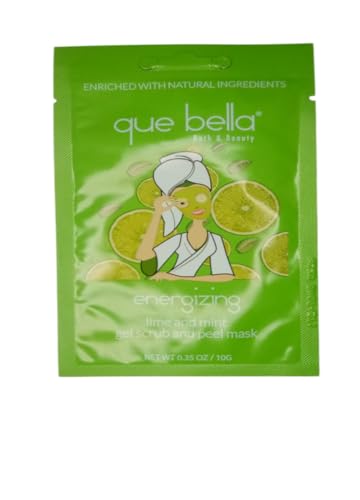
Unlike the citrus sheet and in-shower gel treatments, this Que Bella mask combines a gel scrub-and-peel format with lime and mint. The maker says it is designed to gently cleanse, remove dead skin cells and surface impurities, and leave skin feeling smoother and refreshed. Its exfoliating focus suits someone seeking surface polishing rather than a hydrating sheet treatment. Package count is inconsistent across the specifications, so confirm the count before ordering if the number of uses matters.
Bottom line: Choose this if you want a lime-and-mint exfoliating scrub-and-peel format.
How to choose a Que Bella face mask format
Choose by application style first: a sheet mask rests on the face, a gel mask is applied as a product, and a scrub-and-peel format adds exfoliation. Sheet masks are typically single-use, while rinse-off masks are applied and removed according to the product directions. Exfoliating products can be more irritating than non-exfoliating masks, especially when combined with other exfoliants. If your routine already includes an exfoliating acid or retinoid, avoid stacking several exfoliating products in one session. For a once-and-done sheet format, choose Que Bella Citrus Surge Sheet Mask; for a shower-oriented product, choose Que Bella In-Shower Gel Mask; for scrubbing and peeling, choose Que Bella Lime & Mint Scrub and Peel.
Sheet, gel, and scrub mask differences
Sheet masks deliver serum through a shaped fabric or similar sheet, while gel masks are spread over the skin and removed by the method specified for that product. Scrub-and-peel masks add a surface-exfoliation step, so they are not interchangeable with a simple hydrating mask. A practical decision rule is to choose a sheet mask when you want no scrub step, a gel treatment when shower use is the priority, and a scrub-and-peel only when exfoliation is wanted. Mask formats do not replace daily sunscreen: broad-spectrum SPF 30 or higher is the standard recommendation for sun protection, particularly important when exfoliating products are part of a routine.
| Format | Typical use | Choose when |
|---|---|---|
| Sheet | Lay serum-soaked sheet over face | You want a no-scrub treatment |
| Gel | Apply and remove per directions | You prefer a gel application |
| Scrub and peel | Exfoliating surface treatment | You want a polishing step |
How to use face masks with less irritation
Patch-test a new facial product on a small area first, and avoid applying masks to broken or irritated skin. Follow the package directions for application and removal; leaving a product on longer than directed does not guarantee better results and may increase irritation. Stop using a mask if burning, swelling, or persistent redness develops, and rinse it off. Avoid combining a scrub-and-peel mask with another exfoliant in the same routine, especially if your skin is already sensitive. If irritation is severe or continues after stopping the product, seek medical advice rather than trying another mask.
Frequently Asked Questions
How often should I use a face mask?
Use a mask at the frequency on its package, since sheet, gel, and exfoliating formats differ. For an exfoliating mask, avoid using it in the same session as another exfoliant to reduce irritation risk.
Should I patch-test a new face mask?
Yes, patch-test a new mask on a small area before applying it to your whole face. Stop and rinse it off if the test area develops burning or persistent redness.
Can I use a scrub mask with retinol?
Avoid combining a scrub-and-peel mask with retinol in the same routine if irritation is a concern. Both can be irritating, particularly for sensitive skin; use them on separate occasions and stop if redness or burning develops.
Do face masks replace daily sunscreen?
No, a face mask does not replace sun protection. Broad-spectrum SPF 30 or higher is the standard recommendation for exposed skin.