
Best Glue to Stick Plastic to Glass: 5 Options

Gorilla Super Glue Brush and Nozzle suits most people because it bonds glass and plastic and offers both a brush and precision tip for controlled application. Choose a different option if you need a larger container, a thick formula, or an adhesive specifically limited to indoor use.
We earn a commission if you buy through links on this page. As an Amazon Associate I earn from qualifying purchases. Products are compared on manufacturer specifications, not hands-on testing.
- Best overall: Gorilla Super Glue Brush and Nozzle – Its brush and precision tip give two ways to apply glue to glass and plastic.
- Best for a thick formula: Glass Super Glue Liquid, Thick, 1 oz – The product is identified as a thick, 1-ounce glass super glue and gives a 60–180-second drying range.
- Best for repeated use: Vereclue Super Glue with Brush, 130 mL – The 130 mL bottle provides more adhesive than the other formats.
- Best for indoor glass repairs: Loctite Glass Glue, 0.07 oz – It dries clear and is described as waterproof and dishwasher safe for indoor use.
| Product | Best for | Container or format | Application | Set or cure time | Shop |
|---|---|---|---|---|---|
| Gorilla Super Glue Brush and Nozzle | Controlled application | 0.42 oz bottle | Brush and precision tip | 10–45 seconds | Check Price on Amazon |
| Loctite Glass Glue, 0.07 oz | Indoor glass repairs | 0.07 oz tube | Tube | Fast-drying; no cure time given | Check Price on Amazon |
| Vereclue Super Glue with Brush, 130 mL | Frequent applications | 4.40 oz bottle | Brush | — | Check Price on Amazon |
| Glass Super Glue Liquid, Thick, 1 oz | Thicker application | 1 oz bottle | Anti-clog cap | 60–180 seconds; 24-hour full cure | Check Price on Amazon |
| Gorilla Super Glue, Four 3 g Tubes | Small repair jobs | 0.42 oz total (4 × 0.11 oz) | Tube | 10–45 seconds | Check Price on Amazon |
Glue to Stick Plastic to Glass
Compare the adhesive formats and application features, then check that the glue suits the specific plastic and intended use.
Gorilla Super Glue Brush and Nozzle

Gorilla Super Glue Brush and Nozzle stands apart with two application options: a brush for spreading glue and a precision tip for directing it into a small joint. The 12 g clear formula is described as bonding glass and plastic, as well as several other materials, and as impact resistant. It sets in 10–45 seconds without clamping, which can help with small parts that are difficult to hold. The short set time also leaves little room to reposition pieces, so align the joint before applying. This is a practical choice for controlled repairs, but not the best fit when a larger supply is the priority.
Bottom line: Choose this when application control matters more than container size.
Loctite Glass Glue, 0.07 oz

Loctite Glass Glue, 0.07 oz is the only option here that explicitly limits its intended use to indoors, making that boundary important for a repair exposed to outdoor conditions. The 0.07-ounce clear, colorless tube bonds glass to glass and to certain plastics and metals, and it needs no clamping. The glue is described as waterproof, heat resistant, and dishwasher safe, but those claims do not override the indoor-use restriction. Its small tube suits a limited repair where a clear finish matters; buyers seeking an adhesive for outdoor exposure should choose a different product.
Bottom line: Pick this for a small, clear indoor repair on compatible glass and plastic.
Vereclue Super Glue with Brush, 130 mL

Vereclue Super Glue with Brush, 130 mL differs from the smaller tubes and bottles with a 130 mL container intended for repeated applications. Its clear synthetic-resin adhesive is described as bonding glass and plastic among a broad range of materials, with water and weather resistance. The product also claims stable performance through temperature changes and humid air. No set time is given, so it may be a less convenient choice when a repair needs a predictable quick hold. Its larger volume is useful for recurring household or workshop tasks, but check that the particular plastic is compatible before using it.
Bottom line: Choose this when you expect to make repeated glue applications.
Glass Super Glue Liquid, Thick, 1 oz
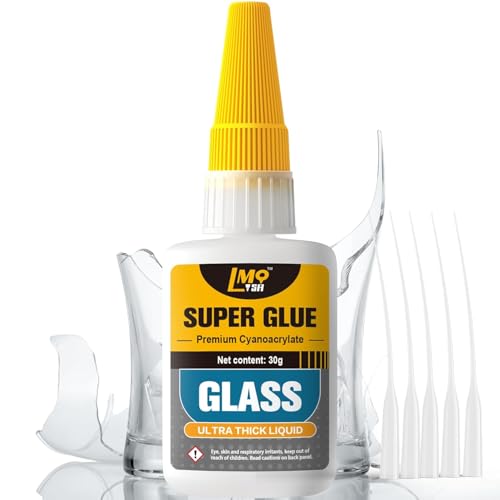
Glass Super Glue Liquid, Thick, 1 oz is the thick-formula option, with a 1-ounce container and an anti-clog cap. It is presented for glass repair and also names plastic among the materials it can bond. The product gives a 60–180-second drying range and a 24-hour full-cure time, a useful distinction when deciding when a repair can be handled again. It also claims waterproof and heat-resistant performance. The timing is a product claim, not a guarantee for every joint; this choice may not suit a repair where rapid handling is essential.
Bottom line: Pick this if you prefer a thick formula and can allow the full cure period.
Gorilla Super Glue, Four 3 g Tubes

Gorilla Super Glue, Four 3 g Tubes separates itself with four individual 3 g tubes, so each small portion can be opened for a separate repair rather than keeping one larger container in use. The clear cyanoacrylate adhesive is described as impact tough and fast-setting in 10–45 seconds, and its anti-clog cap uses a metal pin. The product is intended for small, precise jobs, not repeated large-area application. Because the format is divided into small tubes, it is a less suitable pick when you want a brush or larger volume for multiple projects.
Bottom line: Choose these tubes for occasional, small repairs where portions can be used separately.
How to Choose Glue for Plastic to Glass
For a small, rigid joint between compatible plastic and glass, a cyanoacrylate super glue is often a convenient starting point. The plastic resin matters: polyethylene (PE) and polypropylene (PP) are difficult to bond with ordinary super glue because their surfaces have low surface energy; an adhesive or primer made for those plastics is usually needed. Check the molded resin code or manufacturer guidance before gluing, especially for flexible parts. For parts that flex, vibrate, or face impact, choose an adhesive specifically rated for that service rather than assuming a quick-set bond will tolerate movement. Glass is rigid, while many plastics expand and flex more, so a large rigid bond can be stressed as temperatures change.
Preparing Plastic and Glass Surfaces
Clean, dry surfaces give glue a better chance of making contact, so remove dust, grease, and old adhesive before assembly. A lint-free cloth and isopropyl alcohol can clean many bare glass and plastic surfaces, but test it first because some plastics and coatings can be damaged by solvents. Avoid touching the cleaned bonding area. Do not sand glass; light abrasion may help some compatible plastics, but it can scratch or weaken a part. Dry-fit the pieces first and plan how to hold them, since many cyanoacrylate adhesives set in seconds. Use only a small amount: excess glue can squeeze into view or leave a cloudy residue, particularly near clear glass.
Choosing a Glue Format and Allowing Cure Time
A brush helps spread adhesive over a broader area, while a narrow nozzle or tube can place a small bead along a joint. Thin super glue can run on vertical glass, so keep the pieces oriented to contain it or choose a thicker formula when the joint shape allows. Fast setting is not the same as full cure: some formulas reach handling strength quickly but need hours to cure fully. Leave a repair undisturbed for the full cure period on its package, and avoid water or load until then. A glue claim such as waterproof does not establish that every plastic-and-glass joint will remain watertight under pressure or repeated flexing.
Safe Handling of Super Glue
Cyanoacrylate super glue bonds skin and eyes quickly, so work with ventilation, keep the tip away from your face, and protect the work surface. Do not use cotton or wool to wipe a spill: cyanoacrylate can react rapidly with these fibers and generate heat. If glue contacts skin, do not pull bonded skin apart; soak it in warm, soapy water and separate it gently. Eye exposure needs immediate flushing with clean water and urgent medical advice. Keep adhesive away from children and pets, and store it closed and upright. Avoid using an indoor-only adhesive outdoors, even if the glue also claims water resistance.
Frequently Asked Questions
Will super glue bond every type of plastic to glass?
No; ordinary cyanoacrylate can have difficulty bonding polyethylene and polypropylene. Identify the plastic resin first and use a product or primer intended for that material when needed.
How long should plastic and glass stay clamped?
Many super glues set within seconds, but the joint may need much longer to cure fully. Keep the pieces supported and avoid loading or wetting the repair until the adhesive’s full-cure time has passed.
Can I use plastic-to-glass glue on a drinking glass?
Only use an adhesive specifically confirmed as suitable for the intended food-contact area and washing conditions. Waterproof or dishwasher-safe claims alone do not establish that a cured bond is food safe.
Why does clear glue turn cloudy near glass?
Cyanoacrylate vapor can leave a white haze on nearby surfaces, particularly when excess adhesive is used or airflow is limited. Use a small amount, ventilate the area, and keep the bead away from visible glass.
Can I use super glue to repair an aquarium?
Do not rely on a general-purpose glue unless it is explicitly rated for aquarium use and the specific repair. A water-filled tank places sustained pressure on joints, so use an aquarium-appropriate repair method.