
Best Camera Sensor Cleaning Fluid: 5 Options Compared

Eclipse Optic Cleaning Solution, 2-Pack suits most photographers because its fluid is intended for digital sensors and the maker says it dries quickly without residue. Choose a kit instead if you want pre-sized swabs included; sensor cleaning uses a swab to apply fluid across the sensor, so matching the swab width to the sensor matters.
We earn a commission if you buy through links on this page. As an Amazon Associate I earn from qualifying purchases. Products are compared on manufacturer specifications, not hands-on testing.
- Best overall: Eclipse Optic Cleaning Solution, 2-Pack – Standalone 15ml solution intended for digital sensors and other critical optics.
- Best for a larger swab supply: UES Full-Frame Sensor Cleaning Kit – Includes 14 individually vacuum-sealed, 24mm full-frame swabs and 15ml of alcohol-free solution.
- Best for a compact kit: K&F CONCEPT 24mm Sensor Cleaning Kit – Pairs 20ml of cleaner with six vacuum-sealed 24mm full-frame swabs.
| Product | Best for | Format | Fluid volume | Swab count | Shop |
|---|---|---|---|---|---|
| Eclipse Optic Cleaning Solution, 2-Pack | Standalone cleaner | Fluid only | 15ml total | None included | Check Price on Amazon |
| K&F CONCEPT 24mm Sensor Cleaning Kit | Compact swab kit | Fluid and swabs | 20ml | 6 | Check Price on Amazon |
| VSGO 10ml Camera Sensor Cleaner | Fluid-only option | Fluid only | 10ml | None included | Check Price on Amazon |
| UES Full-Frame Sensor Cleaning Kit | More included swabs | Fluid and swabs | 15ml | 14 | Check Price on Amazon |
| VSGO Full-Frame Sensor Cleaning Kit, 12 Swabs | Mid-size swab kit | Fluid and swabs | 10ml | 12 | Check Price on Amazon |
Camera Sensor Cleaning Fluids Compared
Choose between standalone fluid and kits that pair cleaner with sensor-sized swabs.
Eclipse Optic Cleaning Solution, 2-Pack

Eclipse Optic Cleaning Solution, 2-Pack is the only standalone fluid among these options, making it a fit for photographers who already have sensor swabs or optical wipes. The two-pack is labeled 15ml, and the maker says the solution works on digital sensors and other critical optics and dries quickly without residue. It is intended for use with a sensor swab or PEC-PAD wipes, rather than as a spray-and-wipe screen cleaner. The tradeoff is that no swabs are included, so buyers starting without sensor cleaning tools will need to obtain them separately.
Bottom line: Pick this if you want sensor fluid separately and already have suitable swabs.
K&F CONCEPT 24mm Sensor Cleaning Kit
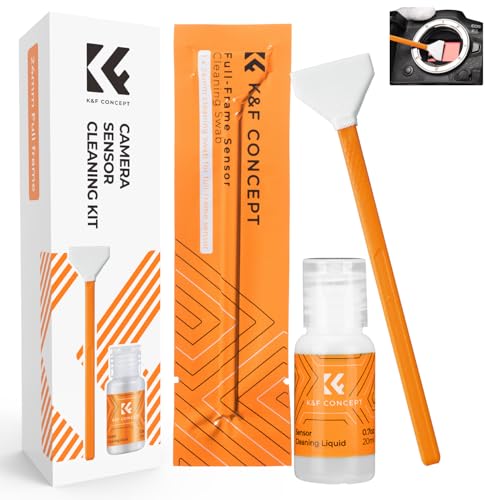
K&F CONCEPT 24mm Sensor Cleaning Kit combines the largest fluid volume among the swab kits with six 24mm swabs for full-frame sensors. The cleaner is ammonia-free and low-VOC, and each swab is vacuum packaged. The maker’s directions call for one or two drops on a swab edge, followed by a careful pass across the sensor and a reversed pass back. This kit suits occasional cleaning when a small swab supply is enough. Its six swabs are fewer than the 12- and 14-piece kits, so frequent sensor cleaning may call for a larger supply.
Bottom line: Choose it if you want 20ml of cleaner with a modest set of full-frame swabs.
VSGO 10ml Camera Sensor Cleaner

VSGO 10ml Camera Sensor Cleaner is a 10ml standalone cleaner made with ultrapure water, according to the maker, who says it cleans without streaks or blemishes. The bottle has a leak-proof design and the fluid is described as alcohol-free. Its uses extend beyond camera sensors to coated lenses and screens, so it may suit someone who wants one cleaner for several optical surfaces. Unlike the bundled kits, it provides no sensor swabs; buyers without a sensor-safe swab will need a separate tool for controlled application.
Bottom line: Pick this for a small standalone bottle when you already have sensor swabs.
UES Full-Frame Sensor Cleaning Kit

UES Full-Frame Sensor Cleaning Kit provides 14 individually vacuum-sealed, 24mm swabs and 15ml of alcohol-free solution, the largest swab count in this group. Its cleaner is intended for CMOS and CCD sensors, and the maker says it is compatible with in-body image stabilization systems. That combination suits full-frame camera owners who want a larger supply of individually packaged swabs. The 24mm swabs are sized for full-frame sensors; a buyer with a different sensor format should confirm the swab width before choosing this kit.
Bottom line: Choose it if you want the largest included supply of 24mm swabs.
VSGO Full-Frame Sensor Cleaning Kit, 12 Swabs

VSGO Full-Frame Sensor Cleaning Kit, 12 Swabs pairs a 10ml bottle of cleaner with 12 vacuum-sealed, 24mm full-frame swabs. The maker says the ultrapure-water-based solution cleans without streaks or blemishes and is suitable for sensitive sensors, lenses, filters, and displays. The swab quantity falls between the six-piece K&F kit and the 14-piece UES kit, while the included fluid volume is smaller than either. The broad range of suggested surfaces may appeal to owners cleaning multiple optical items, but sensor use still requires careful swab handling and a sensor-compatible cleaning mode.
Bottom line: Pick it for 12 individually sealed full-frame swabs and a 10ml cleaner.
How to choose camera sensor cleaning fluid
Choose the fluid-and-tool combination that matches your sensor and cleaning supplies. Wet cleaning uses a sensor swab to spread a small amount of cleaner across the sensor; a dropper bottle alone does not provide the swab needed to control that contact. Sensor swabs are sized to sensor formats, and these kits specify 24mm swabs for full-frame sensors. If you already have appropriate swabs, a standalone bottle avoids buying a second set. If not, a kit bundles the applicator and fluid. For a crop-sensor camera, confirm the swab width for that sensor format rather than assuming a full-frame swab is the right fit. Never use a household cloth or paper towel on the sensor surface.
Wet cleaning versus dry cleaning
Start with a blower for loose dust; wet cleaning is generally reserved for marks that remain after non-contact cleaning. A blower directs air without touching the sensor, while a wet swab brings a material into direct contact with its filter surface. Sensor cleaning swabs are typically single-use because a used edge can carry debris back across the sensor. Work in a clean, still-air space, keep the camera mount facing downward when practical, and avoid canned air, which can propel liquid or residue. If a mark persists after a careful pass, repeated scrubbing can add risk; stop rather than applying extra pressure. Use the camera’s sensor cleaning mode or manual-cleaning procedure for access, as specified by its manufacturer.
Sensor swab size and cleaning technique
Use a swab width matched to the camera’s sensor format; 24mm is the width for full-frame swabs in these kits. A swab that is too narrow can require extra passes, while one that does not fit can be difficult to guide safely. Apply only a small amount of fluid to the swab, not directly onto the sensor, then make a smooth pass without pressing hard. Many wet-cleaning procedures use one side for a pass and the clean reverse side for a return pass; the K&F kit’s maker gives that method and calls for one or two drops. Check swab width before buying if the camera is not full frame.
The table separates fluid-only bottles from kits so buyers can match included tools to their routine.
| Format | Included swabs | Useful when |
|---|---|---|
| Fluid only | None | You already own sensor-safe swabs |
| Cleaner and swabs | 6 to 14 in these kits | You want a bundled applicator supply |
Safe handling for camera sensor cleaning
Sensor cleaning is a delicate contact task, so clean hands, a fresh swab, and a dust-free work area matter more than using extra fluid. Keep liquid away from the camera’s internal components and apply it to the swab rather than pouring onto the sensor. The sensor sits behind a protective filter stack, but that does not make scraping or force safe. Avoid touching the swab’s cleaning face and discard it after one sensor pass sequence. If the camera is still under service coverage or the contamination is stubborn, professional cleaning can be safer than repeated attempts. For routine debris, try a hand blower first and move to wet cleaning only when needed.
Frequently Asked Questions
How often should I clean a camera sensor?
Clean a sensor when visible dust spots affect images, rather than on a fixed calendar schedule. Dusty environments and frequent lens changes can increase the need, but unnecessary wet cleaning adds contact risk.
Can I put sensor cleaning fluid directly on the sensor?
Apply fluid to a sensor swab, not directly to the sensor. A small amount—one or two drops for the K&F kit’s method—helps avoid excess liquid near internal camera components.
What size swab fits a full-frame sensor?
The kits here specify 24mm swabs for full-frame sensors. Match the width to the camera’s sensor format and confirm fit when using a crop-sensor body.
Should I use a blower before wet sensor cleaning?
Yes, use a hand blower first to remove loose dust without contact. Reserve a wet swab for marks that remain, since each wet pass touches the sensor’s protective filter surface.
Can I reuse a camera sensor cleaning swab?
No, treat sensor swabs as single-use. A used swab can retain dust or residue and drag it over the sensor on another pass.