
Best Polish for Golf Clubs: 5 Options Compared

Berkland Golf Club Polish, 8 oz is the best polish for golf clubs for most golfers because its maker says it works on irons, wedges, putters, drivers and hybrids, and its bottle holds 8 ounces. Choose another option if you want a towel included, a larger 9-ounce container, or a formula specifically described for metal rust removal.
Golf club polish is a surface cleaner and finishing compound; it is different from routine soap-and-water cleaning and should be used carefully around faces, grooves and coated finishes.
We earn a commission if you buy through links on this page. As an Amazon Associate I earn from qualifying purchases. Products are compared on manufacturer specifications, not hands-on testing.
- Best overall: Berkland Golf Club Polish, 8 oz – Its maker says it is safe on grooves and graphite and works across several club types.
- Best with a towel: Golf Club Polish with Towel, 8 oz – The 8-ounce kit includes a soft polishing towel.
- Best for larger capacity: YIJINKING Golf Club Polish, 9 oz – Its 9-ounce compound is the largest size among these options.
| Product | Best for | Size | Named club compatibility | Shop |
|---|---|---|---|---|
| Berkland Golf Club Polish, 8 oz | Broad club compatibility | 8 oz | Irons, wedges, putters, drivers, hybrids | Check Price on Amazon |
| FORTIVO Golf Club Polish, 8 oz | Metal rust removal | 8 oz | Metal, zinc, aluminum, steel | Check Price on Amazon |
| Club Doctor Golf Club Polish | All-round club types | — | Drivers, irons, putters, woods | Check Price on Amazon |
| Golf Club Polish with Towel, 8 oz | Towel included | 8 oz | Irons, wedges, putters | Check Price on Amazon |
| YIJINKING Golf Club Polish, 9 oz | Larger bottle size | 9 oz | Steel, aluminum, zinc | Check Price on Amazon |
Best polish for golf clubs
Compare the sizes, accessories and compatibility claims to find a polish suited to your clubs and cleaning routine.
Berkland Golf Club Polish, 8 oz
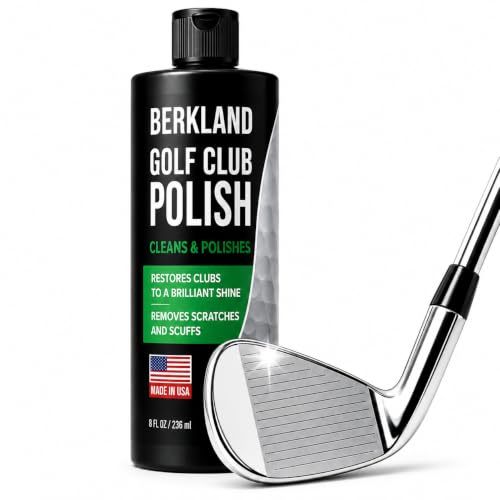
Berkland Golf Club Polish, 8 oz is the clearest pick for golfers who want one polish for multiple club types: its maker says it works on irons, wedges, putters, drivers and hybrids, and is safe on grooves and graphite. The 8-ounce cream is applied with a microfiber towel, according to the maker, and is intended to address grime, oxidation, light rust and scuffs. The maker also says it leaves a water- and dirt-repelling finish. Its limitation is that no towel is included in the specifications, so golfers without a microfiber cloth will need one separately.
Bottom line: Choose it if you want a compatibility range that includes graphite and several club types.
FORTIVO Golf Club Polish, 8 oz

FORTIVO Golf Club Polish, 8 oz stands out for its explicit focus on metal rust removal and compatibility with zinc, aluminum and steel. The 8-ounce polish is also presented as a groove cleaner, so it may suit golfers focused on metal heads with visible stains or scuffs. Its maker says the compound provides a lasting shine and a protective layer, but those are performance claims rather than measured durability figures. The limitation is its compatibility wording: golfers with graphite shafts, painted crowns or other coated surfaces should confirm the product is appropriate before applying it beyond metal club-head areas.
Bottom line: Pick it for a metal-focused polish when rust and scuff cleanup are the priority.
Club Doctor Golf Club Polish

Club Doctor Golf Club Polish distinguishes itself by naming drivers, irons, putters and woods as compatible uses, rather than focusing only on metal types. Its maker says the polish removes scuffs, skymarks and oxidation and restores shine, making it a possible match for golfers maintaining a mixed set. The specifications give no bottle capacity, so it is harder to compare the amount of polish against the ounce-sized options. The maker also frames it as a deeper clean than soap and water; use ordinary cleaning first to remove loose dirt before polishing marks.
Bottom line: Choose it if you value named compatibility across drivers, woods, irons and putters.
Golf Club Polish with Towel, 8 oz

Golf Club Polish with Towel, 8 oz is the only option here whose features explicitly include a soft towel, making it a convenient set for touch-ups without sourcing a cloth separately. Its 8-ounce formula is intended for irons, wedges and putters, with the maker describing removal of stains, oxidation, light rust and surface scuffs. The specifications emphasize restoring shine and refining the surface. Its compatibility does not name drivers or hybrids, so golfers planning to polish those club types should verify suitability before using it on their finishes.
Bottom line: Pick it if an included towel and compatibility with irons, wedges and putters fit your routine.
YIJINKING Golf Club Polish, 9 oz

YIJINKING Golf Club Polish, 9 oz has the largest capacity in this group at 9 ounces, and its maker names steel, aluminum and zinc as suitable materials. The formula is described as a coarse-to-fine grit compound intended to remove rust, scuffs and stains before leaving a high-gloss finish; the maker says a regular towel can be used. That grit-based approach may appeal to someone restoring visibly marked metal, but it calls for extra care near club faces, grooves and delicate finishes.
Bottom line: Choose it if the 9-ounce size and named metal compatibility match your needs.
How to choose golf club polish
Match the polish to the head material and the kind of mark you want to address. These options name metals such as steel, aluminum and zinc, while other features name club types such as drivers, wedges and putters; compare both kinds of compatibility before use. Start with soap, water and a soft brush to lift loose dirt, then dry the head so grit does not scratch the surface during polishing. Use a small amount on a cloth and work gently over an inconspicuous area first. A polish described as abrasive or grit-based deserves particular caution because aggressive rubbing can alter a finish. If your club has a painted crown or specialty coating, keep metal polish away unless its maker says it is suitable.
Where to polish club heads and where to avoid
Keep polishing compound away from the ball-striking face and grooves unless the product specifically says it is safe there. Abrasive residue or forceful scrubbing can change the face texture or round groove edges, which may affect the club’s intended condition. Focus routine polishing on appropriate uncoated metal surfaces, and use a soft brush rather than compound to clear dirt from grooves. Protect graphite shafts and painted or coated areas from metal polish unless compatibility is explicit. For any uncertain finish, test a tiny hidden area first and stop if the color or sheen changes. Dry the head and grooves after cleaning; moisture left on steel can encourage rust, especially during storage.
Golf club polish options by need
Choose by the specific feature that matters most, not by broad shine claims shared across formulas. Capacity is useful if you polish a full set repeatedly, while material and club-type compatibility matter more when a set mixes metal heads, graphite components or coated surfaces. An included towel reduces the need to source a separate polishing cloth. The table summarizes the specifications so a golfer can quickly narrow the options; it does not establish that a compound is safe for every finish on every club.
| Need | Relevant product feature | Selection point |
|---|---|---|
| One formula for several club types | Club-type compatibility claims | Confirm your club type is named |
| Metal rust cleanup | Named metal compatibility | Keep away from uncertain coatings |
| Cloth supplied | Included towel | Check whether your preferred cloth is included |
| More compound per container | Stated ounce capacity | Compare ounce amounts |
How to polish clubs without damaging them
Use a clean, soft microfiber cloth and light pressure; a dirty cloth can drag abrasive grit across a club head. Remove soil first with water and a brush, dry the club, then apply a small amount of polish only to compatible surfaces. Work in small sections and wipe residue away rather than letting compound collect in grooves, seams or hosel joints. Avoid polishing a club face to a mirror finish unless the product specifically approves that use, since face texture and grooves are functional surfaces. Clean compound off your hands and cloth before handling grips, and store clubs dry with head covers where appropriate. Stop if a finish changes during a small-area test.
Frequently Asked Questions
Can golf club polish be used on club faces?
Avoid putting polish on the striking face unless its maker specifically says that use is safe. Grooves and face texture are functional surfaces, so use a soft brush and water for routine face cleaning instead of abrasive rubbing.
How should I remove rust from a golf club?
Start with water and a soft brush to remove dirt, then dry the club and use a compatible metal polish gently on the affected area. Light surface rust is different from deep pitting; stop if corrosion has eaten into the metal or the finish changes.
Can I polish a golf club with a graphite shaft?
Keep metal polish off graphite unless the product expressly identifies it as compatible. Apply compound to the approved club-head surface with a cloth, and wipe away residue before it reaches the shaft or painted areas.
How often should I polish my golf clubs?
Polish only when a compatible metal surface needs marks or oxidation addressed; routine cleaning after play usually needs only water, a soft brush and drying. Frequent abrasive polishing can wear or change finishes, so avoid treating every round as a polishing session.
What cloth should I use for golf club polish?
A clean microfiber cloth is a suitable choice for applying and buffing many polishes, and one product here specifically calls for it. Keep a separate brush for grooves, since grit trapped in a polishing cloth can scratch the head.