
Best Car Wax UV Protection: 3 Options Compared

For most drivers, Turtle Wax Hybrid Solutions Ceramic Spray Wax is the best car wax with UV protection because its spray formula is intended for multiple exterior surfaces and paint colors. Choose Turtle Wax Hybrid Solutions Ceramic Black Spray Wax for black or other dark paint, or Meguiar’s Deep Crystal Carnauba Wax if you want a carnauba liquid wax to apply after polishing.
Wax adds a surface layer over the paint; it does not repair clear-coat damage or replace regular washing.
We earn a commission if you buy through links on this page. As an Amazon Associate I earn from qualifying purchases. Products are compared on manufacturer specifications, not hands-on testing.
- Best overall: Turtle Wax Hybrid Solutions Ceramic Spray Wax – Its ceramic spray formula is intended to protect paint from UV rays and is safe for glass, wheels and trim.
- Best for dark paint: Turtle Wax Hybrid Solutions Ceramic Black Spray Wax – Black pigment and acrylic UV defense are aimed at black, dark blue and charcoal finishes.
- Best for carnauba: Meguiar’s Deep Crystal Carnauba Wax – This liquid carnauba wax is designed for use after washing and polishing.
| Product | Best for | Formula | Paint fit | Size | Shop |
|---|---|---|---|---|---|
| Turtle Wax Hybrid Solutions Ceramic Spray Wax | Most paint colors | Ceramic spray wax | Multiple paint colors | 16 oz, 2-pack | Check Price on Amazon |
| Turtle Wax Hybrid Solutions Ceramic Black Spray Wax | Dark paint | Ceramic spray wax with acrylic | Black, dark blue, charcoal | 16 oz | Check Price on Amazon |
| Meguiar’s Deep Crystal Carnauba Wax | Carnauba finish | Liquid carnauba wax | Multiple paint colors | 16 oz | Check Price on Amazon |
Car Wax With UV Protection
Compare these formulas by paint color, finish goals and application style.
Turtle Wax Hybrid Solutions Ceramic Spray Wax

For broad paint-color compatibility, this ceramic spray wax is the most versatile match in this group. The maker says its ceramic polymers protect paint from UV rays, dirt and road contaminants, and it can also be used on glass, wheels and trim. The two 16-ounce bottles suit someone who wants spray application and shine across several exterior surfaces. Apply it to a clean, dry car and buff with microfiber; the maker recommends clay or polish first for best results. Its limitation is that it is not formulated to add black pigment or fill light swirls like a dark-paint-specific wax.
Bottom line: Pick this for a spray-on option across multiple paint colors and exterior surfaces.
Turtle Wax Hybrid Solutions Ceramic Black Spray Wax
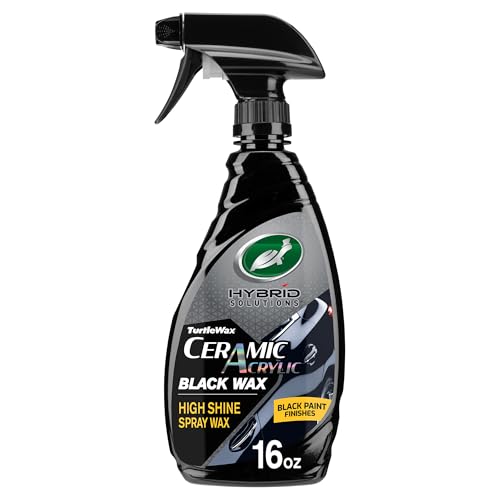
For black, dark blue or charcoal paint, this wax adds black pigment that the general-purpose sprays do not offer. The maker says its acrylic infusion provides UV defense, while ceramic polymers repel water, dirt and road contaminants. It is also intended to fill light scratches and swirl marks for a deeper-looking finish. That color-specific formula is the key trade-off: it is not the right match for light-colored paint, where black pigment may alter the appearance. The single 16-ounce bottle is a fit for dark-car owners seeking a one-step appearance boost and surface protection.
Bottom line: Choose this for a black or other dark finish when color enhancement matters.
Meguiar’s Deep Crystal Carnauba Wax

Unlike the two ceramic sprays, this is a liquid carnauba wax intended as a finishing step after washing and polishing. The maker says it creates gloss and blocks UV rays, making it an option for someone who prefers a conventional wax application. Apply a thin, even layer with a foam applicator or cotton detailing towel, let it dry in the shade, then wipe with a clean microfiber towel. Its limitation is the extra preparation and hand application compared with a spray; it is less convenient if you want a quick spray-and-buff routine.
Bottom line: Pick this if you want a carnauba liquid applied after washing and polishing.
How to choose car wax with UV protection
Choose by paint color and application style first, because UV-protection wording alone does not tell you how a wax will look or how it is applied. A dark-paint formula with black pigment is intended for black, dark blue and charcoal finishes; for other colors, use a non-pigmented formula. Spray wax is applied and buffed with microfiber, while liquid carnauba wax typically uses an applicator and a separate wipe-off step. Car wax sits on the paint surface, so it cannot restore failed clear coat or reverse oxidation already visible as chalky or peeling paint. If your finish has bonded grit, wash and decontaminate it first rather than sealing the contamination under wax.
How to apply wax for an even finish
Apply wax to a clean, dry, cool panel in the shade; direct sun and hot paint can make product spread or wipe off unevenly. Wash away loose dirt first, since rubbing dirt across paint can cause fine scratches. Use a thin, even layer instead of adding excess product, then follow the product’s buffing method with a clean microfiber towel. For bonded roughness that remains after washing, a clay bar can remove surface contaminants before waxing, but it should be used carefully because it can mar paint. Avoid waxing over damaged or peeling clear coat; wax is a surface layer, not a repair. A small test area helps confirm the finish is compatible.
Spray wax and carnauba wax compared
Spray wax generally favors faster application, while liquid carnauba wax offers a traditional applicator-and-buff routine. Carnauba is a natural wax and is often blended with other ingredients in consumer products, so the label’s actual formula and directions matter more than the word alone. Ceramic in a consumer spray wax describes a product category, not an assurance that the product is equivalent to a professionally installed coating. Neither wax eliminates the need to wash away grit or protects paint from every source of damage. Use this decision guide to match the routine to your priorities.
| Need | Choose | Reason |
|---|---|---|
| Quick spray-and-buff | Ceramic spray wax | Spray application uses fewer separate steps |
| Dark-paint color boost | Black-paint formula | Black pigment is intended for dark finishes |
| Carnauba application | Liquid carnauba wax | Applied after washing and polishing |
How often to wax a car
Wax durability varies with formulation, weather, washing frequency and where a car is parked, so a fixed protection interval cannot be assumed from the word “wax.” Check the finish after washing: if water no longer beads or sheets as it did after application, that can indicate the surface layer has weakened, though water behavior is not a laboratory measure of UV protection. Outdoor parking and frequent washing tend to shorten the useful life of a wax layer. Reapply according to the product directions rather than layering wax indefinitely. Regular washing still matters because accumulated road grime can dull the finish and make later waxing less effective.
Frequently Asked Questions
Does car wax really protect paint from UV rays?
Some wax formulas are designed to help shield paint from UV exposure, but wax is a surface layer rather than a permanent barrier. Sun exposure and washing gradually wear that layer down.
Should I wax a car in direct sunlight?
No; work in shade on cool paint so the product is less likely to dry unevenly or become difficult to buff. Wash and dry the car first to keep grit from being dragged across the finish.
Can black car wax go on white paint?
A wax with black pigment is intended for dark paint, including black, dark blue and charcoal. Choose a non-pigmented wax for white or other light paint to avoid risking a color-altered finish.
Do I need to polish before applying car wax?
Polishing is useful when you want to improve the appearance of minor paint defects, but wax itself is not a paint repair. Wash first, and remove bonded surface contaminants before applying a protective layer.
How can I tell when car wax needs reapplying?
A noticeable change in water beading or sheeting after a wash can indicate that the surface layer has weakened. Weather, outdoor parking and frequent washing affect how quickly that happens, so use the product directions as the interval guide.