
Best Small Buffer Polisher: 3 Compact Picks Compared

The SPTA 5-inch dual-action polisher suits most people seeking a small buffer because its 5-inch pad is the smallest and its dual-action motion is suited to paint polishing. Choose a 6-inch model instead if you want a cordless setup or a larger working area; the rotary options use a different motion and call for more control.
We earn a commission if you buy through links on this page. As an Amazon Associate I earn from qualifying purchases. Products are compared on manufacturer specifications, not hands-on testing.
- Best overall: SPTA 5-Inch Dual-Action Polisher – The 5-inch backing plate is smaller than the 6- or 7-inch options and it uses dual-action motion.
- Best cordless: Protmex Cordless 6-Inch Buffer – Two 21V batteries and a 6-inch pad offer cordless operation.
- Best dual-action 6-inch: AOBEN 6-Inch Dual-Action Polisher – A 6-inch dual-action pad gives a larger working area than the 5-inch option.
| Product | Best for | Pad size | Drive type | Speed range | Shop |
|---|---|---|---|---|---|
| SPTA 5-Inch Dual-Action Polisher | Tight paint areas | 5 in | Dual-action | 2,000–5,200 rpm | Check Price on Amazon |
| AOBEN 6-Inch Dual-Action Polisher | Six-inch dual action | 6 in | Dual-action | 1,000–4,500 rpm | Check Price on Amazon |
| Protmex Cordless 6-Inch Buffer | Cordless detailing | 6 in | Eccentric | 2,800–5,500 rpm | Check Price on Amazon |
Small buffer polishers compared
Compare pad diameter, drive type and speed range to match the polisher to the area and finish work you plan to do.
SPTA 5-Inch Dual-Action Polisher

The 5-inch pad makes this SPTA polisher the smallest option here, while dual-action motion suits general paint correction and waxing. Its kit includes four 5-inch and four 6-inch polishing pads, plus a packing bag; the tool itself is a 110V, 6.5A model with a 750W motor and six speed settings. It can also sand wood or metal, so it is not limited to automotive paint. The limitation is its corded 110V power: choose a cordless model if outlet access matters more than a smaller pad.
Bottom line: Pick this for a compact 5-inch pad and dual-action motion.
AOBEN 6-Inch Dual-Action Polisher
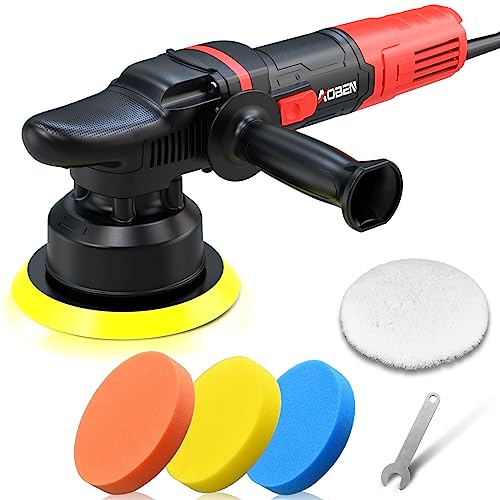
The AOBEN pairs a 6-inch pad with dual-action movement, making it a larger-pad alternative to the 5-inch SPTA without switching to a rotary drive. It has a 700W motor, six speed settings and both side and top handle options, plus four buffing pads. The maker assigns low speed to waxing and buffing, medium to polishing and cleaning, and high to paint defects and oxidation. Heavy pressure can stop the machine at speeds 1–3, so buyers needing steady work under load should consider another option.
Bottom line: Pick this if you want a 6-inch dual-action tool with two handle styles.
Protmex Cordless 6-Inch Buffer

The Protmex is the only cordless option here, with two 21V, 2,000mAh batteries and a 6-inch pad. Its eccentric motion is intended to spread wax evenly, and the kit includes 18 attachments and six speed settings. At 3.3 pounds, it is also the lightest product with a weight figure. Battery-powered operation avoids a cord during detailing, but the 6-inch pad is not as small as the SPTA’s 5-inch pad; buyers focused on narrow areas should favor the smaller diameter.
Bottom line: Pick this for cordless use and a 6-inch pad.
How to choose a small buffer polisher
For tight spaces, choose the smallest pad that still covers your work; among these options, that is 5 inches. Pad diameter affects access and coverage, while drive type affects how the tool moves across paint. Dual-action polishers combine rotation with an orbital path and are commonly chosen for less aggressive paint polishing; rotary polishers spin on a single axis and can remove defects quickly but concentrate heat and cutting action. A practical rule: if your work includes narrow panels or confined spots, choose the 5-inch option; for broader panels, a 6-inch pad covers more area per pass.
| Need | Choice | Reason |
|---|---|---|
| Tight access | 5-inch pad | Smallest diameter here |
| General paint care | Dual-action | Orbital plus rotation motion |
| Rotary correction | Rotary drive | Single-axis rotation |
Pad size and access for car detailing
A 5-inch pad is easier to position around tighter areas than a 6- or 7-inch pad, while larger pads cover broad, flat panels faster. Pad diameter is only part of fit: the backing plate and pad must be compatible with the machine, and a pad that overhangs its backing plate can be unstable. Keep the pad flat against paint and avoid edges, trim and sharp body creases where contact area drops. Foam pads are commonly color-coded by manufacturers, but colors are not standardized, so match a pad to its cutting or finishing role rather than assuming a universal color meaning.
Dual-action and rotary buffers compared
Dual-action and rotary polishers differ in movement, not just speed. A dual-action tool adds an orbital path to rotation; a rotary tool turns around one fixed axis. Rotary machines can cut faster, but holding one in place can create excess heat, especially at panel edges or with an aggressive pad and compound. New users generally have more margin for error with dual-action motion. Speed numbers are not directly comparable across drive types because pad size, load and machine design change the result; begin at the low end and use a small test area before expanding work.
Safe technique and polishing mistakes
Keep a powered buffer moving and use light, even pressure; pressing harder can slow or stall the tool and increase heat. Work on clean, cool paint, since grit trapped under a pad can cause fresh marring. Avoid polishing dry paint, and stop before the pad reaches trim, badges or sharp edges. A paint thickness gauge can help identify thin clear coat, but ordinary consumer gauges do not measure every layer equally; do not assume a polished surface can tolerate repeated correction. If the finish has deep scratches, exposed primer or damaged clear coat, polishing is not a repair method.
Frequently Asked Questions
Is a 5-inch or 6-inch buffer better for small areas?
A 5-inch pad is easier to fit into confined areas, while a 6-inch pad covers more surface on broad panels. Choose 5 inches when access around curves and narrow sections is the priority.
Can a dual-action polisher remove paint scratches?
A dual-action polisher can improve light defects, but scratches through the clear coat cannot be polished away safely. If a scratch catches a fingernail, avoid aggressive correction because removing enough clear coat may damage the finish.
How do I avoid overheating car paint while polishing?
Keep the pad moving, use light pressure and work in small sections on cool paint. Rotary tools need particular care around panel edges, where contact area is smaller and heat can build more quickly.
Can I use the same pad for wax and compound?
Use separate clean pads for compound and finishing wax to prevent abrasive residue from being carried into the final step. Foam pad color codes vary by manufacturer, so rely on the pad’s intended role rather than color alone.
What should I check before using a buffer on paint?
Check that the pad fits its backing plate, then test the compound and pad on a small inconspicuous area. Clean the surface first; trapped dirt can scratch paint under a rotating pad.