
Polish Compound for Stainless Steel: 3 Types Compared

For a stainless steel-specific compound bar, choose ENKAY Green Stainless Steel Compound: its medium coarse/fine grade is designed for a high-luster finish on stainless steel. Choose White Stainless Steel Polishing Compound for a final-stage shine, or SCOTTCHEN Three-Grade Buffing Compound Kit if you want three grades for different polishing stages.
These solid compounds transfer onto a rotating buffing wheel; choose a different compound format if you need hand application rather than wheel polishing.
We earn a commission if you buy through links on this page. As an Amazon Associate I earn from qualifying purchases. Products are compared on manufacturer specifications, not hands-on testing.
- Best overall: ENKAY Green Stainless Steel Compound – A stainless steel-specific 1-pound bar with a medium coarse/fine grade.
- Best for final-stage shine: White Stainless Steel Polishing Compound – A white aluminum-oxide bar intended for final-stage polishing of stainless steel and other hard metals.
- Best for multiple stages: SCOTTCHEN Three-Grade Buffing Compound Kit – A 4-ounce kit combines green fine, white medium and red coarse compounds.
| Product | Best for | Weight (oz) | Grade | Shop |
|---|---|---|---|---|
| ENKAY Green Stainless Steel Compound | Stainless steel finishing | 16 oz | Medium coarse/fine | Check Price on Amazon |
| White Stainless Steel Polishing Compound | Final-stage polishing | 17.6 oz | Fine aluminum oxide | Check Price on Amazon |
| SCOTTCHEN Three-Grade Buffing Compound Kit | Multi-stage polishing | 4 oz total | Green fine, white medium, red coarse | Check Price on Amazon |
Polish Compound for Stainless Steel
Match the compound grade and format to the finish you want and the buffing method you plan to use.
ENKAY Green Stainless Steel Compound
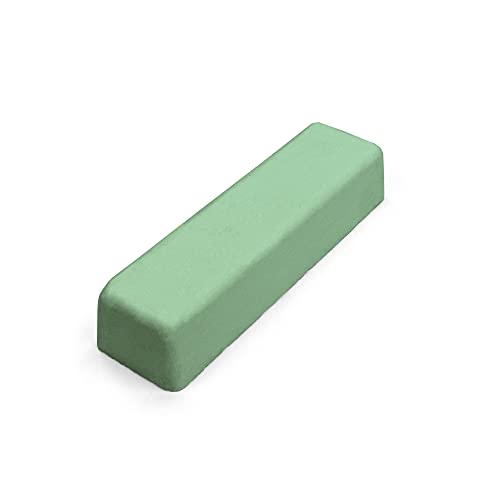
ENKAY Green Stainless Steel Compound is the stainless steel-specific bar in this group, with a medium coarse/fine grade and a 16-ounce weight. The maker says it is designed for a high-luster, mirror-like finish and can also be used on iron, platinum, steel, aluminum, brass, copper and nickel. Apply it to a rotating buffing wheel rather than rubbing it directly on the workpiece. This suits someone seeking one versatile bar for metal finishing. Its broad grade description does not identify a precise abrasive grit, so choose another approach if you need a documented grit sequence.
Bottom line: Choose this if you want a stainless steel-focused bar for wheel polishing.
White Stainless Steel Polishing Compound

White Stainless Steel Polishing Compound is aimed specifically at the final polishing stage, making its role distinct from a multi-grade kit. The white bar weighs 17.6 ounces and uses fine aluminum oxide; the maker recommends stitched white cotton, loose-leaf cotton or loose-leaf flannel wheels. It is intended for stainless steel, steel, iron and other hard metals, with a mirror-like shine as the goal. This suits a buyer who already has a prepared surface and wants a finishing compound. Because it is a final-stage product, it is not the best single choice for removing deeper scratches or working through several abrasive stages.
Bottom line: Choose this when your surface is prepared and you need a final polishing step.
SCOTTCHEN Three-Grade Buffing Compound Kit

SCOTTCHEN Three-Grade Buffing Compound Kit differs from the single-grade bars by bundling green fine, white medium and red coarse compounds in one 4-ounce kit. The maker says the compounds can be used on buffing wheels for metals including stainless steel, steel, iron, aluminum alloy, brass, bronze, copper, silver and gold. The three grades suit someone who wants to move through coarse, medium and fine stages rather than rely on one bar. The package weight is much less than the 16-ounce and 17.6-ounce bars, so it may be limiting for frequent or larger jobs.
Bottom line: Choose this if you want three grades for a staged polishing process.
How to choose a stainless steel polishing compound
Choose by the work stage: coarse compounds cut more aggressively, while fine compounds refine a surface and create a brighter finish. A common progression is coarse, medium, then fine; skip the coarse stage when the surface is already smooth, because unnecessary cutting can change the finish. Use a separate wheel for each compound grade so leftover abrasive does not scratch a finer stage. For a mirror finish, preparation matters: compound polishes the surface but cannot reliably erase deep pits or substantial scratches. If the workpiece has a brushed grain, polish along that grain rather than across it. Match the compound format to the tool as well: solid bars are generally transferred to a rotating wheel.
Buffing wheel and compound compatibility
Wheel firmness and fabric influence how a compound cuts: firmer stitched cotton wheels generally support more controlled cutting, while softer loose cotton or flannel wheels are used for finer finishing. The white compound here is paired by its maker with stitched white cotton, loose-leaf cotton or loose-leaf flannel wheels. Keep wheels dedicated to a single compound and metal; embedded grit or mixed residues can scratch a polished surface or contaminate another material. Apply only a small amount of bar compound to the spinning wheel, and let the wheel do the work instead of pressing hard. Wear eye protection and secure the workpiece: a rotating buffing wheel can catch an edge and pull a small part from your hands. Stay within the wheel and tool maker’s rated speed.
Compound bars compared with multi-grade kits
Use a single-grade bar when you already know the finish stage you need; choose a multi-grade kit when the surface needs progressive polishing. A finishing bar cannot replace earlier scratch removal, and a coarse compound is unnecessary on an already smooth surface. The table maps the two formats to their main roles.
| Format | Best suited to | Practical decision |
|---|---|---|
| Single-grade bar | One known polishing stage | Choose when the surface is already prepared or the compound role is clear |
| Three-grade kit | Progressive polishing | Choose when coarse, medium and fine stages are useful |
For scratch removal, use the least aggressive stage that can reasonably do the job, then refine with finer abrasives. Deep scratches and pits may need more material removal than a polishing compound can safely provide.
Safe technique for polishing stainless steel
Hold the work securely and keep fingers clear of the wheel’s path; buffing wheels can grab loose clothing, jewelry or an unsecured part. Eye protection is essential because the wheel can throw compound and metal particles. Use the wheel only within its rated speed, and avoid excessive pressure: too much force builds heat and can cause uneven results or damage the finish. On thin sheet metal, work in short passes and allow the surface to cool. Before polishing a visible area, try the process on a hidden spot or scrap of the same finish. A mirror finish also magnifies small scratches, so remove earlier-stage marks before moving to a fine compound.
Frequently Asked Questions
Can polishing compound remove deep scratches from stainless steel?
Polishing compound is best for refining a surface, not removing deep scratches or pits. Start with an appropriate abrasive step for the scratch depth, then progress through finer grades; aggressive cutting can alter a brushed finish.
Should I use a different wheel for each compound?
Yes, dedicate a buffing wheel to each compound grade and preferably each metal. Residual coarse abrasive on a fine wheel can leave scratches that defeat the finishing step.
Which direction should I polish brushed stainless steel?
Work with the existing grain rather than across it, since cross-grain marks can stand out on a brushed finish. Test on a hidden area first, especially if the surface has a directional texture.
How much compound should I put on a buffing wheel?
Use a light application and add more only if the wheel is no longer cutting effectively. Heavy loading can make the wheel smear compound and heat the work instead of producing an even finish.
What safety gear should I use with a buffing wheel?
Wear eye protection and secure the workpiece before polishing. Keep loose clothing and jewelry away from the rotating wheel, and operate the wheel within its rated speed.