
Military Modular Sleep System: 4 Models Compared

For a complete military modular sleep system, MT 4-Piece Modular Sleep System stands out for its four named components and ability to layer them as conditions change. Choose Genuine U.S. Military 5-Piece System if genuine U.S. military construction is your priority; its measurements are clear, but its component list is not.
A modular sleep system combines separate bags and an outer bivy so sleepers can adjust layers to conditions.
We earn a commission if you buy through links on this page. As an Amazon Associate I earn from qualifying purchases. Products are compared on manufacturer specifications, not hands-on testing.
- Best overall: MT 4-Piece Modular Sleep System – Includes patrol and intermediate bags, a seam-taped bivy cover and a compression sack.
- Best for genuine military gear: Genuine U.S. Military 5-Piece System – Identified as genuine U.S. military and measures 82 inches long by 36 inches wide.
- Best for OCP color: MT Army Modular System, OCP – Offers an OCP bivy cover and layered sleeping-bag components.
| Product | Best for | Length | Width | Weight | Shop |
|---|---|---|---|---|---|
| MT 4-Piece Modular Sleep System | Layer flexibility | 87.4 in | 35.4 in | 6 lb | Check Price on Amazon |
| USGI Gear 4-Part Sleeping Bag System | Ripstop construction | 86 in | 36 in | 3 lb | Check Price on Amazon |
| MT Army Modular System, OCP | OCP bivy color | 86.6 in | 35.4 in | 6 lb | Check Price on Amazon |
| Genuine U.S. Military 5-Piece System | Military provenance | 82 in | 36 in | 2.7 lb | Check Price on Amazon |
Military Modular Sleep Systems
Compare the included layers, dimensions and stated temperature claims before choosing a setup.
MT 4-Piece Modular Sleep System

MT 4-Piece Modular Sleep System is the clearest choice for a complete, layerable kit: it includes a patrol bag, intermediate cold-weather bag, seam-taped waterproof bivy cover and compression sack. Its maker claims a system range from 50°F to -50°F, while noting comfort depends on clothing, a sleeping pad, weather and personal tolerance. The dimensions are about 87.4 by 35.4 inches, and the weight is 6 pounds. This suits buyers who want named components and a clear layering approach. Its claimed low-temperature range is not a guarantee of individual comfort or safety.
Bottom line: Pick this if you want a complete four-piece setup with separate layers.
USGI Gear 4-Part Sleeping Bag System
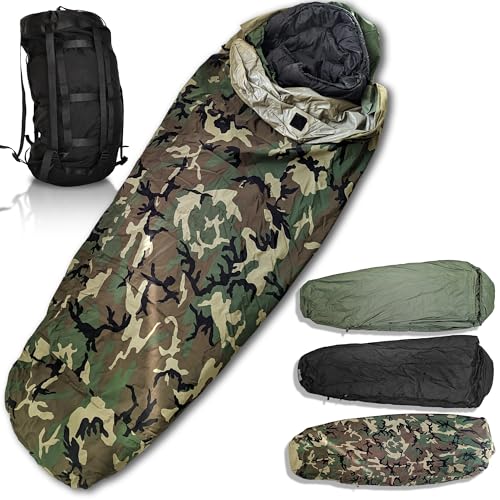
USGI Gear 4-Part Sleeping Bag System pairs a patrol bag and intermediate cold-weather bag with a bivy cover and stuff sack, and its maker describes 210T ripstop nylon with a DWR coating. The maker claims protection from 50°F down to -50°F and calls the cover triple-laminated and waterproof. At 86 by 36 inches, its footprint is slightly shorter and wider than MT 4-Piece Modular Sleep System; stated weight is 3 pounds. It may suit a buyer prioritizing the shell fabric and a lighter stated weight. The temperature range is a maker claim, so do not treat it as a personal comfort guarantee.
Bottom line: Choose this if the ripstop fabric and stated weight matter most.
MT Army Modular System, OCP

MT Army Modular System, OCP is distinguished by its Army OCP color and a bivy described as waterproof, breathable and wind-resistant, with pressed seams. The dimensions are 86.6 by 35.4 inches and the weight is 6 pounds. This suits buyers who specifically want OCP coloring. Verify the temperature scale and the complete component set before relying on it for a particular climate.
Bottom line: Pick this if OCP coloring and the described breathable bivy are priorities.
Genuine U.S. Military 5-Piece System

Genuine U.S. Military 5-Piece System is identified as a genuine U.S. military Gore-Tex five-piece improved modular sleeping bag system, unlike the other full systems whose descriptions identify four pieces. Its measurable profile is 82 inches long by 36 inches wide, with a weight of 2.7 pounds. That makes it a useful option to consider when provenance and a compact listed length matter more than a detailed component breakdown. The specifications provide no component names or temperature guidance, so this is a less transparent choice for buyers planning a specific cold-weather setup; confirm the included pieces before ordering.
Bottom line: Choose this if genuine U.S. military provenance is your main filter.
How to choose a military modular sleep system
Start with the components and a realistic overnight low, not the broadest temperature claim. A modular system commonly combines a lighter patrol layer, a warmer insulating bag and a bivy shell; adding or removing layers changes warmth and moisture protection. A sleeping pad matters too: ground contact draws heat away, so a bag rating cannot compensate for inadequate insulation beneath you. For a planned night near freezing, prioritize a complete layered kit and a suitable insulated pad rather than relying on a shell alone. Comfort also changes with clothing, wind, dampness and individual tolerance, as one maker notes. Compare stated claims only when their units and test basis are clear.
Fit and dimensions for modular sleep systems
Compare bag length and width with your body and sleeping position before choosing. The full systems here run from 82 to 87.4 inches long and about 35.4 to 36 inches wide; a wider cut can allow room for clothing but may leave more air to warm. Bivy dimensions and bag dimensions can differ, so a shell must fit over the intended layers without compressing insulation. Length alone does not establish fit: shoulder width, footbox shape and zipper placement also matter, and those vary by design. If you plan to sleep in bulky layers or use a thick pad, confirm the usable internal dimensions before ordering rather than relying only on the outside measurements.
Temperature claims and cold-weather safety
Treat a maker’s temperature range as a claim about a setup, not a promise that every sleeper will stay comfortable. The four-piece systems here include broad claims reaching -50°F, but sleep-pad insulation, clothing, wind, moisture and personal tolerance can change the outcome. Consumer sleeping bags are often compared using ISO 23537 temperature ratings, but do not assume a military-style modular system’s combined claim follows that testing standard. A wet bag loses insulating performance, and cold exposure can become dangerous; use a dry shelter and insulation appropriate to the forecast. If conditions may fall below freezing, a warm sleeping pad and a backup plan are essential, especially when the system’s rating basis is unclear.
Layering, bivy use and care
Use the patrol layer for milder conditions and add the intermediate bag and bivy as cold, wind or precipitation increases, following the system’s intended configuration. A waterproof shell can reduce rain and wind exposure, but breathable fabric still cannot eliminate condensation in every condition; venting and keeping insulation dry matter. Air sleeping bags fully after use before storing them, since trapped moisture can degrade loft over time. Keep the compression sack for transport rather than long-term storage when possible, and store insulation loosely in a dry place. Inspect seams, zipper tracks and closures before a trip; a damaged zipper or seam can undermine a layered system even when the other pieces remain intact.
Frequently Asked Questions
Does a military modular sleep system include a sleeping pad?
No sleeping pad is named among the full systems’ included pieces here. A pad insulates you from the ground, so choose one with enough insulation for the expected overnight low rather than expecting the sleeping bag layers to do that job.
Can I use the bivy cover by itself?
A bivy cover is an outer shell, not the insulating core of a sleep system. It can help shield a bag from wind and precipitation, but use appropriate insulation underneath and keep an eye on condensation in damp conditions.
What does a -50°F system claim mean?
A -50°F claim is the maker’s system range, not a guarantee that every sleeper will be comfortable or safe at that temperature. Pad insulation, dry clothing, wind exposure and personal tolerance all affect warmth.
How should I store a modular sleeping bag?
Air the bag until fully dry before putting it away, because stored moisture can harm insulation performance. Keep the compression sack for carrying and store the bag loosely in a dry area when practical.
How do I know whether the bivy fits the bags?
Check the bivy’s usable length and width against the combined bag layers, allowing room so the shell does not compress the insulation. Outside dimensions alone do not establish the fit, particularly when adding clothing or a sleeping pad.