
Best Garage Floor Squeegee: 3 Models Compared

For most garages, DSV 24-Inch Straight Rubber Squeegee is the best garage floor squeegee because its 24-inch straight rubber blade balances broad coverage with a manageable width, and its 57-inch wood handle gives standing reach. Choose DSV 36-Inch Curved Rubber Squeegee instead if guiding water around edges and toward a drain matters more than a straight blade.
We earn a commission if you buy through links on this page. As an Amazon Associate I earn from qualifying purchases. Products are compared on manufacturer specifications, not hands-on testing.
- Best overall: DSV 24-Inch Straight Rubber Squeegee – Its 24-inch straight blade and 57-inch handle suit general garage cleanup.
- Best for drains and edges: DSV 36-Inch Curved Rubber Squeegee – Its 36-inch curved blade is designed to channel water toward drains and follow edges.
- Best for broad open floors: 30-Inch Rubber Floor Squeegee – The 30-inch blade covers more width per pass than the narrower options.
| Product | Best for | Blade width | Handle length | Head / blade design | Shop |
|---|---|---|---|---|---|
| DSV 24-Inch Straight Rubber Squeegee | Everyday garage cleanup | 24 in | 57 in | Straight rubber blade; metal frame | Check Price on Amazon |
| DSV 36-Inch Curved Rubber Squeegee | Drains and edges | 36 in | 57 in | Curved rubber blade; metal frame | Check Price on Amazon |
| 30-Inch Rubber Floor Squeegee | Wide open floors | 30 in | 59 in | Rubber blade; plastic-sleeved joint | Check Price on Amazon |
Garage Floor Squeegees Compared
Compare blade width, handle reach and shape to match the squeegee to your garage layout and cleanup needs.
DSV 24-Inch Straight Rubber Squeegee

For general garage cleanup, the 24-inch straight blade on this model offers a middle ground between a narrow head and a wider one. Its rubber blade, metal frame and 57-inch tapered wood handle are suited to pushing water across concrete, asphalt or tile. The maker says the flexible blade conforms to floors and channels liquid into a pile. This is a practical fit for open stretches and routine spills. Its straight profile lacks the curved edge design of DSV 36-Inch Curved Rubber Squeegee, so buyers dealing with corners and drains may prefer that shape.
Bottom line: Choose this for everyday water cleanup across a typical garage floor.
DSV 36-Inch Curved Rubber Squeegee

The curved 36-inch blade is the distinguishing feature here: the maker says its shape follows corners and wall edges while directing water toward drains. That wide head can cover more floor per pass than the 24-inch straight model, and the 57-inch tapered wood handle provides similar reach. It is aimed at large garage, concrete or asphalt areas where water needs to be moved toward an exit. A 36-inch head can be cumbersome in narrow bays or crowded spaces; choose a narrower option if maneuverability matters more than coverage.
Bottom line: Pick this when broad coverage and directing runoff to a drain are priorities.
30-Inch Rubber Floor Squeegee
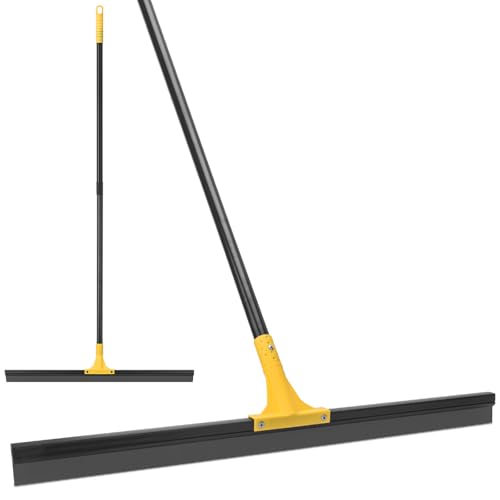
A 30-inch rubber blade gives this model a wider sweep than the 24-inch straight options, without moving up to a 36-inch head. Its 59-inch handle and reinforced plastic sleeve at the joint suit broad, smooth garage floors where a standing reach is useful. The maker says the angled blade is designed for concrete, tile and other smooth surfaces. The head is not described as curved, so buyers who need to guide water around edges or toward a drain may prefer a curved design.
Bottom line: Choose this for open, smooth floor areas where a 30-inch blade fits.
How to Choose a Garage Floor Squeegee
Blade width should match the clearest path across your garage: a 17- to 24-inch head is easier to maneuver around equipment, while 30 to 36 inches covers more open floor per pass. A wider blade can be awkward around parked cars, shelves and narrow bays, so measure the tightest route before choosing. Handle length also affects reach; these options span 44 to 59 inches, but a longer handle is not automatically easier to control. Rubber and silicone blades are intended to move liquid across hard floors. Choose among straight, curved or reversible action based on the path you need to clear.
For an open floor without a special drainage route, a 24- or 30-inch blade balances coverage and control; choose a 36-inch head when the available space allows it.
Blade Width and Garage Fit
A 36-inch blade covers 50 percent more width per pass than a 24-inch blade, provided it fits between obstacles. Garage bays often include tires, workbenches, shelving and door tracks that interrupt a straight sweep, so compare head width with the narrowest clearance. A 17-inch head can thread through smaller spaces, while a 30-inch blade suits a more open area. Handle lengths range from 44 to 59 inches here, including an adjustable 44–54-inch handle. Measure aisle width and consider your working reach, especially when water must be moved around parked vehicles.
| Garage condition | Useful blade width | Why |
|---|---|---|
| Tight area or obstacles | 17–24 in | More maneuverable |
| Open floor, general cleanup | 24–30 in | Balances coverage and control |
| Broad open run to a drain | 36 in curved | Wide pass with water-guiding shape |
Straight, Curved and Push-Pull Designs
A straight blade pushes pooled water in a line; a curved blade is designed to steer water along edges or toward a drain. A reversible push-pull handle changes the direction of use, which can help gather a spill from both sides. These are different design choices, not a universal performance ranking: the floor layout and route to the drain decide which is useful. Rubber and silicone are the blade materials in this selection. Choose the shape and action for your cleanup path rather than assuming one material or design is always better.
Safe Wet-Floor Cleanup and Storage
Water on a garage floor can make walking surfaces slippery, so keep foot traffic away from the wet area while pushing water and avoid leaving a film across a walking route. Move liquid toward a drain or drying area rather than into a doorway or beneath stored items. Use controlled strokes near walls and equipment, particularly with a wide blade. After cleanup, rinse residue from the blade and let the squeegee dry before storage; grit on the edge can interfere with floor contact next time. Check that the floor surface is suitable for the squeegee before use.
Frequently Asked Questions
What blade width works best in a garage?
A 24- to 30-inch blade is a useful range for general garage cleanup because it balances coverage with control. Choose 17 to 24 inches when obstacles or narrow aisles limit maneuvering, and consider 36 inches for an open run.
Is a curved squeegee better for garage drains?
A curved blade is designed to guide water toward a drain and follow edges, which suits a floor with a clear runoff path. For a straight push across an open area, a straight blade may be easier to steer.
How long should a garage squeegee handle be?
The options here range from 44 to 59 inches, including an adjustable 44–54-inch handle. Match handle reach to your standing working posture and the depth of the area you need to clear.
Can a floor squeegee remove water from concrete?
Rubber-blade floor squeegees are intended for hard surfaces such as concrete, and several options here are described for concrete floors. Sweep toward a drain or drying area, and keep people off the wet path to reduce slip risk.
Should I choose rubber or silicone for a floor squeegee?
Rubber is the blade material on four options, while one uses silicone. Width, blade shape and whether you need push-pull action are clearer differentiators than material alone in this selection.