
Best Flocculant for Pool: 4 Options Compared

Clorox Pool&Spa Sink to Clear, 1 qt suits most pool owners facing severe cloudiness because it is made to sink debris and dead algae for vacuum cleanup. Choose another option if you need a larger bottle or a treatment coverage; flocculants bind suspended particles so they settle for removal.
Flocculant cleanup is different from ordinary filtration: the settled material must be vacuumed out, often to waste, rather than sent through the filter.
We earn a commission if you buy through links on this page. As an Amazon Associate I earn from qualifying purchases. Products are compared on manufacturer specifications, not hands-on testing.
- Best overall: Clorox Pool&Spa Sink to Clear, 1 qt – Made to sink dead algae, debris, and other particles for vacuum cleanup.
- Best for large pools: BubbyShine Pool Flocculant, 3 L – The maker says the 3 L bottle treats up to 126,000 gallons when dosed per label.
- Best for severe cloudiness: AquaDoc Swimming Pool Flocculant, 32 oz – Designed to settle fine particles for vacuum removal when ordinary filtration leaves water cloudy.
| Product | Best for | Bottle size | Stated coverage | Cleanup method | Shop |
|---|---|---|---|---|---|
| Clorox Pool&Spa Sink to Clear, 1 qt | Heavy debris | 32 oz | — | Vacuum cleanup | Check Price on Amazon |
| BubbyShine Pool Flocculant, 3 L | Large pools | 101.5 oz | Up to 126,000 gal | Vacuum to waste | Check Price on Amazon |
| AquaDoc Swimming Pool Flocculant, 32 oz | Fine particles | 32 oz | — | Vacuum removal | Check Price on Amazon |
| Bastion Pool Clarifier & Water Flocculant, 64 oz | Filter cleanup | 64 oz | Up to 320,000 gal | Filter capture | Check Price on Amazon |
Pool Flocculants for Cloudy Water
Compare how each formula handles suspended particles and what cleanup it calls for.
Clorox Pool&Spa Sink to Clear, 1 qt
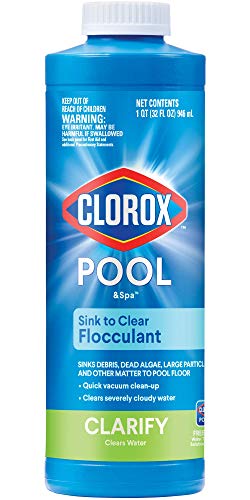
Clorox Pool&Spa Sink to Clear, 1 qt is the clearest match for a pool with heavy debris or dead algae because it is specifically made to sink those particles to the floor. The maker says it clears severely cloudy water and supports quick vacuum cleanup. Use it when particles need to settle for removal rather than pass through routine filtration. The product comes in a 1-quart bottle, but the product facts do not give a pool-volume dose. That limitation matters if you need to calculate treatment quantity before starting; verify the label dose for your pool volume.
Bottom line: Choose this when dead algae or large debris needs to settle for vacuum removal.
BubbyShine Pool Flocculant, 3 L

BubbyShine Pool Flocculant, 3 L stands out for its large bottle and stated coverage: the maker says it treats up to 126,000 gallons when dosed per label. It is intended for fine suspended particles that filtration cannot catch, with settled material removed by vacuuming to waste. The 3 L format may suit owners treating a larger pool or wanting a larger supply on hand. Coverage depends on label-directed dosing, so pool volume still matters. This is not a filter-trap cleanup approach; it is a poor fit if you cannot vacuum to waste.
Bottom line: Choose this if your pool volume and vacuum-to-waste setup suit its label-directed treatment.
AquaDoc Swimming Pool Flocculant, 32 oz

AquaDoc Swimming Pool Flocculant, 32 oz focuses on fine suspended particles that normal filtration has not cleared, making it a fit for persistent cloudiness rather than routine weekly clarification. The maker says the particles bind together, settle on the pool floor, and can then be vacuumed out. It suits someone who wants a settling treatment, but not someone seeking particles to be captured by the filter.
Bottom line: Choose this for fine particles that remain suspended after normal filtration.
Bastion Pool Clarifier & Water Flocculant, 64 oz

Bastion Pool Clarifier & Water Flocculant, 64 oz differs from the drop-out options because its maker describes clusters being trapped and removed by the filter. The maker says 1 fluid ounce treats up to 5,000 gallons, or up to 320,000 gallons of treatment from the 64-ounce bottle. That stated dose gives pool owners a concrete volume calculation, but the product’s filter-centered cleanup is not the same as vacuuming settled material to waste. Choose it when filter capture fits your cleanup plan; if particles need to settle on the floor for manual vacuuming, a drop-out formula is more directly aligned.
Bottom line: Choose this when you want particle clusters captured through the filter.
How Pool Flocculant Differs From Clarifier
Pool flocculant gathers suspended particles so they settle on the floor; a filter clarifier instead aims to make particles easier for the filter to capture. That difference determines the cleanup: drop-out floc usually calls for vacuuming to waste, while filter-based clarification keeps water moving through the filter. Use floc when fine debris remains suspended or a heavy cloud follows algae treatment, and choose a filter clarifier for ongoing haze when the filtration system is operating normally. Do not assume the terms on a bottle guarantee the same method: check whether the product instructions call for settling and vacuuming or continued filtration. Never combine pool chemicals in a container; add chemicals separately as directed by their labels.
Choose by Pool Volume and Vacuum Setup
Pool volume and the ability to vacuum to waste are the two practical filters for choosing a drop-out flocculant. Measure length, width, and average depth in feet; a rectangular pool’s approximate gallons equal length × width × average depth × 7.5. Round or irregular pools need a shape-appropriate volume estimate, and an inaccurate volume can lead to overdosing or undertreatment. If you cannot route vacuum water to waste, a floor-settling floc may be impractical because the settled material needs removal without returning it through the filter. Use the label dose for your measured gallons rather than comparing bottle size alone. Follow local rules for disposing of pool water, especially where discharge is restricted.
| Need | Look for | Why it matters |
|---|---|---|
| Heavy settled debris | Drop-out floc | Particles settle for vacuum cleanup |
| Fine haze with filtration | Filter clarifier | Clusters are directed to filter capture |
| No waste-vacuum option | Filter-based treatment | Avoids relying on floor vacuum removal |
What to Expect During Floc Cleanup
Floc treatment is a settle-then-remove process, not an instant substitute for filtration. A common approach is to distribute the chemical as its label directs, stop circulation so particles can settle, and allow several hours—often overnight—before vacuuming slowly to waste. Exact dose, circulation time, and settling time vary by product, so use the specific label rather than a generic schedule. Keep swimmers out during chemical treatment and cleanup, and do not restore normal swimming until the water is clear and chemistry is in the appropriate range. Vacuuming too fast can stir the settled layer back into the water; make deliberate passes and monitor the waste-water level.
Pool Flocculant Mistakes to Avoid
The most common mistake is treating flocculant like clarifier and leaving the filter running during the settling stage. Moving water can keep particles suspended, while sending floc through a filter may clog or burden the system; use the product’s specified method. Another mistake is vacuuming settled material back through the filter when the label calls for waste removal. Confirm that the multiport valve or plumbing supports waste mode before dosing, and never run a pump with a closed discharge path. Chemical safety matters: wear the protection specified on the label, add products separately, and keep concentrates away from children and pets. A cloudy pool also may have a separate cause, so check water balance and filtration before repeating chemical treatment.
Frequently Asked Questions
How long should pool flocculant settle before vacuuming?
Many drop-out treatments need several hours, often overnight, for particles to settle before vacuuming. Use the specific product label because dose and settling time differ by formula and pool conditions.
Do I vacuum pool flocculant through the filter?
Vacuum settled floc to waste when the product instructions call for waste removal. Sending concentrated settled debris through the filter can burden or clog it, so confirm the valve setting before starting.
Can I swim while pool flocculant is settling?
Keep swimmers out during treatment and cleanup. Resume swimming only after the water is clear and the pool chemistry is within the appropriate range, following the product label.
Can pool flocculant work without vacuuming?
Drop-out floc requires removal of the particles after they settle, usually by vacuuming to waste. If you cannot do that, a filter-based clarifier may better suit your setup.
Should the pool pump run after adding flocculant?
Many settling treatments require circulation to stop so particles can drop to the floor, then vacuuming after they settle. The required sequence varies, so use the treatment’s label rather than leaving the pump on by default.