
Small Trailer to Pull Behind Car: 3 Options Compared

For a small trailer to pull behind a car, Time Out Deluxe Camper is the closest match because it is designed for small cars and has a 1 7/8-inch ball coupler. Choose Ultra-Tow 40 x 48-Inch Aluminum Utility Trailer Kit for an open utility bed, but confirm its coupler and your car’s towing limits before ordering.
Ultra-Tow Tag-Along Motorcycle Cargo Trailer is a motorcycle cargo trailer, so consider it only if its towing setup is compatible with your vehicle; it is not presented as a car-specific model.
We earn a commission if you buy through links on this page. As an Amazon Associate I earn from qualifying purchases. Products are compared on manufacturer specifications, not hands-on testing.
- Best overall: Time Out Deluxe Camper – Designed for small cars and includes a 1 7/8-inch ball coupler.
- Best for open hauling: Ultra-Tow 40 x 48-Inch Aluminum Utility Trailer Kit – A rustproof aluminum utility trailer kit with a 40-by-48-inch bed.
- Best for enclosed cargo: Ultra-Tow Tag-Along Motorcycle Cargo Trailer – A lockable ABS shell offers 16.6 cubic feet of storage, though it is made for motorcycle towing.
| Product | Best for | Empty weight | Cargo capacity | Shop |
|---|---|---|---|---|
| Time Out Deluxe Camper | Small-car camping | 385 lb | 23 cu ft | Check Price on Amazon |
| Ultra-Tow 40 x 48-Inch Aluminum Utility Trailer Kit | Open utility hauling | 139.1 lb | 1,060 lb payload | Check Price on Amazon |
| Ultra-Tow Tag-Along Motorcycle Cargo Trailer | Motorcycle cargo | 229 lb | 600 lb load capacity | Check Price on Amazon |
Small Trailers to Pull Behind a Car
Compare the towing purpose and cargo format before choosing a trailer for your vehicle.
Time Out Deluxe Camper
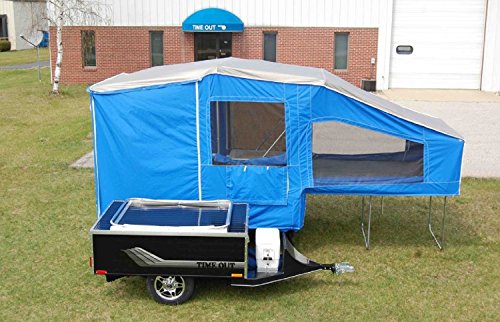
Unlike an open utility trailer, Time Out Deluxe Camper is a camping trailer designed to pull behind a small car. It has 23 cubic feet of cargo space and comes with an air mattress, table, chair, wiring harness and 1 7/8-inch ball coupler. The maker says one person can set it up in about 3 minutes; optional add-ons include an air-conditioning attachment and a screen room. At 385 pounds empty, the camper still adds its cargo and tongue weight to the load your car must handle. Choose it for camping rather than hauling bulky, exposed materials.
Bottom line: Pick this for compact car camping when its loaded weight and coupler match your vehicle.
Ultra-Tow 40 x 48-Inch Aluminum Utility Trailer Kit

For open cargo hauling, Ultra-Tow 40 x 48-Inch Aluminum Utility Trailer Kit has a 40-by-48-inch bed and an aluminum frame, rather than the enclosed camping or motorcycle cargo format of the other options. Its payload capacity is 1,060 pounds and its maximum gross vehicle weight rating is 1,200 pounds. The kit is intended for loads such as mulch, dirt and machinery. The specifications do not establish a coupler size, so confirm that the assembled trailer’s coupler fits your car’s hitch ball before buying. Also count the trailer and cargo together against the vehicle’s towing limit.
Bottom line: Choose this for open utility loads if its assembled hitch setup suits your car.
Ultra-Tow Tag-Along Motorcycle Cargo Trailer

Unlike the car-specific camper and utility kit, Ultra-Tow Tag-Along Motorcycle Cargo Trailer is explicitly a motorcycle cargo trailer, making vehicle compatibility the key limitation for a car buyer. Its lockable molded ABS shell holds 16.6 cubic feet, and it has a steel frame, leaf-spring suspension and self-assisted lid struts. The load capacity is 600 pounds; include cargo and trailer weight when checking the towing setup. The specifications do not give a car coupler size, so this is a conditional option only after confirming that the hitch, coupler and vehicle are suitable.
Bottom line: Consider this only when its motorcycle-oriented towing hardware is confirmed compatible with your car.
How to Choose a Small Trailer for a Car
Start with the car’s tow rating, not the trailer’s payload figure. The combined weight of the trailer and cargo must stay within the vehicle’s towing limit, and the tongue weight must also remain within the vehicle and hitch limits. A trailer’s payload is the cargo it can carry; its gross vehicle weight rating (GVWR) includes the trailer itself plus cargo. For example, Ultra-Tow 40 x 48-Inch Aluminum Utility Trailer Kit lists a 1,060-pound payload and a 1,200-pound GVWR, so those numbers describe different limits. Decide whether you need an enclosed camper or an open bed, then confirm the hitch ball and coupler sizes match. If either the car’s towing capacity or the trailer’s loaded weight is unclear, verify both before purchase.
| Need | Type to consider | Key check |
|---|---|---|
| Camping gear and shelter | Camping trailer | Loaded weight and coupler |
| Open, bulky cargo | Utility trailer | Payload and assembled hitch |
| Enclosed motorcycle cargo | Motorcycle cargo trailer | Compatibility with car towing hardware |
Trailer Weight, Payload and Tongue Load
Trailer weight has three useful figures: empty weight, payload capacity and GVWR. Empty weight is the trailer before cargo; payload is the cargo allowance; GVWR is the maximum combined trailer-and-cargo weight. Do not treat a 1,060-pound payload as the total trailer weight: Ultra-Tow 40 x 48-Inch Aluminum Utility Trailer Kit separately gives a 1,200-pound GVWR. Tongue weight is the downward force at the hitch, and too much can overload the hitch or affect handling. Keep cargo secured and distributed so the trailer remains stable, with heavier items low and near the axle rather than piled at the rear. Use the vehicle and hitch manufacturer’s limits as the ceiling; the lowest applicable rating controls.
Hitch Ball and Coupler Fit
A trailer coupler must match the diameter of the hitch ball, and Time Out Deluxe Camper uses a 1 7/8-inch ball coupler. That measurement alone does not establish that every car can tow it: the hitch class, receiver, vehicle rating and electrical connection also matter. Never tow with a coupler that only seems close in size or that cannot fully latch and lock onto the ball. A trailer with lights needs an electrical connection compatible with the tow vehicle, and the plug and wiring must work before driving.
Safe Setup Before Towing
Before each trip, check tire pressure, wheel attachment, lights, coupler latch and safety chains. Safety chains should be crossed beneath the coupler and attached to the tow vehicle’s designated points, not draped over the hitch ball. Secure cargo so it cannot shift, and confirm doors or lids are latched; an unsecured load can change balance or leave the trailer. Practice turns and braking in a clear area because trailers track inside a car’s turning path and increase stopping distance. Keep speed within the limits set by the vehicle, trailer and local rules, and check local registration and lighting requirements before travel because those rules vary by jurisdiction.
Frequently Asked Questions
How much can a small car tow safely?
Use the car manufacturer’s tow rating as the upper limit for the loaded trailer, and also check the hitch rating and tongue-weight limit. The lowest of those ratings controls, so a trailer’s payload number alone cannot establish safe fit.
Does trailer weight include the cargo?
Empty weight excludes cargo, while GVWR is the maximum combined trailer-and-cargo weight. A payload figure is cargo capacity, so check it alongside the GVWR rather than treating either number as the total loaded weight.
What size hitch ball does a car trailer need?
The hitch ball diameter must match the trailer coupler exactly; Time Out Deluxe Camper uses a 1 7/8-inch coupler. Check the coupler marking and the vehicle hitch rating before towing, and do not rely on a ball that does not latch securely.
Do small trailers need safety chains?
Safety chains provide a backup connection if a coupler separates, and many jurisdictions require them. Cross the chains under the coupler and attach them to the tow vehicle’s designated points; confirm the applicable local rules before travel.
How should cargo be loaded in a small trailer?
Keep cargo secured, low and balanced near the axle, and avoid loading heavy items at the rear. The loaded trailer must stay within both payload and GVWR limits, while its tongue load must fit the car and hitch limits.