
Outdoor Frost Free Faucet: 4 Types Compared

For a typical exterior-wall faucet, choose Eastman 10-Inch Frost Free Sillcock: its 10-inch sillcock has a 1/2-inch MIP x 1/2-inch sweat connection and a vacuum breaker. Choose a yard hydrant instead when you need a freestanding water point away from a building; its bury depth must suit local ground-freeze conditions.
We earn a commission if you buy through links on this page. As an Amazon Associate I earn from qualifying purchases. Products are compared on manufacturer specifications, not hands-on testing.
- Best overall: Eastman 10-Inch Frost Free Sillcock – A 10-inch wall sillcock with a vacuum breaker and clearly specified 1/2-inch inlet connections.
- Best for push-to-fit plumbing: Young Dance 12-Inch Push-to-Fit Sillcock – Its 12-inch stem pairs a 1/2-inch push-to-fit connector with a 3/4-inch hose bibb.
- Best for longer yard reach: 4.25-Foot Frost Proof Yard Hydrant – A 4.25-foot yard hydrant with a 3/4-inch pipe connection and 12-inch bury depth.
| Product | Best for | Type and length | Inlet connection | Hose connection or bury depth | Shop |
|---|---|---|---|---|---|
| Eastman 10-Inch Frost Free Sillcock | Exterior wall faucet | Sillcock, 10 in. | 1/2 in. MIP x 1/2 in. sweat | — | Check Price on Amazon |
| Young Dance 12-Inch Push-to-Fit Sillcock | Push-fit connection | Sillcock, 12 in. | 1/2 in. push-to-fit | 3/4 in. hose bibb | Check Price on Amazon |
| 4.25-Foot Frost Proof Yard Hydrant | Longer yard reach | Yard hydrant, 4.25 ft. | — | 3/4 in. NPT; 12 in. bury | Check Price on Amazon |
| 3.25-Foot Frost Proof Yard Hydrant | Compact yard reach | Yard hydrant, 3.25 ft. | — | 3/4 in. FNPT; 12 in. bury | Check Price on Amazon |
Outdoor Frost Free Faucet Types
Match the faucet style to its mounting location, then confirm that its connection and length suit your plumbing or yard layout.
Eastman 10-Inch Frost Free Sillcock

For a wall-mounted outdoor faucet, this 10-inch sillcock is the clearest fit among these options, with a 1/2-inch MIP x 1/2-inch sweat connection. Its large wheel handle and vacuum breaker suit a fixed exterior-wall installation, and the notched flange is intended for siding attachment. The brass body provides a durable metal construction. The main limitation is its sweat connection: it suits compatible copper plumbing, not a push-to-fit connection or a freestanding yard hydrant. Check that the 10-inch stem length reaches through your wall to the intended shutoff location.
Bottom line: Pick this for a conventional wall installation with compatible sweat plumbing.
Young Dance 12-Inch Push-to-Fit Sillcock

A 1/2-inch push-to-fit inlet distinguishes this 12-inch sillcock from the sweat-connected wall faucet. The lead-free brass body has a chrome-plated finish, and the 3/4-inch hose bibb accepts a standard garden-hose connection. Its anti-siphon design includes a backflow preventer, useful where a hose could otherwise allow water to flow back toward the supply. This option is for a wall plumbing run, not a hydrant set into the yard. Confirm that the existing pipe material and access meet the connector maker’s requirements before choosing a push-fit connection.
Bottom line: Choose this when a 12-inch sillcock and push-to-fit inlet match the wall plumbing.
4.25-Foot Frost Proof Yard Hydrant
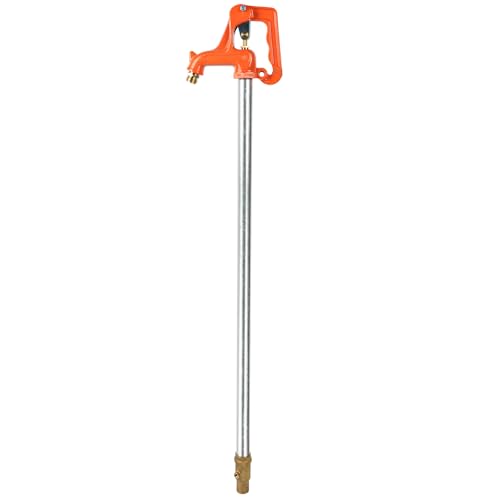
This 4.25-foot yard hydrant serves an open-yard location rather than an exterior wall, with a 3/4-inch NPT garden-hose connection and a 12-inch bury depth. The maker describes a drain-down design that empties when the hydrant is closed, so the buried valve and drainage path matter to freeze protection. Lead-free materials, a copper adapter and galvanized steel hose are named construction features. Its 12-inch bury depth may not reach below the frost line in every region; verify the required installation depth for your site before selecting it.
Bottom line: Choose this for a freestanding yard water point where its bury depth is adequate.
3.25-Foot Frost Proof Yard Hydrant

This shorter 3.25-foot yard hydrant is the compact yard option, with a 12-inch bury depth and a 3/4-inch FNPT connection. Its cast-iron head, zinc-plated 1-inch tubing and polyester powder-coated finish set it apart from the sillcocks, which mount through an exterior wall. A solid-brass foot valve body is also specified. The 12-inch burial depth is the key constraint: it may be too shallow where the local frost line extends farther down, so confirm that depth before installation. This is a hydrant, not a wall-mounted hose faucet.
Bottom line: Pick this for a compact yard hydrant only where 12 inches of burial is sufficient.
How to choose an outdoor frost free faucet
Start with the mounting location: sillcocks pass through an exterior wall, while yard hydrants stand in the ground. A sillcock’s shutoff seat is at the inner end of its long stem, so the stem must extend into a space protected from freezing. Common sillcock stem lengths run about 6 to 24 inches; match the length to the wall thickness and indoor reach. For a hydrant, the valve and drain arrangement must sit below the local frost line. Choose a wall faucet for a hose connection at the building; choose a hydrant when the water point needs to be out in the yard.
Frost-free faucet length and installation fit
A frost-free sillcock must slope slightly downward toward the outdoors so water can drain after shutoff; a level or inward-sloping installation can leave water trapped in the barrel. Measure from the exterior wall face to the protected shutoff area, then choose a stem that reaches that area without being too short. Hydrant bury depth is a separate measurement from above-ground height: the buried valve needs protection below the local frost line, not merely a convenient pipe length. In the options here, both hydrants list a 12-inch bury depth, so verify local freeze depth before committing to either one.
Wall sillcock versus yard hydrant
A sillcock attaches to building plumbing and places the hose connection at the wall; a yard hydrant provides a remote standpipe with an underground valve. This quick comparison helps identify the right installation type before comparing connections.
| Need | Choose | Fit condition |
|---|---|---|
| Water at an exterior wall | Frost-free sillcock | Stem reaches into protected space |
| Water at a freestanding yard point | Yard hydrant | Bury depth suits local frost line |
| Anti-siphon protection at the faucet | Model with a vacuum breaker or backflow preventer | Confirm the feature on the specific unit |
These types are not interchangeable: the sillcock depends on the building wall and indoor pipe connection, while the hydrant requires a suitable underground installation.
Preventing freeze damage and backflow
A frost-free sillcock can still freeze if water remains trapped in its barrel, so remove the garden hose before freezing weather; a connected hose can block drainage. The faucet should pitch outward, and the shutoff end should be inside the heated or otherwise freeze-protected portion of the structure. Vacuum breakers and anti-siphon devices help keep hose water from being drawn back into the potable supply, but they do not replace correct drainage or plumbing installation. Yard hydrants rely on their below-ground valve and drain path, so keep the drain area functional and do not assume a shallow burial will protect against a deeper frost line.
Frequently Asked Questions
Why does a frost-free faucet need to slope downward?
A sillcock needs a slight outward downward pitch so water drains from its barrel after shutoff. If the faucet is level or slopes inward, trapped water can freeze even when the shutoff is inside.
Should I leave a hose attached in winter?
No; remove the hose before freezing weather so the sillcock can drain. A hose or closed-end attachment can hold water in the faucet and increase freeze risk.
How long should an outdoor sillcock be?
Common sillcock stem lengths run roughly 6 to 24 inches. Choose a length that passes through the wall and places the shutoff end in a protected area.
How deep should a yard hydrant be buried?
The valve and drain arrangement should be below the local frost line, which varies by location. Compare the required depth with the hydrant’s specified bury depth before installation.
What does an anti-siphon feature do on a faucet?
A vacuum breaker or backflow preventer helps stop hose water from being siphoned back into the water supply. It does not prevent a faucet barrel from freezing if drainage is blocked.